1 free read left. Create a free account for unlimited reading + AI research.
Create free accountArticle G|A|M|E – The Italian Journal of Game Studies
1 free read left. Create a free account for unlimited reading + AI research.
Create free accountArticleG|A|M|E – The Italian Journal of Game Studies
Interactive storytelling is a hybrid of cinema and video games in which viewers' choices shape narrative progression, character development, and endings.
This review argues that interactive storytelling, a hybrid of cinema and video games that pairs emotional engagement with player agency, can function as an educational medium for moral reflection rather than only as "serious game" instruction. Its framing is selective and theoretical rather than exhaustive, reflecting a field that remains fragmented. The author draws on examples ranging from Netflix's interactive children's titles to the cut-scene work in The Last of Us Part II, and situates the argument within media-effects research, which has concentrated largely on negative outcomes of play.
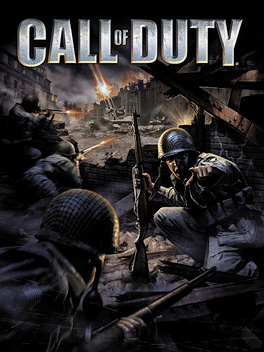
The central claim is that interactive violence may produce positive effects, particularly guilt and heightened moral sensitivity. This is supported by experimental research, notably studies by Grizzard and colleagues (2014) and Gollwitzer and Melzer (2012), which suggest that simulated transgression can prompt self-reflective moral processes. The mission "No Russian" from Call of Duty: Modern Warfare II serves as a case study of a game operating as moral provocation. The evidence base for these claims is acknowledged as limited, and the review treats the positive-effects argument as a promising hypothesis rather than an established finding.
The analysis identifies the conditions under which interactive narratives are most likely to be educationally effective: decisions must carry perceived responsibility and emotional weight. Conversely, the playful and reversible nature of games can undermine moral responsibility when it is not deliberately countered. Educational impact therefore depends on careful narrative and ethical design, rather than on the medium's mere presence in a learning context.
Taken together, the review positions interactive narrative as a potentially significant but still under-theorized vehicle for moral education. Its contribution lies in reframing games from sources of concern to possible instruments of ethical reflection, while underscoring that realizing this potential requires intentional design choices and more rigorous empirical testing than the current literature provides.
Each row is a game or company this document names, each column a document, oldest first. A mark means that document names it. Select a row to see those documents.



European Conference on Games Based Learning (ECGBL) · 2026
European Conference on Games Based Learning (ECGBL) · 2024
G|A|M|E – The Italian Journal of Game Studies · 2026
G|A|M|E – The Italian Journal of Game Studies · 2024