1 free read left. Create a free account for unlimited reading + AI research.
Create free accountArticle G|A|M|E – The Italian Journal of Game Studies
1 free read left. Create a free account for unlimited reading + AI research.
Create free accountArticleG|A|M|E – The Italian Journal of Game Studies
The paper argues that visual and mechanical qualities of pixel-art games create aesthetic experiences that players carry into their home spaces.
This paper examines how pixel art aesthetics shape player experience and the design of physical gameroom environments, drawing on interior design, game psychology, and game studies. Its central argument is that the visual and mechanical qualities of pixel-art games, particularly 2D platformers and MMORPGs, generate aesthetic experiences that players extend into their home spaces through decorative collections, furniture, and nostalgic memorabilia. The author applies the Mechanics-Dynamics-Aesthetics (MDA) framework as the analytical lens, positioning it as a tool for understanding how game design choices translate into emotional and aesthetic responses in players.
The paper surveys several genres, including platform games such as Super Mario Bros, strategy and fighting games such as Crazy Arcade, role-playing titles such as Mega Man, and the MMORPG MapleStory, which is presented as a leading example of design-driven pixel art with over 100 million players. Its discussion of Super Mario Bros highlights recurring themes of obstacles, fatigue, and frustration, drawing on prior studies of player persistence, competence, and cognitive load. Beyond gameplay, the paper addresses material culture, examining collectibles such as cartridges, posters, figurines, and canvas art, and their role in creating personalized gameroom displays.
The research relies primarily on a qualitative, literature-driven and case-study approach rather than original empirical data. No survey sample, participant count, or statistical analysis is reported, and the results section is largely interpretive, discussing game design features and cited psychological theories rather than measured outcomes. The paper's contribution is therefore best understood as a conceptual and exploratory synthesis connecting game design theory, nostalgia, and interior design practice.
 MapleStoryGame · Wizet · 2003 · 196 documents
 Super Mario Bros.Game · Nintendo R&D4 · 1985 · 85 documents
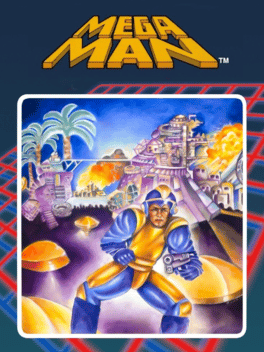 Mega ManGame · Capcom · 1987 · 13 documents
 TetrisGame · Nintendo · 1989 · 68 documents
 Among UsGame · Innersloth · 2018 · 64 documents
 Sonic the HedgehogGame · Sonic Team · 1991 · 35 documents
Each row is a game or company this document names, each column a document, oldest first. A mark means that document names it. Select a row to see those documents.
G|A|M|E – The Italian Journal of Game Studies · 2026

Extra Credits · 2022