1 free read left. Create a free account for unlimited reading + AI research.
Create free accountArticle G|A|M|E – The Italian Journal of Game Studies
1 free read left. Create a free account for unlimited reading + AI research.
Create free accountArticleG|A|M|E – The Italian Journal of Game Studies
The author codes 25 dialogue scenes from a single playthrough and treats this as a limitation. The focus is textual, concentrating on the two protagonists, Mio and Zoe.
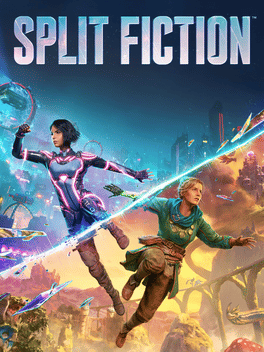
Split at the Core positions Split Fiction as a sophisticated system of "affective control," arguing that the game uses branching structures, non-linear timelines, and minimalist emotional cues to make players perform emotional labor around grief, guilt, and fractured identity. Grounded in trauma studies and affect theory, the analysis treats the game as a case study in how digital narratives mediate subjectivity. Its method is a qualitative thematic analysis of dialogue drawn from a single playthrough, covering 25 scenes, with a supporting 32-snippet coding framework applied to the characters' backstories. The scope is therefore focused and textual rather than industry-wide, concentrating on the two protagonists, Mio and Zoe.
The central findings concern the characters' divergent modes of emotional processing. Mio's arc moves from self-protective deflection and anticipatory grief toward acceptance, reconciliation with her friend, and a closing reconciliation with her father, with rage over parental treatment and an internalized "prisoner" self giving way to self-liberation. Zoe's processing is indirect and escapist: her fantasy storytelling reframes her sister Ella's death as a heroic afterlife, functioning as a counterfactual emotional regulator that doubles as mourning. Her confession of survivor's guilt over the river accident anchors her movement toward self-forgiveness. The coding reveals a gradual progression from guarded defensiveness to emotional disclosure, culminating in the revelation that Ella died when the twins were twelve.
The analysis concludes that the game's dialogue-driven trauma narrative operates as an affective system that casts players as emotional agents rather than passive observers. Its methodological contribution lies in offering a replicable textual-analysis approach for narrative games, one that treats dialogue, fantasy framing, and coded emotional themes as analyzable instruments of player engagement.
Each row is a game or company this document names, each column a document, oldest first. A mark means that document names it. Select a row to see those documents.
G|A|M|E – The Italian Journal of Game Studies · 2026
G|A|M|E – The Italian Journal of Game Studies · 2026
G|A|M|E – The Italian Journal of Game Studies · 2026
G|A|M|E – The Italian Journal of Game Studies · 2026
G|A|M|E – The Italian Journal of Game Studies · 2026
G|A|M|E – The Italian Journal of Game Studies · 2026
G|A|M|E – The Italian Journal of Game Studies · 2026
G|A|M|E – The Italian Journal of Game Studies · 2026
G|A|M|E – The Italian Journal of Game Studies · 2026
G|A|M|E – The Italian Journal of Game Studies · 2026
G|A|M|E – The Italian Journal of Game Studies · 2026
G|A|M|E – The Italian Journal of Game Studies · 2024
DiGRA · 2026