1 free read left. Create a free account for unlimited reading + AI research.
Create free account
The Publisher – Developer Relationship: The Square Enix Mobile Partnership Approach
Key insights
6 takeaways- 01Square Enix West’s mobile publishing model replaces the traditional adversarial publisher-developer dynamic with a unified, partnership-driven structure to ensure fully aligned incentives.
- 02By integrating publishers into the development lifecycle from early stages to global launch, the model aims to combine developer creativity with publisher expertise in user acquisition and live operations.
- 03The ultimate goal of this unified team structure is to create a sustainable cycle where team satisfaction and product quality directly drive long-term commercial viability.
- 04The strategy prioritizes long-term, collaborative relationships over short-term deal-making to mitigate risks associated with the high complexity of the free-to-play mobile market.
- 05To prevent communication breakdowns and conflicting priorities, the model mandates radical transparency and joint decision-making rather than rigid, top-down contractual enforcement.
- 06The approach emphasizes cultural compatibility and soft skills to foster an environment where constructive feedback is prioritized over ego-driven creative processes.
Ask AI about this video
Transcript
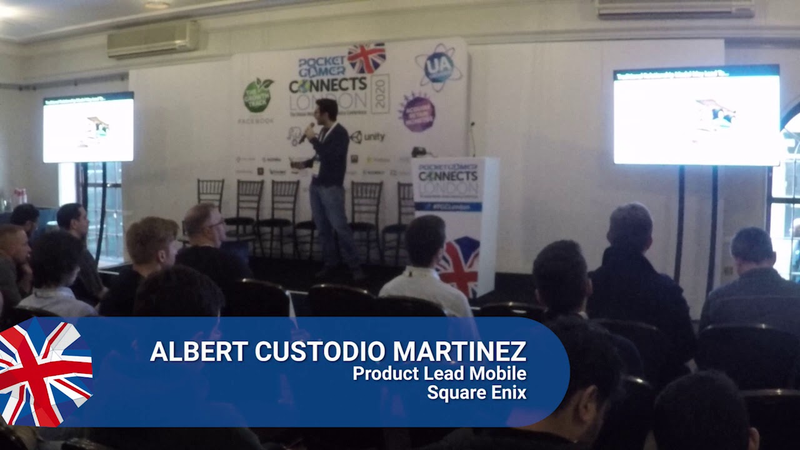
[Music] hi everyone thanks for joining today in this presentation my name is Albert the project lead at square enix mobile publishing team that we're here in London I will explain you a little bit later today just a summary what I wanted to talk to you about is like first of all introduce the news chronics publishing t-mobile here in London as well as the classical publisher developer relationship how this classical set up that I've seen can deal to like issues or problematic issues if they're not set up properly and how I think this could be like manager soft and is how we are like trying to implement also at the new publishing
team ok so just a little introduction about me very brief Who am I basically instead of going on to the left which is about work me I'm a normal random person animal lover I have a few adopted dogs and I also doubt I have a dog rescue association that's me but in terms of work I'm the lead product manager I told you is chronic so mobile my background is in finance marketing I also worked in business planning and strategy I've been in the sector for more than six years in the free-to-play okay always in management positions in life ops and product management and ad monetization and on the past years of manage games with more than 50 million annual revenue managing dragon city and monster legends being consistently in the top 50 grossing on Western markets specially us which was was and the ADIZ for them still domain market and even eventually
placing the gains in the top 10 in the u.s. for certain dates no Square Enix West ok so we are here we're based in London just so you know Square Enix is divided between Japan and West West is everything that is not Japan so ages including West so that you know so we are here we cover for the rest of the world in terms of the genders and subgenres that we're targeting data analysis of portfolio things too we have tools like game refinery that is very very useful sensor tower and a penny and we are the general sense of jungles where foucaultian is more on the casual and mid core okay not all of them just a few we are living hyper casual away and hardcore away okay just little bit organization structure so you know I'm not going to go on detail but we are very product oriented and the product guy there on the left and we have set up a team and we are
continuing hiring and setting up a team that is it's made the main purpose is to be able to partner with the developers at all stages and in all senses covering a 360 degrees okay so be able to partner I will talk about later about this partnership model a little bit more so jumping a little bit more right now in what was the main topic right of the of the presentation he's like you will see I would I wanted to put two slides together but I couldn't so I don't know how to do it so I just put it the first developer challenge and constraints and then the next one you're gonna see publisher concerns you will see that like both of them have different different ideas the different issues or things that they think about and they're worried and this is like if it's not set up properly between them can lead to like misunderstandings lack of trust and ultimately of failures developer basically funds ok funds is the domain
cause why they're looking for for publishers it's not the truth it can be in many many fields and many reasons maybe its funds to scale maybe it's because I like experience in some of the key roles or some of the positions are going to the market there are many reasons I'm not going to enter but just some of them more typical you a it's it's a classical one analytic sometime and project management I live ops that I've seen in my experience and talking to many developers many many so far they're lacking this this field no it's it hasn't been like that many developers that have been successful to run live ops in their games for a long run why on the other side the publisher is not thinking on that sense no he's more like they want to get the investment the money back and see how the product grows right so it's like and it's pretty pretty much in the human behaviors like people are not in favor of risk presume no humans are like more adverse to risk so as soon as they want they can they
really want to see the data from the developer and these already some a little bit of clash because sometimes developer already don't have this data yet but they really think the game is great and they're gonna be is gonna be amazing so here's the first thing while publisher really is like no no no really show me numbers the publisher wants to go is like go to Mac like quickly and escalate okay and of course some of the developer publisher sorry might have also like a big eye piece it's it's our case but other ones so it's like you also want to make sure that the brands and the piece that you have it's it's protected and is well used right and last but not least to be honest there are a lot of developers okay so also in terms of the publisher intone source is like selecting the right partners time is limited resources are limited in all senses humans and pony so you really need to pick up the ones that you really think they're gonna nail it what I've
seen so far being in both sites in the developer and the publisher site and when I joined Square Enix this impact me somehow is how the developers approach you when your protocol operates how there's already at the beginning kind of a lack of trust okay so it's like apparently they had bad experience not all the time but some of the times so basically the publisher is seen as a big brother and it is somehow it gives the money and the developer just creates a game but needs to respond to the publisher that are pretty pushy pushy and then these at the end is like if the basics are not properly set which is more about soft skills not hard skills this can lead then to you know the cliff faster or slower but it can not always but it can ultimately come to here right like in terms of future trip like the as
I said before right the the publisher wants to go fast to market developer might want to invest more time refining features working little bit more and there's always a middle ground no it's not it's not one or the other I need to be you know reasonable but as I said is this trust is not properly set and this like ways and then go and the gold ultimately the goals between the teams are not the same and aligned then when it happens because mobile gaming is free-to-play it's it's a complex market okay it's not easy even great games fail then it goes you know like when they're like scheduling issues a classic this is a classic for all of you have been in development delays which is it happens but then really goes to these and low key pies whatever it starts already like okay it's kind of your fault oh no if it would like the way I want it we shouldn't be getting to that point so it's like that's that's not great that's not great and that's how I also have felt talking to many developers that
they had these in their mind no I really don't think this has to be that way I really believe in like everyone wearing the same t-shirt and it's it's possible it's it's feasible it's not it is not neither magic neither something revolutionary not at all it's something very basic and very normal it's like both of the teams working as one single team the publisher is an extension of the developer and vice versa and only when both teams have the same goals aligned since the beginning before starting to jump in any project meeting the people but in a personal way not in a professional way like really who are you dealing with who are they what do they like how do they set which are the culture that you have in the company then is the only way when if everyone is showing the same goals you can go and work and have a long-term commitment and success right I really think that's a way to like succeed in the product then a long-term is going to be potentially good KPIs and you know when you have good product and the people are happy working in a company usually this
translates to the market no matter business you are and usually the market then appreciates that and the product that is built and it goes back to the company so it's like at the N is a it's a good circle right so how we're building and how I believe it and that's also how we are starting to work we're already working with with a few developers and more are coming in different projects is like for me it's very important in all this model about trust and partnership establishing relationship with no egos that's that's a no-go and I've seen it many times especially in in mobile free-to-play in other industries not that much but in mobile and free-to-play yes and there are many gurus in the market or self called gurus I don't believe all that honestly I'm sorry I'm very like data-driven I'm very like down-to-earth I don't believe on that I believe in teams that work together and really go for same goal is never one person it's always a team okay so it was never someone that magically had something so
this is key also like in terms of like if you really trust and set the same goals you can give constructive feedback so there's no I don't like the idea that is like okay we do whatever you want because you're the the publisher no no that's not that what we're gonna do is what is the best for the game what is the best for all of us not because we say it and the team that we set up for example in our case I'm talking about our case but other companies can have the same model it's just like we are very sure that the team that we're working and the team that we're hiring and we're having are set up in this mindset okay only these you know targeting common goals maintain trust and transparency at all moments if the goods are not the news are not good sorry it's okay it's fine as far as we are aligned it's not a matter of like again we're looking on the long run we're not looking at doing just a short deal because I always seen that also in terms of like publish developers that approach you and the way they want to negotiate
or the treaty it is like okay I want to get as maximum as I can from you because in the past they were already tricked by another publisher or whatever that's that's not the goal right so what are we thinking on the long term we're not working for one single project that is to work with good developers on the long run and be able to build many many many games together right and as I said the joint decision-making in single sites so long run no matter at which stage the developer is of their product we might join and as you saw on the organization struck to have a big big team that can support and all of these and let's let's be realistic only when the game goes to world launch is when the real business starts everything before it's like just preparations that I know they're hard but it's just preparations it's just when the game is war lunch that everything starts and we have a pretty robust product team behind to support and make it scale and make it successful okay potential scenarios this light I
wanted to add it basically is what if so yeah it's very happy might seem very happy flower pink glasses world but they shouldn't be situations where you get to the last point where you were not aligned between the publisher and the developer like really if what I said before it's properly done and it's hard it's easy to say and to write and do it but if it's properly done it shouldn't get to scenarios with like okay I really want to go that way and the other gonna go that way okay that's why I said that it shouldn't get to that point so just as a recap it's very important that's the most important within having shared incentives okay establishing the goals together not from one site on from the other together only that way is gonna lead to a close collaboration and at the end a strong partnership that will get on long term success okay it's very important what I said about the objectives is key because
it not only applies to this model if you it applies to any product management model in any tech business always having the object is very clear so all the company at all levels understands why they're looking and what they're working for and agree with this and they work total to a common goal yeah that's it you can find us on LinkedIn and the our B staff manager who's here myself you can find us on LinkedIn or our booth but our booth is not sure but at least you can have a nice coffee from very standard is there everyone is down the coffee so yeah that's it so thank you very much if you have questions please feel free thank you very much it's good to see how you want to be kind of in the same boat with developers it's nice and both were actually working in the same direction any questions for Albert Albert or
Square Enix it's just curious the one that cause everyone making the line for the coffee you've got some more questions he'll be available or one of his teammates will be available for questions thank you very much for coming and thank you very much for sponsoring we really appreciate that thank you [Music]
Summary
The mobile publishing division of Square Enix West advocates for a collaborative, partnership-driven model to replace the traditional, often adversarial, publisher-developer relationship. The primary thesis is that long-term success in the free-to-play mobile market requires both parties to operate as a single, unified team with fully aligned incentives, shared goals, and radical transparency. By moving away from the "big brother" dynamic—where publishers act as rigid overseers and developers feel pressured to meet arbitrary demands—firms can mitigate the risks of project failure, communication breakdowns, and conflicting priorities.
The mobile gaming sector is characterized by high complexity and significant risk, where even high-quality products can fail without proper support. Developers often seek publishers for funding, user acquisition, and live operations expertise, while publishers prioritize risk mitigation, data-backed growth, and brand protection. When these objectives are not synchronized from the outset, it frequently leads to a lack of trust, disputes over development timelines, and finger-pointing during periods of underperformance. To counter this, the proposed model emphasizes soft skills, cultural compatibility, and joint decision-making over rigid contractual enforcement.
The methodology for this approach relies on a product-oriented structure that supports developers at every stage of the lifecycle, from early development to global launch. By prioritizing long-term relationships over short-term deal-making, publishers can foster an environment where constructive feedback is welcomed and egos are removed from the creative process. Success is defined not by individual brilliance, but by the ability of a cohesive team to maintain clear, shared objectives. Ultimately, this strategy aims to create a sustainable cycle where high-quality product development and team satisfaction translate directly into market performance and long-term commercial viability.














Comments