ArticleGame Discovery Now
The One Game Discovery by Player Age Chart You Need to See
18 Sept 20261 pages~8 min full read
Key insights
4 slides
Key channels
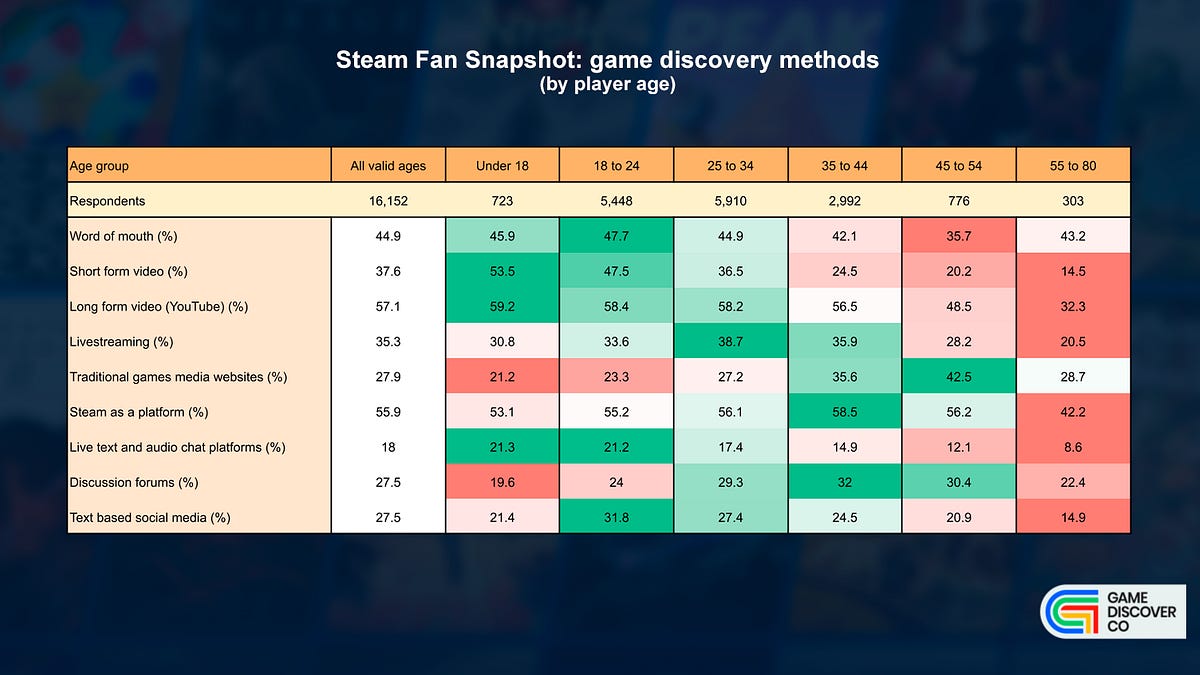
Steam and long-form video are the top two game discovery methods across all age groups.
These methods show high stability in usage compared to other channels. Steam as a platform accounts for 55.8% of discovery, and long-form video for 57%.
Youth preference
Short-form video is a primary game discovery driver for younger players.
This method ranks as the second most important for players under 18 at 53.5%. Its influence significantly decreases with age.
53.5%
Short-form video as a discovery method for players under 18.
- For 45-54 age demographic.
- 20.2%
Older audience
Traditional games media remains a significant game discovery source for older audiences.
Its relevance decreases for younger demographics.
42.5%
Traditional games media as a discovery method for 45-54 year olds.
- For players under 18.
- 21.2%
Mid-age engagement
Livestreaming discovery peaks among 25-34 year olds.
Text-based social media also has its highest engagement in a similar age range.
39%
Approximate livestreaming discovery peak for 25-34 year olds.
- Text-based social media for 18-34 year olds.
- 31.8%
1 / 4
Ask AI about this report