ArticleGame Discovery Now
Game Discovery Lessons From 30 Years in the Biz
7 Aug 20261 pages~10 min full read
Key insights
4 slides
Historical context
Game discovery has evolved through three distinct epochs.
The industry moved from physical retail bottlenecks to a digital-first market with high accessibility and competition. This shift defines the current landscape for developers.
Industry Shift. The evolution of game discovery has shifted from the 'Triassic' era of physical retail bottlenecks to the 'Cretaceous' era, characterized by sky-high access to tools, audience reach, and market competition.
Digital adoption
Digital sales now account for half of all Nintendo software with physical versions.
This marks a new record for the company. The shift away from physical retail is a key trend.
Digital Record. Nintendo reported that digital sales now account for 50% of all software with a physical version, marking a new record for the company.
50%
Digital sales share of Nintendo software with physical versions.
- Switch games distributed in the most recent quarter
- 33.81 million
Audience engagement
Top Roblox titles maintain massive scale with hundreds of thousands of concurrent users.
Brookhaven, a top Roblox title, reached 546,000 average concurrent users in July.
Roblox Scale. Top Roblox titles, such as Brookhaven, are maintaining massive scale with average concurrent users (CCU) reaching 546,000 in July.
Successful launches
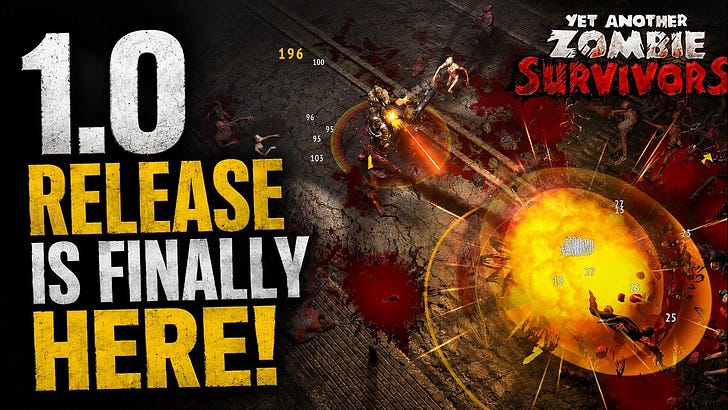
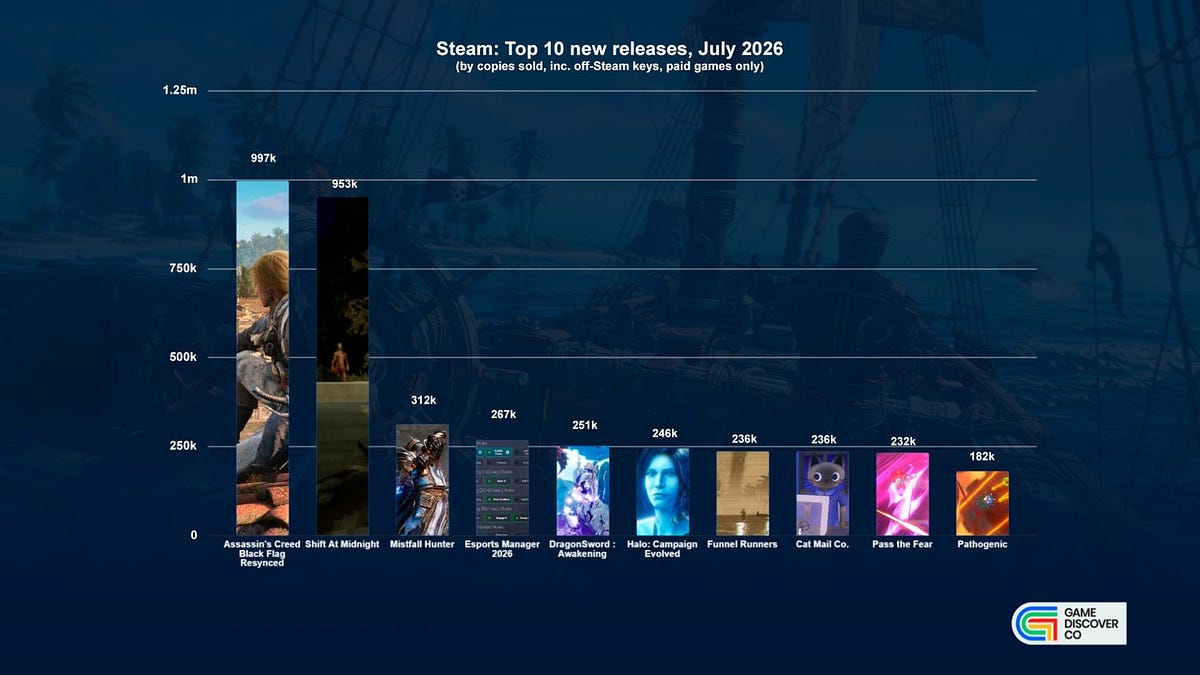
Successful Steam launches are seeing high engagement with tens of thousands of concurrent users.
Scrap Mechanic reached 38,000 concurrent users and Fields of Mistria hit 27,000 concurrent users.
Launch Engagement. Successful 1.0 launches on Steam are currently seeing high engagement, with Scrap Mechanic reaching 38,000 CCU and Fields of Mistria hitting 27,000 CCU.
1 / 4
Ask AI about this report