ArticleGame Discovery Now
Putting Your Game in a Showcase: 5 Key Questions to Ask
11 Aug 20261 pages~11 min full read
Key insights
6 slides
Market Context
Streaming game showcases help developers overcome audience 'filter bubbles'.
These events are a strategic tool for driving visibility for PC and console titles. They provide a framework for evaluating alignment with marketing goals.
Top Performers
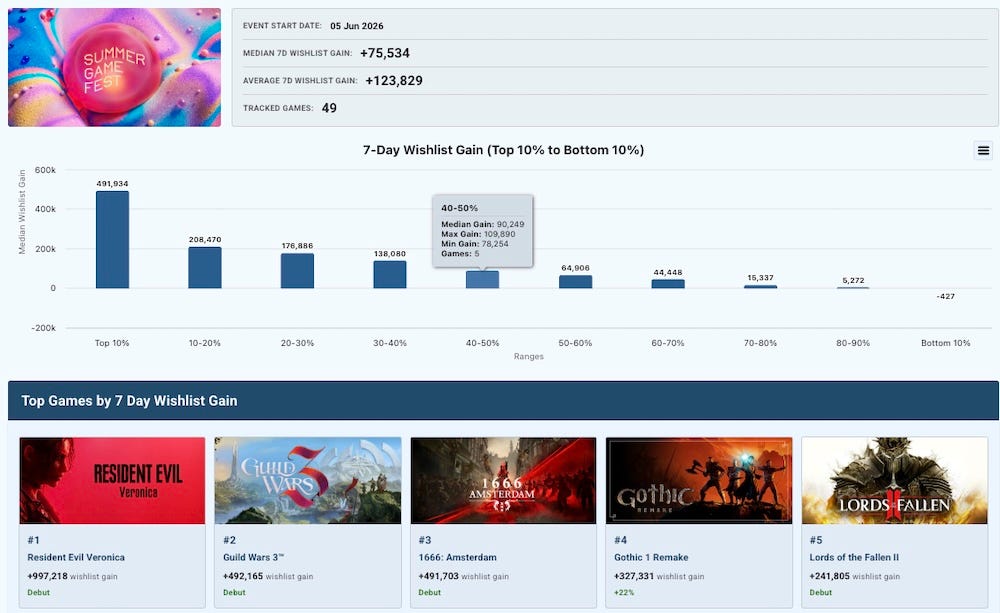
Major industry events consistently deliver the highest median Steam wishlist gains.
These include events associated with Summer Game Fest, The Game Awards, and platform-specific showcases. The Triple-I Initiative also performs strongly.
Evaluation Criteria
Developers should assess five key factors when considering showcase participation.
Success is not guaranteed.
Key Factors. Five critical factors guide developers in evaluating showcase participation.
Cost Considerations
Inclusion costs for major showcases vary significantly.
These costs can range from approximately $1,000 to hundreds of thousands of dollars. Strong indie reveals can sometimes secure free placement.
Market Evolution
The showcase market faces potential overcrowding.
Developers should prioritize shorter, sharper events over those saturated with repetitive trailers. Shorter, more focused showcases are increasingly preferred by audiences.
Like a crowded marketplace, it's harder to stand out when there are too many similar offerings.
Market Challenge. The showcase market is effective but faces potential overcrowding.
Strategic Focus
Developers should prioritize alignment between their game's identity and the event's audience.
This is more important than relying solely on broad reach metrics. Future success will favor tightly curated broadcasts.
Strategic Advice. Aligning a game's identity with a showcase's audience is crucial for future success.
1 / 6
Ask AI about this report