1 free read left. Create a free account for unlimited reading + AI research.
Create free accountArticle G|A|M|E – The Italian Journal of Game Studies
1 free read left. Create a free account for unlimited reading + AI research.
Create free accountArticleG|A|M|E – The Italian Journal of Game Studies
German and Austrian prohibitions on Nazi symbols were extended to games by a 1998 court ruling. The study focuses primarily on German-speaking regulatory contexts.
This study examines how legal taboos, cultural norms, and player-enforced standards of "authenticity" shape the depiction of Nazi symbols, the Holocaust, and the Second World War in digital games. Drawing on critical discourse analysis of titles such as the Wolfenstein series, Hearts of Iron IV, and Battlefield V, along with forum debates on Steam and Reddit, the authors focus primarily on German-speaking regulatory contexts and on the period from the late 1990s through the late 2010s, a span that includes the 1998 court extension of German bans on Nazi symbols to games and the 2018 shift in USK classification policy.
The authors argue that German and Austrian prohibitions led publishers to pre-emptively censor symbols, typically through cosmetic alterations such as covered swastikas or renamed characters. Such changes, they contend, can depoliticize Nazi content rather than encourage critical engagement, and may even enable uncritical representation. Earlier controversies, including the 1980s KZ-Manager and the 2010 Sonderkommando Revolt mod, drew sharp backlash and withdrawal, whereas a clear paradigm shift became visible in the late 2010s. The authors attribute this partly to the pulp, fantasy, or explicitly historical framing of newer titles such as Wolfenstein: The New Order and Through the Darkest of Times.
A central finding concerns the role of players themselves. Forum discourse reveals that players have internalized official taboos and generate further taboos of their own around "authentic" historical representation. In the Battlefield V case, criticism concentrated disproportionately on the game's female and disabled protagonist rather than on other inaccuracies, pointing to a fixed, identity-rooted image of the war. In the Hearts of Iron IV case, players treated the Holocaust and war crimes as off-limits, justifying this by framing the game as a strategic simulation, even while accepting many fictional liberties elsewhere. The authors conclude that appeals to historical accuracy often function as a proxy for broader contests over identity politics, and that the exclusion of Nazi atrocities risks reinforcing revisionist narratives such as the "clean Wehrmacht."
 Hearts of Iron IVGame · Paradox Development Studio · 2016 · 31 documents
 Hearts of IronGame · Paradox Development Studio · 2002 · 29 documents
 WolfensteinGame · Raven Software · 2009 · 25 documents
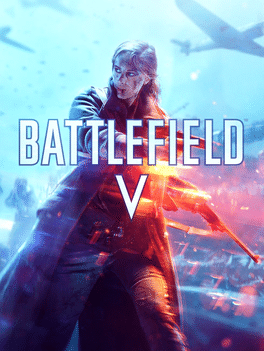 Battlefield VGame · EA Digital Illusions CE · 2018 · 10 documents
Each row is a game or company this document names, each column a document, oldest first. A mark means that document names it. Select a row to see those documents.
G|A|M|E – The Italian Journal of Game Studies · 2026
DiGRA · 2025