1 free read left. Create a free account for unlimited reading + AI research.
Create free accountWhitepaper European Conference on Games Based Learning (ECGBL)
1 free read left. Create a free account for unlimited reading + AI research.
Create free accountWhitepaperEuropean Conference on Games Based Learning (ECGBL)
The games were built in Twine for a graduate Bioanalytical Chemistry module at University College Cork. They are based on real industrial problems supplied by biopharmaceutical partners.
This paper describes the design and use of branching-path narrative games, built in the Twine authoring tool, within a graduate Bioanalytical Chemistry module at University College Cork. The games are based on real industrial problems supplied by biopharmaceutical partners, and they are intended to develop problem-solving and troubleshooting skills in a context shaped by time constraints and strict regulatory demands for thorough root cause analysis. The authors argue that narrative games can capture complex cause-and-effect reasoning more effectively than the lab simulations that dominate existing game-based science education research, which they characterise as scarce at graduate and professional levels.
The implementation relied on Twine's accessible graphical editor, which allowed industry partners to structure their case studies quickly and then convert them into playable games. Technical choices were driven by sustainability and accessibility: games were published as self-contained HTML files that run offline, with a day-counter variable enforcing time limits and a fishbone variable ensuring that players explored enough potential causes before reaching a conclusion. Incorrect choices carry realistic consequences, such as lost days, and the authors describe plans for richer inventories and team-member profiles in later iterations, along with possible migration to Unity via the Fungus plugin.
Assessment was pass/fail and based on students completing a required number of games, writing a 500-word reflection, and contributing to a group case study. The authors report qualitative observations rather than formal outcome measures: student-written cases were shorter and narrower than industry cases, with groups containing more experienced students producing more challenging scenarios, and students found it difficult to devise credible problems. The study's scope is a single module at one institution, and its conclusions about improved learning rest on the authors' interpretation of student work and reflections rather than on controlled comparison.
Each row is a game or company this document names, each column a document, oldest first. A mark means that document names it. Select a row to see those documents.
European Conference on Games Based Learning (ECGBL) · 2025
European Conference on Games Based Learning (ECGBL) · 2025
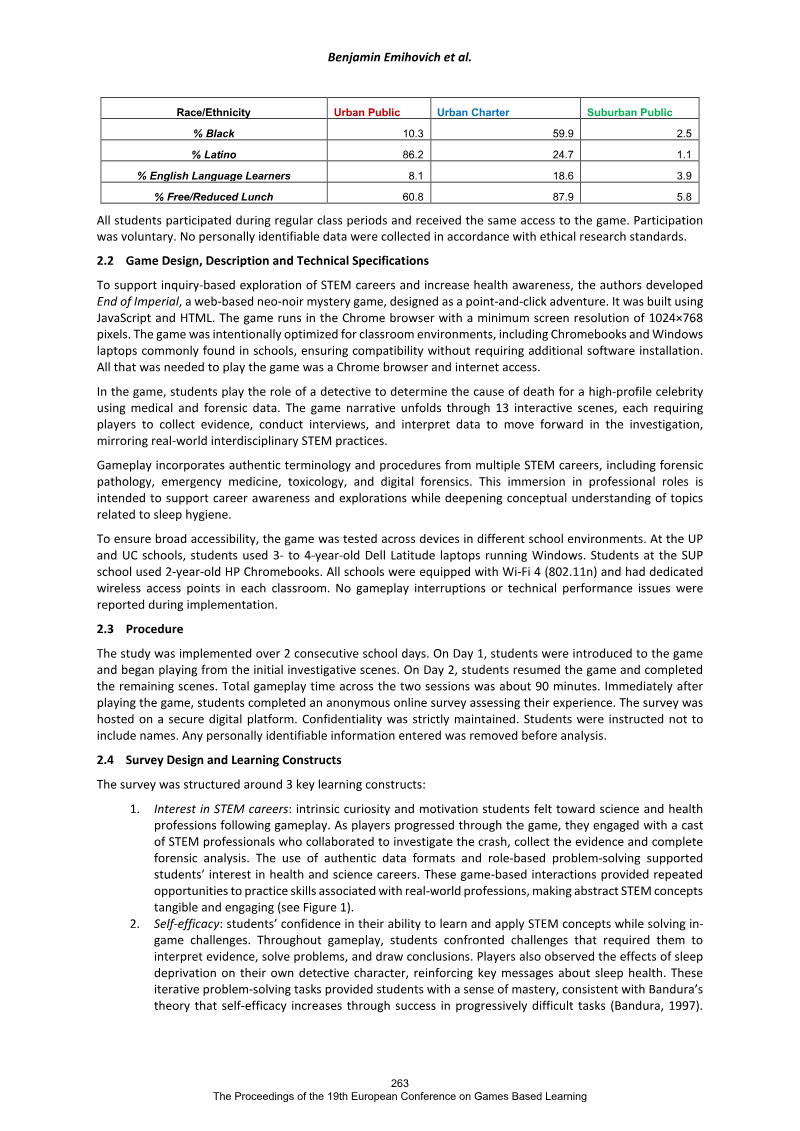
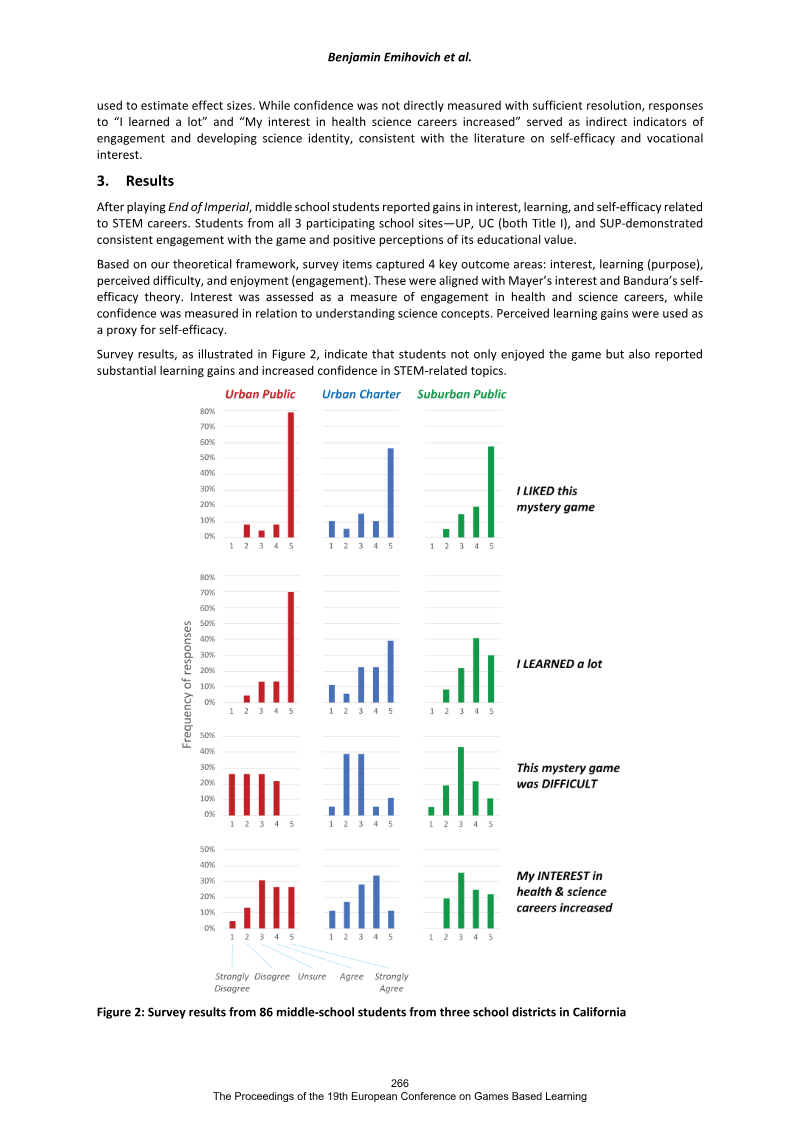
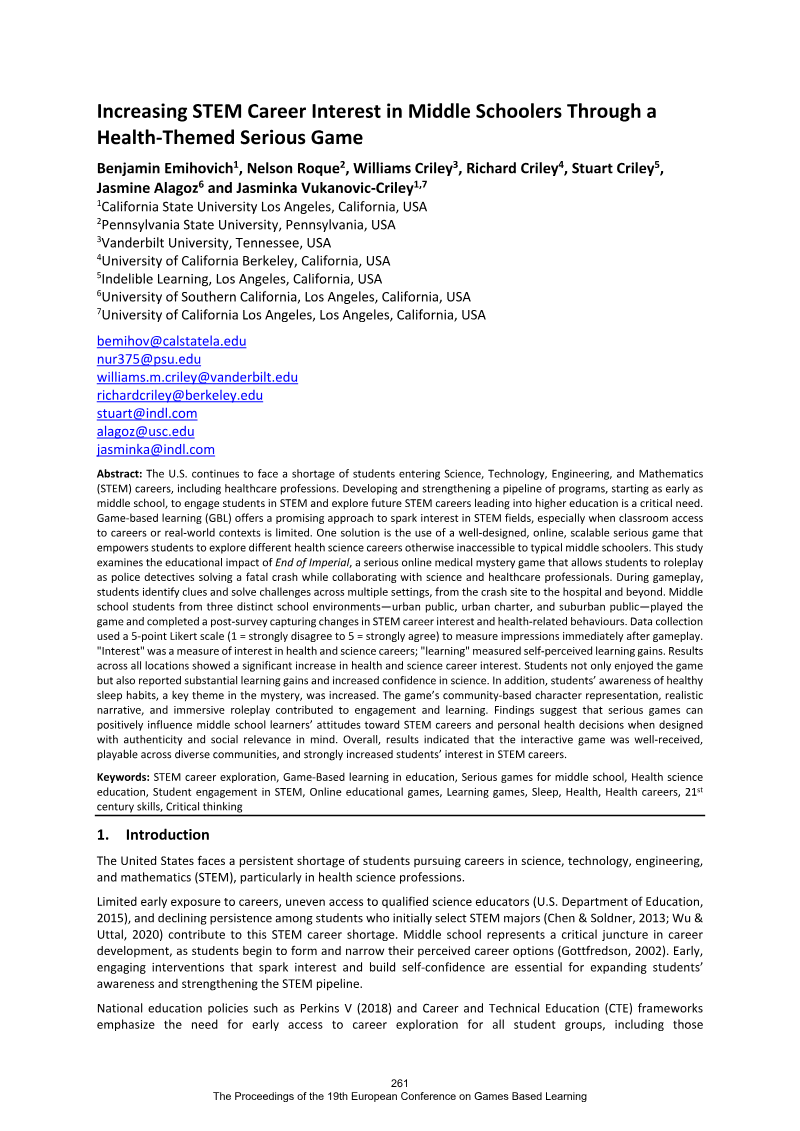
European Conference on Games Based Learning (ECGBL) · 2025
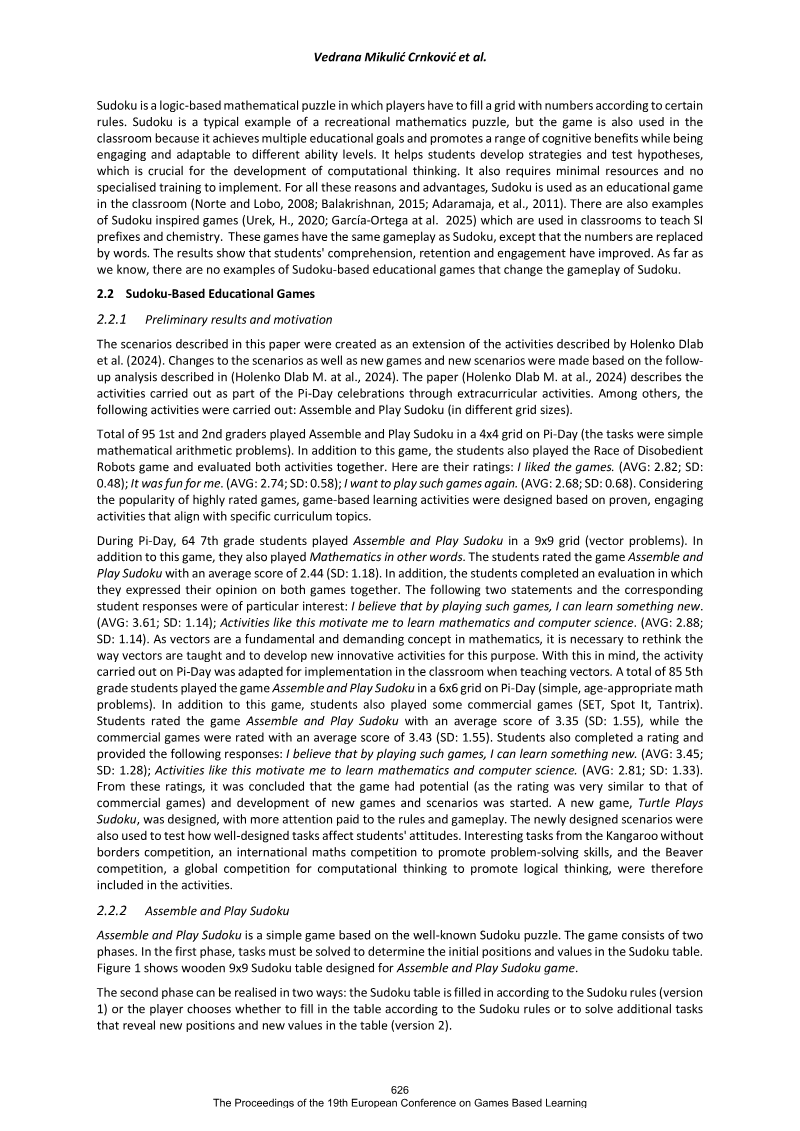
European Conference on Games Based Learning (ECGBL) · 2025
European Conference on Games Based Learning (ECGBL) · 2025
European Conference on Games Based Learning (ECGBL) · 2025
European Conference on Games Based Learning (ECGBL) · 2025
European Conference on Games Based Learning (ECGBL) · 2025
European Conference on Games Based Learning (ECGBL) · 2025
European Conference on Games Based Learning (ECGBL) · 2025
European Conference on Games Based Learning (ECGBL) · 2025
European Conference on Games Based Learning (ECGBL) · 2025
European Conference on Games Based Learning (ECGBL) · 2024