1 free read left. Create a free account for unlimited reading + AI research.
Create free accountArticle DiGRA
1 free read left. Create a free account for unlimited reading + AI research.
Create free accountArticleDiGRA
An Australian Bureau of Statistics survey from 1994 found this share of households used games on home computers.
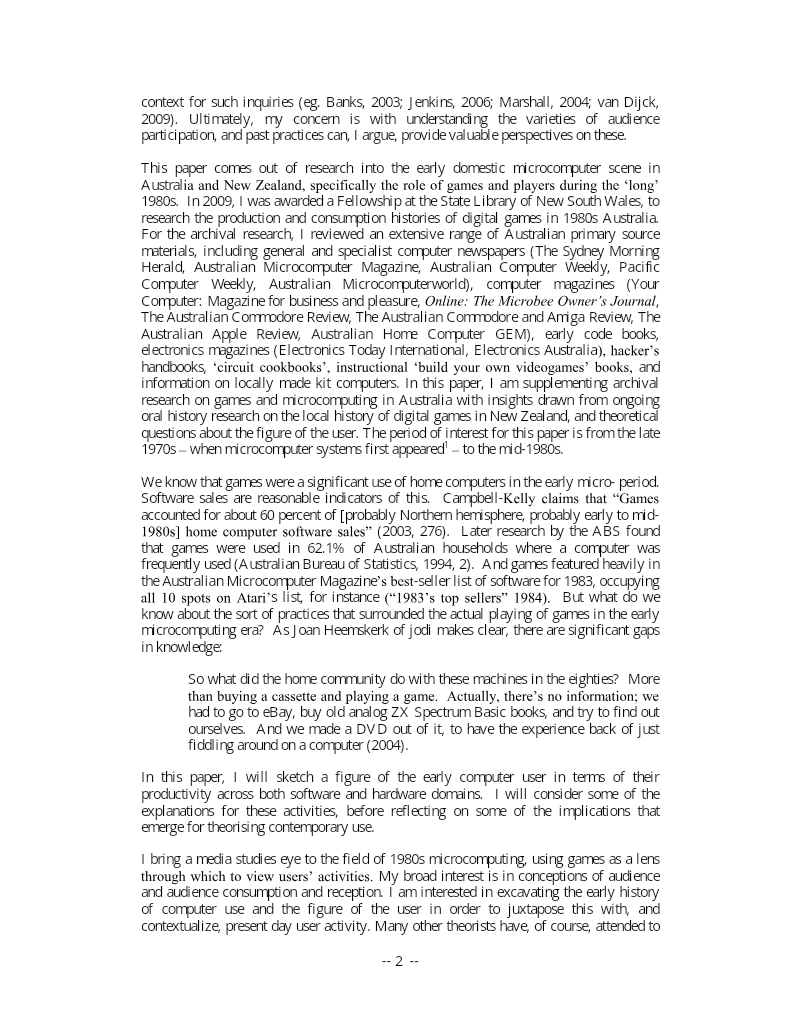
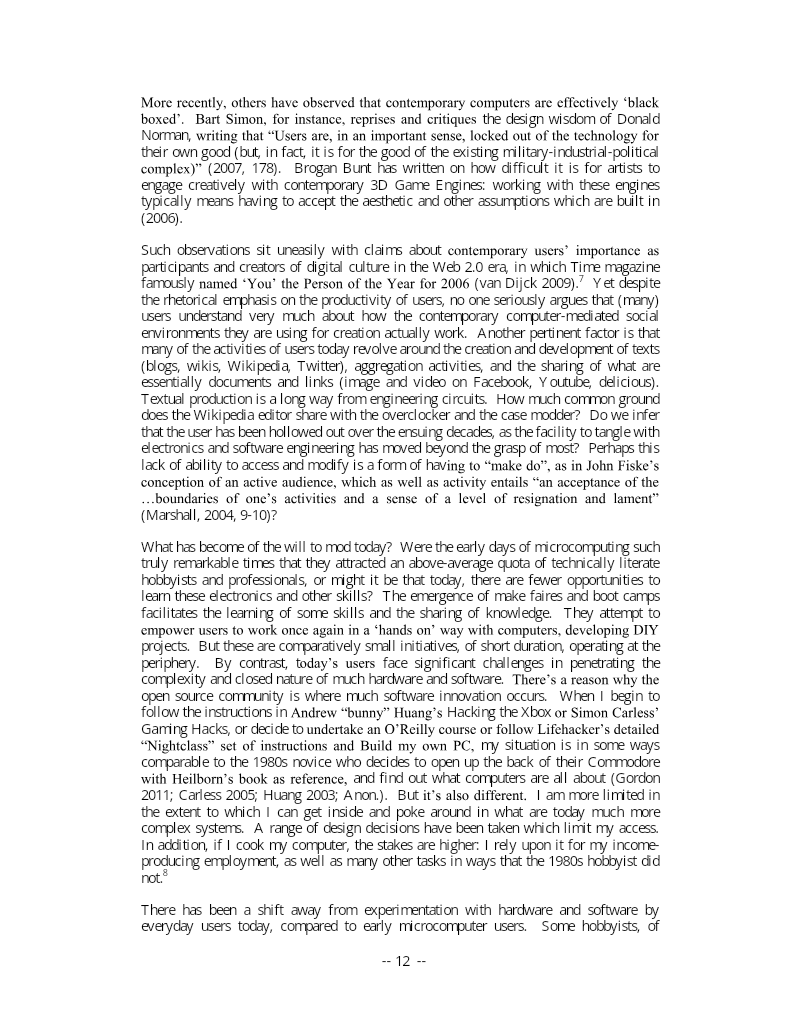
Melanie Swalwell's paper argues that historical accounts of user activity have been largely absent from debates about user-generated content, and it uses the microcomputer era of the 1980s in Australia and New Zealand to recover that history. Drawing on archival sources and oral histories, the author shows that games were central to early home computing: they reportedly accounted for roughly 60 percent of home computer software sales, and an Australian Bureau of Statistics survey from 1994 found that games were used in 62.1 percent of frequently used home computer households. Early users commonly learned BASIC by typing in and modifying game code, and many became "bedroom coders" or built and sold their own kit computers and software, establishing what the author calls a longer lineage of user tinkering and a "will to mod."
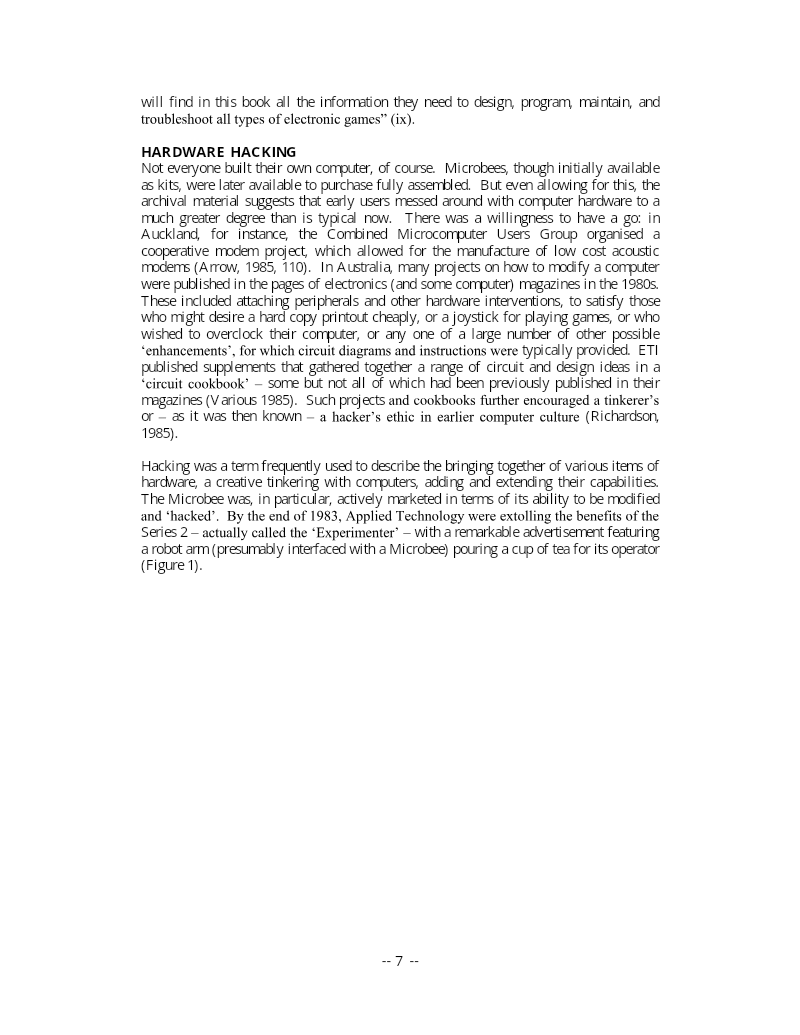
The paper contends that this hands-on culture extended well beyond programming into electronics. MicroBee owners and other hobbyists learned to build, repair, and hack their machines, supported by magazines, kits, and how-to books. Swalwell argues that repair and tinkering were the norm for hobbyists of the period, a practice that has faded and been largely overlooked in computing history. Recovering this electronics lineage, she suggests, matters for game studies and for digital media audience research, which has drawn more heavily on fan and television studies than on the material practices of early users.
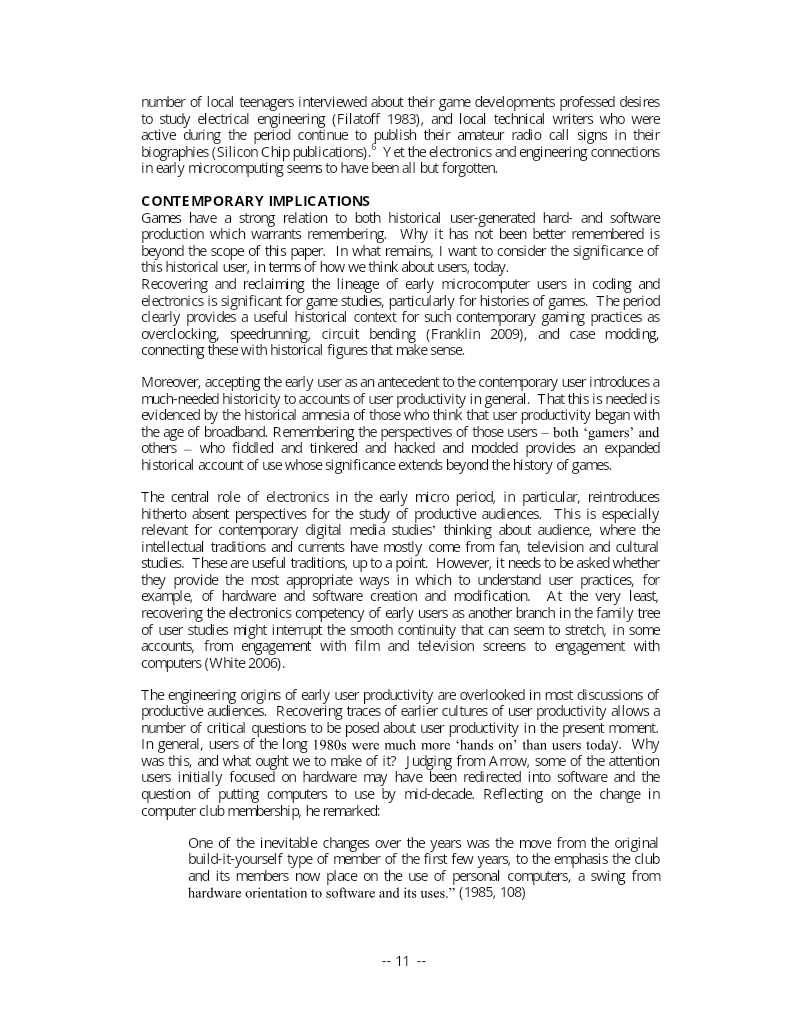
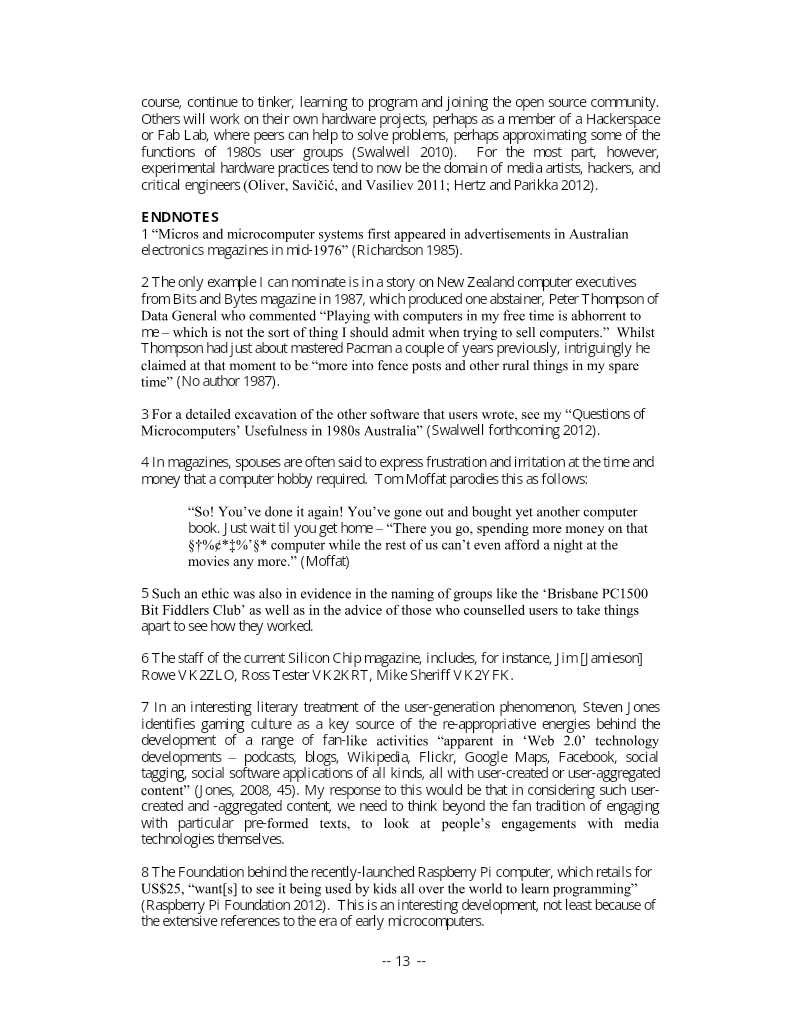
The author also draws a contrast between the 1980s and the present. Users of the earlier era engaged with hardware far more directly than today's users, who face closed, black-boxed systems and mainly take part in textual, aggregating, and sharing activities. Hobbyist attention shifted from building hardware toward software use by the mid-1980s, and contemporary tinkering has become largely confined to media artists, hackers, and small peripheral initiatives such as Maker Faires, Hackerspaces, and Fab Labs. The paper leaves open whether this decline reflects fewer learning opportunities or a broader loss of user agency as technologies grow more complex and closed.

DiGRA · 2026

DiGRA · 2026



DiGRA · 2026



DiGRA · 2026



DiGRA · 2026



DiGRA · 2026



DiGRA · 2026



DiGRA · 2026



DiGRA · 2026

DiGRA · 2026



DiGRA · 2026



DiGRA · 2026
DiGRA · 2023