1 free read left. Create a free account for unlimited reading + AI research.
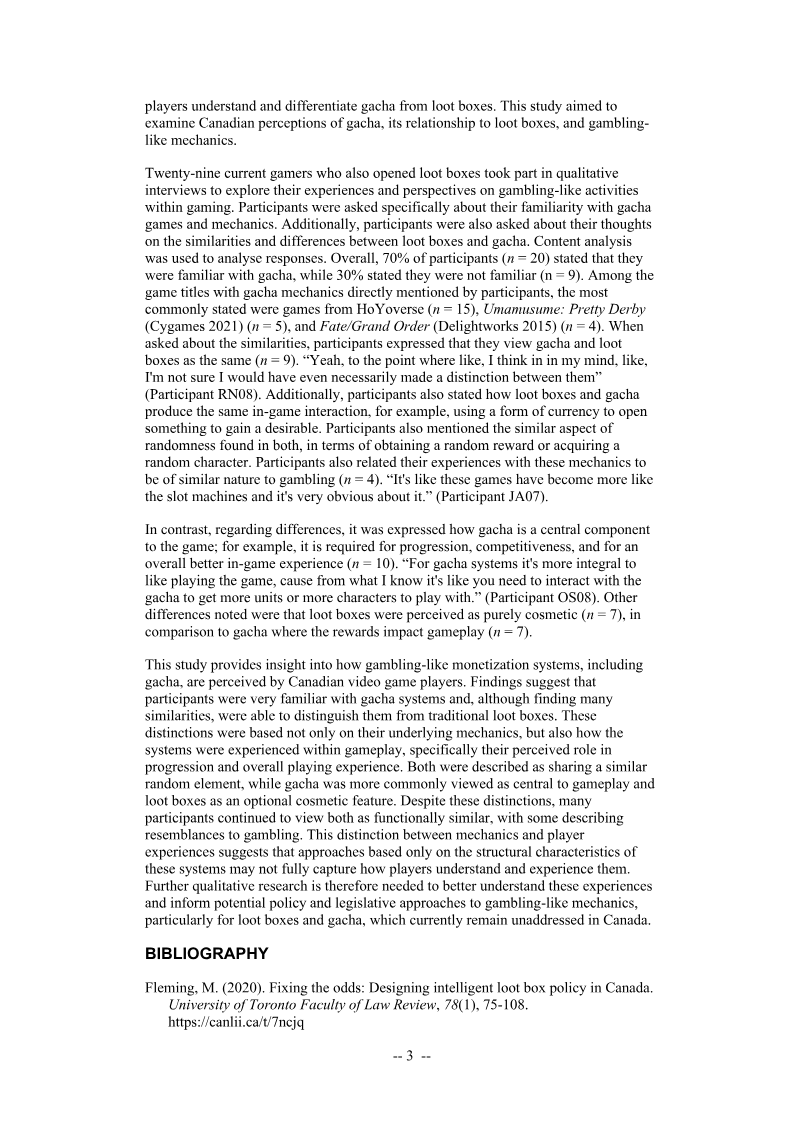
Create free accountWhitepaper DiGRA
1 free read left. Create a free account for unlimited reading + AI research.
Create free accountWhitepaperDiGRA
This classification makes Belgium an especially informative setting for studying adolescent simulated gambling. The study focuses on Flemish teenagers.
This paper introduces a longitudinal three-wave panel survey examining the relationships between adolescent video gaming, simulated gambling, and monetary gambling among Flemish teenagers in Belgium. Its central aim is to address gaps in existing research, which has seldom used longitudinal designs, rarely focused on Belgium, and seldom compared the distinct forms of simulated gambling beyond loot boxes. Belgium is positioned as a particularly informative setting because paid-for loot boxes have been classified as gambling there since 2018.
The first wave, conducted in winter 2021 and early 2022, surveyed 2,289 teenagers aged 10 to 19 across 13 high schools. Participants were on average 14.1 years old, with a near-even split between female and male respondents. Most participants (82.3%) reported playing video games, with boys playing more and for longer than girls, and 2.5% were classified as having problematic gaming according to the Gaming Disorder Scale for Adolescents. Roughly three-quarters (76.9%) had engaged in at least one of ten simulated gambling activities in the previous year. Over half had opened a free loot box, about one in four had purchased one despite its classification as gambling, and 14.6% admitted to selling items obtained from loot boxes. Esports betting (9.3%) and spending in social casino games (8.6%) were also notably common.
Correlational analyses revealed significant positive associations between problematic gaming and both simulated gambling (r = 0.408) and online monetary gambling (r = 0.275), as well as between simulated and monetary gambling (r = 0.487). Gaming time was likewise linked to both forms of gambling. These findings are consistent with prior research connecting simulated gambling to problem gambling and disordered gaming. The authors note, however, that cross-sectional data cannot establish the direction of these relationships, which is the purpose of the subsequent survey waves and planned comparisons across specific simulated gambling activities.

DiGRA · 2026

DiGRA · 2026



DiGRA · 2026



DiGRA · 2026



DiGRA · 2026



DiGRA · 2026



DiGRA · 2026



DiGRA · 2026

DiGRA · 2026



DiGRA · 2026



DiGRA · 2026

DiGRA · 2026
DiGRA · 2026