1 free read left. Create a free account for unlimited reading + AI research.
Create free account
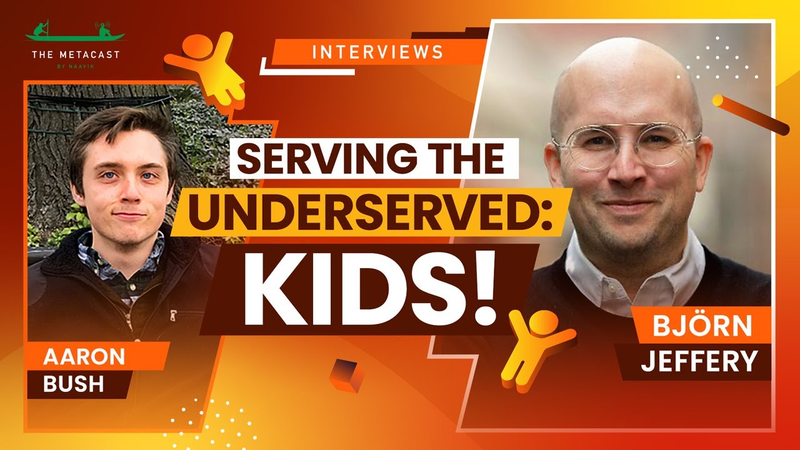
Björn Jeffery: How to Conquer the Kids Market
Key insights
7 takeaways- 01To ensure longevity, companies should focus on fundamental, consistent interests rather than chasing fleeting trends, allowing for cross-cultural appeal.
- 02Success in the kids' digital market requires designing 'digital toys'—open-ended, non-prescriptive experiences that mirror physical play rather than rigid, rule-based gaming structures.
- 03Building long-term brand recognition is best achieved through a cohesive aesthetic, unique animations, and consistent sound branding across a collection of focused, individual applications.
- 04Developers should prioritize observational play-testing over adult assumptions, as direct observation is the only accurate way to predict how children interact with technology.
- 05Business models should evolve from monolithic platforms to a piecemeal approach, such as transitioning from paid-upfront models to expansion-pack strategies.
- 06Due to strict privacy constraints that render traditional viral loops ineffective, developers must prioritize organic brand loyalty and long-term growth strategies.
- 07In an era of generative AI, human taste and aesthetic judgment remain the primary competitive differentiators for creative products.
Ask AI about this video
Transcript
Hi everyone and welcome to the Mediacast by Naavik, a podcast in which we explore the business and future of video games. I'm Aaron Bush and in this episode I'm excited to host a conversation with Björn Jeffery. Björn is a serial entrepreneur, perhaps best known for the kids media company Toca Boca and is currently an active board member including at Rovio, technology columnist and advisor for all things digital strategy and consumer culture. Björn, welcome to the Mediacast. Thank you so much. Thanks for having me. So, obviously you're a well accomplished guy and there's so much that we could
dig into today, but before we dive into anything specific, I'd love to just give you a chance to tell your story as you would like it to be told. Um, so maybe to kick things off, what originally drew you to entrepreneurship and as you you look back over what you've accomplished so far, what do you view as the highlights of your career? It's a tricky question, but uh yeah, I started a lot of companies. I started my first company when I was 16. Um, more some sort of party outlets than a company maybe. You know, we wrapped it in a company format, but I think realistically it was more about going out, having fun and having some sort of brand to do that with. Um, I'd say, you know, the highlights, I mean, I'd argue that maybe the lowlights taught me more about entrepreneurship than anything else. Like a lot of the companies that I ran and projects were complete failures and utter failures and were quite difficult to manage. Um, and at the time it's very difficult to see any sort of sense or meaning in having to, you know, fire staff or cancel
projects or whatever it may be. Um in retrospect, it's actually quite useful. Uh and it and it really does you know, there is an element of incremental learning. So, I think maybe some of the some of the failures that I did have actually been the most useful. So, yeah, but otherwise, I'd describe myself as a yeah, an entrepreneur and a uh person interested in sort of media and and culture in general. And that's sort of the areas where I've started things. Everything from fashion blogs to record labels to agencies and and and a little bit of gaming that we're going to talk about more today. Right. And we'll also talk more about the kids market later. Um but I know you've you've kind of had a bent in that direction across your career as well. Um why is that? Why have you um been often times pretty focused on and have come back to that kids market? It's a it's very under rest uh misunderstood and underestimated, I think. That's that's how I feel about it at least. It's been something that I
think adults take for granted. Um you know, you a lot of products for children, whether it be media or or otherwise, come up from the parents thinking, "What would I like if I was a child?" And that is the fundamental wrong way of approaching it. And it it's very tricky to think like a child. You have to go to the source. Uh and I think early in my career, I was an editor for a children's journal. And and the way in which they did it was not adults writing for kids. It was kids writing for kids because it was impossible to know what on earth do these kids want us to write about so it doesn't you know, turn into these sort of Steve Buscemi meme like uh "Hello, fellow kids" sort of situation. Uh it's you've got to go to the source. You've got to talk to kids themselves cuz they know what's relevant for them and they know what they want to talk about. So, letting them have a voice was useful. Uh creating Tokaku was actually quite similar, you know, you just go to the source and try to figure out what do kids actually want as opposed to what do adults think that children want, which
is a quite a different very different question with a very different outcome. Right. I I kind of want to double click into that before moving on actually. Could you just talk a bit more about what is misunderstood about this market more generally and maybe a bit more about like what does it really take to serve kids differently from adults that people don't really understand? I think the misunderstanding part is partly commercial. I think like there's no money in kids, especially in kids gaming. Kids gaming has quite a bad reputation I'd say within within the gaming sphere. It's not something which is really I don't know, even sometimes even considered to be part of the gaming industry. And I think that's it lives somewhere in between education, technology, uh games, certain media, somewhere there. It lives in those sort of the the the the I don't know, the crossroads of those four things I suppose. That's where sort of the kids media is, but
it's not sufficiently strong in either of them. So, gaming companies don't consider kids gaming to be gaming. Media considers kids media to be a very particular subset of media, not real media and and so on and so forth. It's very very similar. You could argue that publishing is in there, too. And like kids publishing is a completely different uh sort of niche than than regular publishing. It has quite little to do with with one another in certain ways. And the way in which you need to think about it I think is is there are actually a lot of you know, from the the business point of view, a lot of advantages that you overlook. Like, yes, it's difficult making products for children, for sure. You can't go to yourself and if you do, you tend to mess it up. On the other hand, there's longevity in children's products. You know, a good children's book, you could sell it for 100 years. You know, a good kids game could be used over and over again for new kids that turn, you know, they turn three, they turn four, they turn five. But a five-year-old now and a five-year-old 10 years ago surprisingly similar.
A 30-year-old now and a 30-year-old 10 five to 10 years ago has very different expectations. So much more has changed and the cultural impact of who you are, same thing goes across geographies. If you take a a five-year-old from Saudi Arabia, a five-year-old from China, and a five-year-old from Sweden, you know, put them in a room, they're not going to understand what they're saying, but they're going to get along. It's going to work out because five-year-olds are five-year-olds. They're very similar. 35-year-olds not so much. You know, they could be very, very different. You have a completely different cultural context. You're coming from different places and you're seeing the world in in in very different ways based on on, you know, culture, heritage, upbringing, all manner of things, philosophy maybe. Um so while making sort of what whatever was good for an adult five years ago is most likely not good for adults right now. Whereas for kids, it's the opposite. A great game five years ago is probably still great. So that is a huge advantage which is very under-leveraged when it comes to making products for children. Once you get it right, you have
long-term returns and rewards on that. And that's not necessarily something that you see with a few exceptions in in in regular gaming. Mhm. Yeah, that's that's really interesting and well said. And I want to talk a bit more about that, but maybe maybe before we dive too deep, um I think it would be good to introduce Toca Boca specifically. Um so maybe to to set the scene, could you give us more context around that company? How did it start? What was its mission? What did it do when you ran it? That kind of thing. Sure. So I I started it together with my co-founder Emil Overmar. We worked together at a large media company in Stockholm. Um and we were working for the research and development team. This is a very traditional publisher. They've been around 200 years, uh, family owned, seventh generation, uh, you know, traditional. They do books, newspapers, television, cinema. It's a traditional sort of media conglomerate kind of idea. So, we worked for the R&D team. And the idea was come
up with, you know, the next thing, you know, which is a very ungrateful, quite daunting, and almost impossible task to do. Um, but one of the project that we were working on at the time that we're talking now, 2008, 2007, 2008, somewhere there, um, was there's a rumor that there was going to be a large iPhone entering the market. Um, and this of course was an iPad, but we didn't know that at the time. And this company that I worked for, the Bonnier Group, they had a lot of magazine assets, like loads of magazines. At the time, about 60 magazines even in the US, things like titles like Popular Science, Parenting Magazine, all manner of things. Uh, and the magazines throughout the Nordics and Scandinavia. Um, so the idea was like, okay, if there's a big iPhone coming, wouldn't it be great if we just took the magazines and we put them on top of here, you know, if we just, you know, basically turned this into a digital magazine reader. Um, and this is sort of a classic case of inside-out innovation in a way. It's like, we have this asset and this
technology is coming along. This is a perfect match. If everybody would just do what we'd like to, what what what what we'd like them to do, what we'd want them to do, this would be a great business. So, then we can sell digital magazines, we'll save on print, we'll save on distribution, we'll super great. So, we did this project. Um, and we turned it, you know, we made a the concept video, something called Mag Plus. And that actually still to this day looks pretty cool. But it was a concept video. It was a it was an idea, like what could this be? The underlying sort of principle behind it, which we got wrong, I think, was there was no consumer demand for this. Like, no one really wanted this. Like, that have to teach everyone to say like, "Okay, so now you going to buy this iPad that you don't have, which is very expensive, and you're going to use this in a way in which you never thought that you would use it to do something that you're quite happy doing already, but in print." Cuz magazines have, you know, not been in the same decline as the decline as newspapers. People like that magazines generally speaking. So, we were trying to design something for a use case, which arguably was not really
there. So, after we left that project, Emil and I Um we weren't the only ones working on it, of course, but we were part of the that project. We sort of started in the other end. As like, "Okay, well, if we started with the consumer behavior instead, what is already happening, which is not being addressed, as opposed to trying to convince people to do something that they're not doing?" And then that led us to sort of was a report from Sesame Street's think tank, the Joan Ganz Cooney Center, um referencing something called the pass-back effect. The pass-back effect is parents passing back the devices to the kids in the backseat of the car. But today, this is super obvious. Like, this is long time ago. Like, of course everybody does this. All kids have iPads. But this was not the case at the time. The the the consumer insight that was different was suddenly children have uh access to disproportionately good devices, handheld devices made out of glass that cost five to a thousand a five hundred to a thousand dollars. Um
and suddenly they're using them to play with, which seems completely unreasonable if you were to try to pitch that to someone. It's like, "You should buy this glass device for for a thousand bucks and give to three-year-old." Like, who would do that? But everyone is doing that. Yep. So, that was that was completely new. So, that we sort of started in that angle and said, "Okay, so if the behavior's already there, how do we design a product on the basis of the behavior?" And that's kind of how it started. Then we sort of started, you know, finding different ways in. But that was sort of the the foundation to where it came from. Mhm. And what was the the product? Or the evolution Well, the product Yeah, the product was partly a an overarching brand, a branded approach, which is very common if you look at the product category that we were trying to emulate, which was not games, but actually toys. So, our whole thing was like, we should make digital toys. We should make things that are open-ended, things that don't You can't necessarily win or lose. It's like a Frisbee or LEGO. Like, you can't win at LEGO. You can have a LEGO
competition if you will, but the point of LEGO is more like the joy of creation, and you're building it in whatever way you want. You can be very prescriptive, or you can be very free. You build it in whatever way you want to, and that's what makes it a toy. Whereas gaming has sort of levels, rules, it has a sort of set idea. You know, there's more Now, there's more kind of sandpit-oriented or also sandbox-oriented um products um that you can play in that way, but generally speaking, I'd say that gaming is relatively prescriptive. This is what you're supposed to be doing. Um and our take was like, I think gaming um has its place, but toys is such a universal thing that never seems to have changed. It just hasn't been really applied in the screen context. So, what if we try to make digital toys with the same essence? And if you look at toy brands, that's very common. You know, you have Barbies, you have LEGO Yeah, LEGO. All of these sorts of things, very, very strong brands on a product level and on a toy level. So,
we're thinking, okay, we should try to emulate this and do something quite similar. And this is how we came up with Toca Boca, which originally was called Rainbow Teeth, which is a terrible name um because of the the For those who haven't seen the logo, it's a happy face with sort of primary color teeth. Um luckily, Rainbow Teeth does did not pass through the lawyer filter because uh it Rainbow is owned by Rainbow Six, which is a Ubisoft game. So, luckily, that didn't work. So, we had to get rid of that, and then we chose um Toca Boca is actually Spanish. A Toca la Boca means touch the mouth, and the logo is a big smiley mouth. So, some some one of our early ideas was like, okay, you play like a little mini game, you got to touch the mouth before you do it. But also like, it sounds funny. Toca Boca sounds funny, relatively easy to pronounce, relatively easy to spell. We could get the dot com domain, you know? And so, that's what we did, and then we were off to the races. Nice. Yeah, that is a that is a fun name. Um when I was studying it, I I
thought it was interesting how you took a like a multi-app strategy. You know, some companies might try to shove everything in in one super app. Others take a more distributed approach. Could you talk a bit about why you took the approach you did, and like what that looked like in practice? Yeah, um I think that it's an it's two things. I think partly it's an effect of of the digital toy strategy. It's a sort of like toys are singular experiences. We're trying to emulate certain play patterns that suited, you know, a digital product very well. Certain certain ways of playing, yeah, you know, like playing catch or something like that is super hard. Like, it's not going to be fun on an iPad. The whole point is, you know, is kinesthetic. You're feeling things, you're throwing things, you're catching things. Doing that with an iPad doesn't really work. Whereas like, make-believe works super well. Like, a dollhouse, that works very very well in this context. So, these singular approaches like, this is the dollhouse app, and this is the
make-believe app, or this is the creative app, these sorts of things is more akin to sort of a toy-like strategy. You wouldn't go to a toy shop and buy everything from Barbie in one big box. You buy them piecemeal. You buy one piece and then the other. But they're all sort of part of the the Barbie family, if you will. So, that was a effect that we wanted to explore different play patterns, and we wanted to do that under this this um you know, digital toy brand, Toca Boca. Um the other thing was a strictly a business issue. As like at the time, and of course this I'm I'm dating myself here, but I mean there was no subscriptions in the App Store. So, that was another issue. So, so the the reason why everybody's choosing multi sort of putting all the apps into one right now is that the the platforms are primarily pushing you to do subscription. Uh and then to do subscription you need a lot of content, and then it sort of makes sense to pull everything into one place. And I think had we started it now, then maybe we would have been a different situation. But at the time, subscription was not available. Um so, that meant you
need to sell them individually. Uh and then also sort of having multiple apps out at the same time seemed to be sort of a a sensible way of doing it at the time. Um and also, as I was mentioning in the beginning, you have longevity. So, and and that is still true to this day. Like the first app we ever published, Toca Tea Party, in 2011, it's still selling. It is untouched, basically, but I mean more than 10 years later, that app is still selling and still doing well in the store, because it's still fun to have a tea party on an iPad. That is still fun. And the three and four and five-year-olds that have had fun with it then, they've grown up, but their siblings are now playing the same thing. So, yeah. Yeah. So, from that perspective, having everything in one place didn't really make any sense. So, it made sense to sort of have like this is a good fit for you who likes this way of playing. Then if you don't like that, then you can choose something completely different without leaving sort of the family and the brand family.
Right. Um and what's interesting to me is that, you know, kind of despite taking that app-by-app approach, you still managed to pull off like a really strong, you know, central brand around um Toca Boca with consumers. Um I'd like to to hear you talk about that a little bit. How did you go about like thinking about brand building across all of this? Um and obviously these games, these digital toys were one key part, but I also know that the ecosystem has grown over time and and and done different things too. But in general, how did you How did you really think about making the brand what it became? Yeah, it was very deliberate. Like it was a plan from the beginning, super deliberate. We filed our first trademarks before we submitted our first app. You know, so like it was it was a very clear, intentional strategy. It's like we need to get this right. And we didn't know how well we would do, but at least
that was the plan. Um and it was a number of things and we we I think for a lot of gaming and movies and things, you know, you have the the something something production in association with something something else. And it's The feeling as a consumer when you're watching it just like get on with it. You know, I don't I don't care who financed this movie, just just get on with it. And then you have things that do it in the completely different way, which is, you know, the Pixar thing. It's a bit fun. You know, the it it it you know, this lamp is jumping. It's at least a little bit of humor. And then you have the far extreme of them that do does it really well, uh which is like The Simpsons. And that's where we borrowed sort of the one of our ideas from because The Simpsons intro, which is essentially part of The Simpsons branding, if you will, um you want to watch that. Because it's always different, you know? What what is Bart going to be writing on the board? What is Lisa going to be playing something on the sax? The last scene when they all sit on the couch, what's going to happen? It's a part of the content. You want to have You don't want to You don't want to skip intro on The Simpsons because it's part of the show.
Um which is what again, very unusual. So we were thinking like, okay, what's the kids equivalent of this? So we thought we'll have like an intro animation. Uh and we'll have We won't have the same sort of just splashing Well, make a We'll make a unique animation for every single app that's sort of themed, be a little bit funny, and we'll have this Sonic sound logo as well. What it what says it in a specific specific way. And that would be something that kids would over time, not the first time cuz you wouldn't know that it's there, but over time after using it you'd like, I wonder what they did this time. Be something that you you want to you want to look at it. You want to know. You know it's going to say Toca Boca at the end, but you're not quite sure how it's going to be there. So, that was that was one thing like working with Sonics, working with intro animations, things like that. Other things that we thought was just is the choice of aesthetics for instance. So, that's say the style was sort of somewhere between Scandinavia meets Japan, somewhere sort of in that in that middle there. And something that we talked about a lot was like we can't we can't out Disney
Disney, you know, whatever Disney's doing strategy-wise, conceptually, anything really, there's no realistic way that we are going to be able to take them on with whatever they're doing, which means we need to do the opposite in some ways. So, so even the choice of aesthetics is very non-traditional and very non-Disney-esque in that way and saying like we need to find something which looks completely different and has a very different sort of tone of voice um graphically and otherwise just so that we don't come off as you know, here's Disney with less resources essentially, which which is a huge risk and I think a lot of products fall into that category. It's just like you're a you're a you're an under-resourced carbon copy of the what's what the original is. And we're the grand strategy had to be we had to be busy doing something completely different. Which means we might not be for everyone and we'll have to live with that, but at least it's deliberate. Um and there's no way of picking up a
Toca Boca app without getting the feeling is like, oh yeah, I I I recognize this and this this looks familiar. This has a certain aesthetic and things. So, I mean, brand building is something you do every day, you know, in a way. But at least then we we we'd spend time on this early on to just make sure that we we kind of get it right. And then it's just been continuous work product and marketing wise since then. Mhm. I'm curious how that translated to how you think about user acquisition or just what you learned in general about user acquisition when it comes to the kids market side of things. How do you How do you you know, scale the kids you have cuz they're not the the ones with the money, right? The parents are. So, you know, to what degree are you targeting the kids versus the parents? How does that all come together under the Toca Boca brand? Yeah. It's um it's a tricky thing. The brand is an advantage. So, this was a long-term play
that we weren't sure if this is going to work out. But all all the apps are called Toca something as a prefix. Toca Doctor, Toca Store, Toca Life and and so forth. Um that means of course we knew you know, we could hope maybe that people would be discussing like, "Oh, you know, Toca Cars is coming next Saturday. That'll be amazing." But that's an unlikely topic of discussion in in in regular families households. Like we're not going to know what the next app coming out is. Like we we weren't that well known. Um so, instead we thought, "Well, they might remember the brand." So, they they might search for Toca Boca and then they don't know what they're going to find, but they'll get a long list of all the products that we have and they'll choose something. Again, akin toy with the toy reference like going to the specific aisle. Going to the LEGO aisle, you don't know exactly which box you're going to be buying in the store, but you go to the LEGO aisle cuz you know, it's a safe bet. That's what we were trying to create and that helped in user acquisition as well. Instead of, "Okay, I don't know exactly what I'm going to be downloading, but Toca Boca is
normally good." And as long as we'd earned that position of trust, again, long-term play, but once you earn that position of trust, you search Toca Boca just like you go to the LEGO aisle, and then you pick something up, depending on what you're like. Um as we are the other part of the question is that all right, well, how do you handle the the kids and the and the adults? This was tricky, and we messed this up uh on a few occasions as well. I think the you know, now, these days I work as an as an advisor for these sorts of questions and sort of family tech and things like that. The most common thing as sort of pitfall that you you fall into, and I know this because I was in it. I did it I did make that mistake myself. is you try to do it for both. You start saying like, well, we'd like to make this product. We'd like really both adults and kids to to really sort of appreciate this product, and that is not realistic. Um something has to give. You can make great products for children that are aimed and sold to adults.
That is primarily educational products. Uh I want my kids to learn how to speak Mandarin. I want them to get a head start in school, these sorts of things. They could be game-like experiences, but there's no 3-year-old that's saying like, I wish I could be better at the my my, you know, algebra at the moment. Like, no kid has said that. That might be what they're ending up doing, but that's because their parents are you know, forcing or mildly suggesting, depending on the level of of authoritarianism. at home. Um but then on the other end of things, you have products that are just for kids that you'd say, well, parents hate this. This is never going to happen. But every parent knows there are things in your your house or your kids' room that you wonder, how on earth did this end up here? How Who bought this? Why did Why do I have this? I hate this, but still my kid loves it. So, the the interests are not they they they're not overlapping. Like, it's a like a Venn diagram, and and and then the the but the middle part is very
very small. You would think that you can sell to both. And that's where we were, too. We had We had social channels. Um we had uh Facebook and Twitter that was talking strictly to parents. And then we had Instagram and YouTube that was talking strictly to kids. And at some point we had to put our foot in and say, "You know what? We're going to go strictly for the kids." We're going to say like, "Okay, the the parents then have to They can't hate it. That would be bad. Uh the kids have to love it. But the parents They can't hate it. They can like it or they can accept it." You know, but we're siding with the kids. We're We're saying like where if if there's if there's an issue where you could go kids or you could go parents, we'll always go kids. Um and once we did that, that started to help because it created sort of clarity in communication and created clarity in in in sometimes simple things like product design. Give you an example. Like in in Toca Life World, which is the most successful product currently. Um and we have the Toca Life series when I was uh CEO, too. You know, at some point you can you can flush things down the toilet. You can take an object. This
is like a dollhouse app. You can flush things down the toilet. Something that kids find hilarious. I believe you can flush a cat down the toilet as well. Which seems from a parent perspective like, "This is very inappropriate. No parent would suggest like, 'Don't Don't flush a cat down the toilet. That seems like a bad idea.'" But if you're 5 years old or if you're 8 years old or 10, this is hilarious. It's a bad thing to do, yeah. The cat comes up again and then nothing happens. It's nothing gory or anything like that. It's just funny. Like, I can flush the cat down the toilet. And it's, you know, tiny little decisions like that. It's like, "Should we have this? Is this too much?" And then like kids would love it. Kids would love it. The parents maybe would not suggest it. And and and if you take the parents' point of view, it's like, "What would I like my kids to do?" It is a very different story than what the kids themselves say that they want to do. So, that that that I'd say is sort of marketing and and sort of getting it right in between, you got to choose. Uh you you can work on both ends, but it's very hard to make it work in the middle. Mhm. How did you figure out what kids
wanted? Um did you have play tests, you know, systems around that that that guided your decision before launching or how did you How did you think about like nailing it for the the kids? It was it was a lot of play testing and you know, with a team that did it very very well and was very empathetic and very sort of open and and that in itself was a fine art just try to get like how do you test with kids? Um because you know, the adults are in some sense easier and in some sense much harder to to to interview and get a good, you know, any anyone who's run a focus group knows that, you know, like would you buy this? Like, yeah, I I probably would, you know, because they also want to please to a certain extent. You know, you like the idea of it. That doesn't mean that that's corresponding with your actual behavior once you're sort of out of the market. Kids' innocence, if you can sort of corner them correctly, so to speak, are very honest. You know, if they don't like the app that you're showing, they'll just leave. They'll just leave the test, you know, at least younger kids. They'll
just go away and play with something else. That's a very very obvious, like, okay, we don't know exactly what's wrong, but we know that something is wrong. Um so so the honesty is there. So there were other things, you know, that you need to think about like if the kids become apprehensive, like we we normally went to them. Like it was tricky for them to come to us because then it was a they're in our office, it was very colorful, there was a lot going on, and then they become, you know, a little bit more worried and concerned. You need to get them in a relaxed zone. We try to film as much and just sort of see what are they doing? What are they getting stuck on? Trying to film someone over over their shoulder with an iPhone just seeing what what's happening. It's like, oh, they're swiping in a way that they're actually like swiping out of the app because we've designed it in in an incorrect way so that when you think you're swiping in the game, you're actually multitasking and sort of going from one app to another. Right, then we need to change that navigation mechanic. Or things that happen with smaller children, they put their hand on the iPad on top of it and then they use the
other hand to try to press an object. The iPad is interpreting the first hand, which is just lying there, as all the touch points and then nothing works. Things like this, like that doesn't happen with adults because why would you lay your whole hand on an iPad and then use your Like no, an adult wouldn't do that, but kids do this all the time. Very, very difficult to to, you know, guess until you see it. And when you see it, it's like, okay, I get it. Like, you know, you you immediately figure out what the problem is. So, I think play testing is the only way, even with very skilled professionals that we had that were experienced of working with this. I'd say like their their main skill was not like thinking like a child, but actually managing to get that info out of it. Like this is this this is a reasonable hypothesis enough to test. Go to the kids, test it and be able to interpret those results and then take it back and redo something. That that's where sort of the professionalism comes in. Mhm. Could you talk a bit about the challenges that you faced in building out Toca Boca or just even the
challenges that you learned about serving kids? Um, how you overcame them, how you and maybe how you overcame them in a way that other teams, other companies out there weren't able to figure out. I mean, the the the biggest challenge I'd say was was our business model. We we had we had huge, you know, when when we started the market was looked at the market, I thought my first assessment was completely incorrect. I thought, it's too late. This is in 2010. Like, the market is over. We've the train has already left the station. There's no point doing this. And then, you know, gradually sort of revise that a little bit and thought, you know what, there might be something here. Um, and then it started to sort of move and then I realized, okay, the market has not even started yet. It hasn't ended. We haven't even begun yet. So, the first years we had huge just tailwinds. And and it was growing fast, and it was growing well, because the market was growing. And then, few years down the line, that stopped happening. And you know, and and and in
some way, when you're growing, you you become a little complacent with other things. You're not necessarily questioning uh, in our case, maybe our business model fully. We're thinking like, well, everything's doing fine, because we're growing. So, so how bad can it be? And then suddenly, when when the tailwind ends, you realize, you know what? This is not as easy as it once was. So, so we were sort of pedaling water a little bit for a while, trying to figure out how are we going to stay in our business model, which at the time was paid apps, paid apps up front. And the reason for this also was that there had been a history of quite deceptive business practices from from uh, certain game makers, um, that just tried to sell a lot of in-app purchase, you know, virtual currency to to young kids. Um, but I mean, even if you look at sort of the iOS system and the Android system, they didn't really have a lot of safeguards at that time. But over the course of those years, those safeguards had actually come into place, and like, it wasn't as easy to
spend $500 on Smurf berries as it once was, because there were actually sort of technical safeguards in place. So, the very thing that we were trying to distance ourselves from and avoid, in a sense, wasn't really relevant anymore. And I think that it took us too long, um, to to to to realize that. And I think that that was something that changed the end of sort of 2017, somewhere there. Uh, it changed and and was also that, which is since I and then after my time, uh, after I I left, has also turned the the revenues explosive, um, because now they moved to this sort of expansion pack level model basically where you you can you can buy more packs in the same product. And that is just been hugely hugely successful. Um in retrospect, we probably should have done that earlier. I think we were overly cautious um with problems that maybe weren't really there. And I think we're a little bit spoiled. We were spoiled for a business
model that has served us quite well that we didn't really bother to maybe question it to the same extent that we should have. Interesting. And that might be a good segue um to discuss um the acquisition by um Spin Master, which is a a large multi-pronged entertainment company for kids. Um they acquired Toca Boca in 2016. Um I'd I'd like to hear from you what you learned from that acquisition process, integrating with a larger company, um and maybe if you want to talk a bit more about um you know, what you learned and how things changed from from them starting to operate. That would be great, too. Yeah, it was a it was a very long process. Um as as mentioned, we were part of this this media company and we were a bit of an odd fish, you know, like if if you run book publishing for 200 years, suddenly having you know, if you publish Swedish and Finnish poetry on one hand and then you go and to have this
international gaming company or digital toy company which was the biggest in the US, the overlap is pretty small. Um so so they decided that they were not going to be a good owner. So they they thought, "Okay, we should we should sell this, which we should take this somewhere else." So we did that and the whole process took about 1 and 1/2 years to sell. Um and there was a lot of learnings here. I messed this up in many ways. Um I think the biggest learning was uh know your acquirer um before you need them. Um I hadn't really spent any time I'd spent a lot of time with other kids app makers, you know, my peers, if you will, in the industry, because it's interesting. They hear, you know, it's a little bit of gossip. There's also sort of marketing techniques and things that you can discuss sort of in a collegial manner. I had not spent a lot of time thinking who would be buying this company. Um, because I if I had, then I would have had a lot much much easier time explaining the success that we actually had. Like, we've built a brand on mobile
in this category, which is exceedingly difficult to do and that so few have done. But if you've never thought about that, then then also your the accomplishment is somewhat diminished. Because that well well, okay, if you say it's hard, but I I don't know. I you know, cuz these people had never really thought about it. So, we went to all the large entertainment companies, as you can imagine, and they'd almost never heard of us, because we were too small. We were a subset of a subset of an industry for them. They had they had primary businesses, all of them, that they thought about all the time, and this was just a tiny little fringe thing. So, I had to start from the very very very beginning to explain, "Okay, this is the kids app market, and this is how people buy, and this is how much they pay." You know, it was a very long road. So, in order to get from I've never heard of this to yes, I think we should buy this for a lot of money and integrate it into a company. That is a long road. Um, and if I would have done this again, I would have thought about that much earlier and say, "Look, I should form
some relationships. They should know me before, whether this ever leads to any partnership, any acquisition, or anything. Know your acquirer. Whether whether you you're ever intending to sell or not, uh that probably could have cut down this process with at least half, if not three-quarters." Um, so that's been my lesson learned. So, so once on the inside, it was I'd say it was relatively simple. They're quite entrepreneurial. Uh, you know, this is a publicly traded uh company in Toronto. So, obviously there was processes in place that were different. But, they're very entrepreneurial. The people who who who started it were still running it. Um so, I wouldn't say that was so painful, but the process of selling it was incredibly painful and not something that I would look forward to doing again if I could avoid it. Awesome. Yeah, that's that's really good advice in there. Uh thanks for thanks for sharing that. Um maybe to to zoom things out a little bit more. Um
I'm curious um you you said towards the beginning of the conversation that, you know, a kid 10 years ago compared to one today, it's really not all that different in their expectations. Um but, at the same time, the the market around digital devices um in the ecosystems has changed quite a bit. And so, I imagine that, you know, even if kids' expectations of you know, some have been the same, like how you have to think about serving them and where they are. Um some of those pieces um have have evolved quite a bit and I imagine have led to even some some newer opportunities popping up. So, I I'd like to get your take on maybe compared to, you know, 5 to 10 years ago, where are the opportunities now that didn't exist before? Like like what are you seeing out there that excites you in this market? Um I mean, that there's it's kind of it's ebb and flow, I think, in this market. Whether, you know, if there's if there's investment and hunger,
uh then suddenly there's a lot of interesting things. And in other cases, it sort of it pans floats away and and maybe not not so interesting for certain periods of time. Um I think obviously what we're seeing is a lot around video. There's just business models around video that you didn't have before. Um you know, YouTube becoming sort of an infrastructure and a phenomenon. And I think people are building sort of on the back of the let's call it the literacy, the video literacy that children have. They're so used to this format that you can now build other verticals, if you will, um that that are taking on the same sort of behavior, same sort of tonality, but putting it in a different context. Um I'm an investor in a company called Tappity, for instance, which is sort of the largest deposit repository of educational video. So, like, they could have put it on YouTube, but they're building sort of a vertical with educational video, which is sort of designed for kids that are coming out of YouTube in a sense. Like, they know that, they know how that works, they're used to they're used to consuming that
format, but this is in a specific niche, and it's around certain topics. And I think that that video macro is very, very strong, and now it's something that you take completely for granted. We saw it, we tried to build a video product, we failed uh spectacularly with with this. I think the the trend that we saw was correct, but the way in which we did it was wrong, and I think we're seeing a few examples of them that's doing doing that more well now. Um I guess the next sort of realm could be sort of generative AI things for creativity, I suppose. That could be pretty fun. What happens if you put these sorts of tools in the hands of children? Toca Boca often talked about the idea of like, how do you give children superpowers? How can they do things that they fit that they thought that they could not do? Yeah, yeah. That to me is a good match in the sense of like, what could you they didn't think that they could do these sorts of things, you know, but but just by speaking and saying, "I want to see, you know, a lion in a top hat in a speedboat um having a cup of tea." And then it creates that for you. That's quite
possible now, but that certainly was not possible just a few years ago, or at the very least was not certainly not available for children, but arguably not available to the general public. So, I haven't seen that, but that at least to me is fun and sort of plays to using kids' imagination to something interesting and and giving them some superpowers. Yeah, I'm definitely bullish on that, too, I think. I mean, we've seen with Roblox, obviously, in and of itself, um just the power of UGC, um and how that has primarily been a kid-first audience, and has grown from there, which is really interesting. I don't I feel like that's a typical not typical, but yeah, merging UGC with, I guess, more um I guess you could call it AI, but really like whatever makes it easier and more exciting to get those superpowers um for kids. Um yeah, if I were a kid, I'd be I'd be stoked about that. Um Yeah. I might be stoked about that now, let's be real. Um um I guess before I want to spend kind of the final leg of our conversation just talking about like
your current interests and, you know, advice. Um but maybe it's a kind of segue the the two. Um before we we move on to those final thoughts, what what final advice would you have for founders and teams who want to tackle the kids' market today? Hm. I mean, if you're making products for kids, you need to spend time with kids. Um and and and not assume that you can think like them. Um so so I think that that's the that's the first thing. I think sort of yeah, deciding whether it is genuinely kids or or whether it's parents, and and doing that work. Um and then I think that I there needs to be a plan for a longer game. This is not a quick win. Like these things will not naturally go viral. Um for privacy reasons and things of the like, they don't have a contact book, and they're not going to upload it to your server, and they're not going to be able to send invites. And if they do, that will be the last thing you'll ever do on that person's iPad. So, a lot of these traditional mechanics that you would use
in in regular sort of viral loops and things are not accessible, which means that you need to you need to have a plan for like, okay, if we can't access that, then what are we doing instead, and and how do how do we plan for that longevity? This will pay off over the long term. As I said before, like products that you make now could serve you very, very well for a long period of time, uh which is more than could be said for sort of flavor-of-the-month and social apps that come and go. But on the other hand, you need to make it that far. Uh so that's the challenge and that's the plan that needs to be done before you sort of head into this. That's my advice, I'd say. Plan Plan for the long term and if you don't have a realistic plan for that, reconsider because this is not going to be a fast and quick win. Right. Well said. So let's go ahead and talk about um the you know, zoom to the present and talk a bit about what's on your mind today. And so maybe just to to kick that off, what are you working on these days?
Um I work on a number of boards. Uh one is a gaming company. I'm on board of Rovio, which is the company behind Angry Birds. I am on the board of Acast, which is a podcasting company, for instance. So these are things that I'm interested in. Podcasting, very obviously, uh interesting to me. Um so So there's this and then, you know, writing I'm a technology analyst. So like I'm curious. I read a lot of newsletters and just sort of I I like to do uh keep my eye on what these things are you know, things that are happening in the market, try to describe that as well. So yeah, a number of things. Um but yeah, that that's probably the things that I'm spending the most time on. Okay, great. Um and on your your website, you have written a few areas of interest. I want to get your take on at least one or two of these. Um perhaps, you know, more as it relates to gaming. Um one you call out um taste as a countertrend to AI. Um you know, right now we're obviously seeing an explosion of progress in text-to-image and now text-to-video AI
that will likely make its way into how games are made, too. And And we just talked about how it could be interesting from, you know, giving kids superpowers and, you know, digital toy experiences as well. Um so, so my question to you is um where could taste in the digital world, um especially around gaming, stand out over AI in the future? I mean, for for me this is sort of, you know, I'm interested in art, you know, like I I'm I'm an I'm an art buff. I think this is interesting. And And a lot of art, even AI-generated art, you know, if if you want to want to go to that that end of the the market as well is is tricky to me, um because a lot of it comes down to taste. It It comes down to like it's what it was it what is this trying to tell me? What is it telling me? What I'm not only what is the painting bringing to me? What am I bringing to the painting? Or to the installation? Or to, you know, to the performance, whatever it is. A lot of that is so intangible. I find it tricky to think that that AI necessarily is
going to pick these things up because it's so difficult to explain what this is. Um fashion is a great example, you know? You put together sort of a certain outfit. You could You can load up the AI and say, you know, like you never wear brown shoes after six and you always wear a something something on your lapel and blah blah blah. And then you see someone who breaks that, but they do it in a certain way. And for them it looks fantastic. There's like they are wearing brown shoes and you shouldn't, but my god this that guy can really pull it pull it pull it off. And you see someone who has the wrong brown shoes and it looks terrible. Um and the answer is it's the taste in between. They are both technically wearing the same thing. From a sort of computer vision perspective, blue suit, brown shoes, like it's the same thing, but it's the taste that does that is not there. So, to me what's what's interesting and what I what I'm fascinated about is like what are those areas that that taste could do better than AI? Cuz I'm just convinced that AI is is going to do a lot of things way, way better, faster, cheaper, all of these sorts of things. But what are the
areas where it's not? Uh art is probably one of them. And, you know, style and and maybe sort of in the gaming context like aesthetics and choice of this is like you could generate a lot of a computer art, but will it be with the uh you know, what the Germans called Fingerspitzengefühl uh or the sort of the the which is the feeling at the tip of your fingers like the the precision, the level of detail, the elegance. Would would you get the same thing from them as you would from an artist which just has a very good eye? Um so, that to me that's one of those areas. Um that just makes me curious is like basic not not every if everybody's thinking, "What will AI take over?" My I'm more interested in the opposite. What would be really hard for AI to actually do? And where does that leave us? What do we do with that then if AI can't do it? That's more interesting to me. Cool. Um one more I'll throw out you. Um you say um competing for consumers or talent by breaking common convention.
And you give examples like a four-day work week or decreasing prices, whereas I guess many companies would want to raise prices. Um if you were a founder again again, what ideas that break common convention would you be most interested in implementing into your company today? Um yeah, I'm actually working with a project which is trying to sort of live along the lines of these um these sorts of ideas. And it's more sort of maybe challenging how companies are created and run. And sort of working with a finite constraint, whereas like normally you'd say, "Well, you know, you work 40 hours. Even better work 80 hours." That you know, that it'll go faster. It'll be better. In this case, I'm sort of working with a project together with a friend of mine. And we're thinking, "What happens if we only have 10 hours to spare?" Like, you know, if that is the constraint, how would you design a company and how would you design your operations and all of these things if there's a finite constraint in time? and also you know, you could have finite constraint in in budget or any of those
things, what happens then? What are some things that you need to sort of reassess? And and it's quite refreshing, actually. It's quite refreshing because suddenly the idea of of, you know, growing into like multiple product teams and and and like, okay, so you went from one product team to three to five to 10, and then suddenly you have someone who's like, this is the product team that's responsible for the record button. That's the only thing that they're working on. You know, and it almost ends up being absurd. It's like, yes, you could grow in that way, but maybe that's not really necessary and maybe you don't want to. Um if you start with a huge amount of constraints, suddenly you need to question everything about running these things. And and I don't I'm not sure, you know, time will tell whether the outcome will be um will be anything worth having or not, but that at least is interesting to me. I feel like there's a startup formula that people follow a little bit blindly. This is how one does it. This is how you scale. And you read the same blog posts on Hacker News and all of these things. It's always the same thing.
To me, it's interesting to think about, well, what if we didn't do that then? What if we started with maybe arbitrary and artificial constraints? What Where does that Where does Where does that leave us? And that's that's Yeah, I'm very curious about that. I think that's an interesting trend. Yeah, that that is interesting. It piqued my mind, too. Just as a a founder with, you know, naturally with constraints, and you know, every day you're thinking about how you can better operate within them. And not just to to scale a business by just doing more and more or more time, throwing more resources, but how to do um more with less or work smarter. Yeah, there's a difference between overcoming constraints or just accepting them. Because I think a lot of startup culture and sort of hustle porn is is just like, get over it, you know, like, work in a different way, get up earlier, you know, do the meditation, and all of these sorts of things. It's like, well, or you could just accept it. You just accept that this is the limitation. And And so, if we have accepted it, what's then the result given that, not assuming that it has to follow this set pattern.
So, that that's also a different sort of philosophical view of of how to go about it. Right. Um one last question, and then we can go ahead and and wrap up. Um and this is also, you know, somewhat selfish founder question, but I know we have a lot of entrepreneurs that that listen to this show, too. Um I know you serve on several boards, including including Rubicon, which we called out. Um what is your advice for to to founders on how to build successful and effective boards? I'm curious what you've learned um both from your own companies and from serving on other boards. If there are any one or two pieces of advice that really stand out above the rest for you? I It's almost easiest to answer it in the opposite way. What What makes it not work? Um and and it it is a it is a lack of trust. Um you know, I think a lot of founders fall into sort of I can't I can't bring a question to the board. I need to bring the solution, you know? Um and that, you know, there's some boards that operate
in that way, but I think when I've seen boards work the best, it's more sort of this is an extension of the management team. It's like, okay, maybe you need to come You need to come with the problem. You need to come with maybe a hypothesis. You can think about it like this. But like, you're open in in in in describing to the board that I don't know the answer to this. This is what I'm thinking, but I'm not entirely sure. And then you can sort of collectively try to work as figure out the problem together. It brings trust, because the the level of certainty that I think a lot of, especially early young founders, think that they need to have to the board, an experienced board knows there's no way you know this. Experienced board members will call this out immediately, like, there's no chance in hell that you know how this is going to go, even if you present it in that way. So, a more sort of trust-building approach to this would be like, "You know what? I don't know. This is what I'm intending to do, and if you have any thoughts on it, let me know, but this is what my plan is." You don't want to be clueless, but but but being a little bit
more humble, I've found has built so much more trust between management and board. And once that trust is there, it's so much easier. It actually serves, you know, as the support function that you as a CEO, you know, you might not need it when it goes well, but when it stops going well, you do need it, and then it can be quite nice to have a board to go to. Awesome. Yeah, that that's really great advice. And and thanks for um being willing to answer my really scattershot questions at the end. But it's fun to kind of bounce around with with some of these some of these topics. Um I guess very very lastly for you, Björn, um for anyone who's um who's interested in this conversation and wants to follow along and continue learning from you, where can they find you? Um follow me on Twitter at Bjorn Jeffrey. Very simple. Sometimes I tweet in Swedish. Please apologize Apologies in advance for that, but it's still it's still worth it. There's enough in English for to hang around. Awesome. Um well, really
uh Björn, thank you again for for joining me today. I had a great time learning more about the kids market, about your um you know, experiences with Toca Boca, and how you engineered success there, as well as what you're thinking about today. This was a lot of fun. Likewise. Thanks for having me on. Yeah. And to all of our listeners, if you enjoyed this episode, please make sure to give us a like, subscribe, five stars. It would mean a lot. We'll put the links to all things Björn in the episode description below. And of course, if you want to check out Naavik's free newsletter and premium research, links to all of that are below, as well. Thanks for listening, and we'll catch you next time. Hold up.
Summary
The kids’ digital market is frequently misunderstood because developers often project adult perspectives onto products rather than observing actual child behavior. Successful engagement in this sector relies on the concept of digital toys—open-ended, non-prescriptive experiences that mirror physical play. By focusing on fundamental, consistent interests rather than fleeting trends, companies can create products with significant longevity and cross-cultural appeal. This strategy is exemplified by the success of Toca Boca, which prioritized intuitive mechanics and observational play-testing over the rigid, rule-based structures common in traditional gaming.
To achieve sustained market presence, developers should emulate the piecemeal nature of physical toy collections by releasing focused, individual applications rather than monolithic platforms. Building a cohesive brand identity through consistent aesthetic choices, sound branding, and unique animations fosters trust and recognition among young users. While initial business models may require adjustment—such as transitioning from paid-upfront models to expansion-pack strategies—the core focus must remain on the child’s experience. Rigorous play-testing is essential, as adult developers cannot accurately predict how children will interact with technology without direct observation.
Looking toward the future, the industry faces significant shifts driven by generative AI and video-based educational content. While AI offers substantial gains in operational efficiency, human taste and aesthetic judgment remain the primary differentiators in creative fields. Founders are encouraged to challenge conventional scaling models by applying intentional constraints to foster innovation. Furthermore, long-term success requires proactive relationship-building with potential acquirers and the cultivation of radical transparency within board-founder dynamics. Because traditional viral loops are largely ineffective due to strict privacy constraints, developers must prioritize organic brand loyalty and long-term growth strategies to remain competitive in the evolving digital landscape.















Comments