Loading the document
1 free read left. Create a free account for unlimited reading + AI research.
Create free account1 free read left. Create a free account for unlimited reading + AI research.
Create free account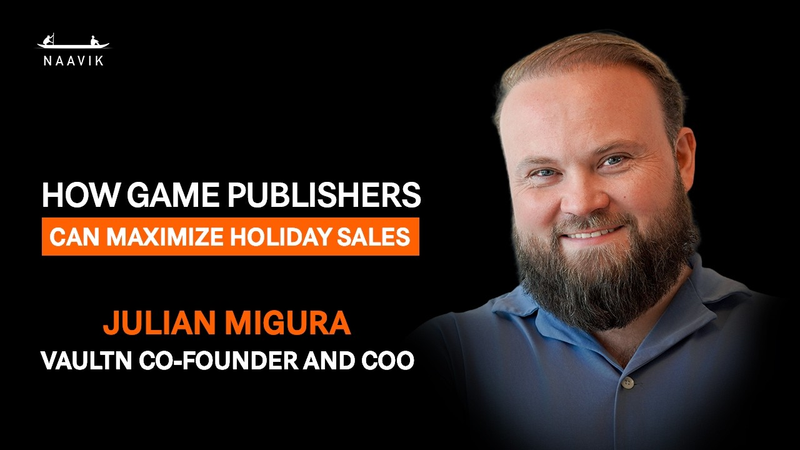
[music]
Welcome to the Naavik Gaming Podcast, where it is our mission to explore the business and future of video games. We bring together the industry's brightest builders, investors, and thinkers to keep a pulse on current events, dissect emerging trends in games, share lessons learned, and have a great time. This podcast is also part of Naavik's growing ecosystem, which ranges from free and premium research to consulting and advisory services. For more information, visit www.naavik.co. This episode is brought to you by AppCharge, the payments platform built specifically for mobile gaming that processes over a billion dollars annually. Their web store and payment links share one gaming-tuned checkout and merchant of record infrastructure, a 96% order success rate, a 0.1% dispute rate versus the industry's 0.83%.
Gaming-specific infrastructure means the most net revenue on every sale. Just ask Product Madness, triple.dot, and many more world-class publishers working with AppCharge. Head to appcharge.com to see how the numbers stack up, or simply check out the link in the show notes. Now, let's jump into today's episode.
Welcome to the Naavik Gaming Podcast. I'm your host, Kayleigh Moore. When you listen to this, we will be officially 2.5 weeks out from Black Friday, which is the biggest week of the year for game sales. And while you, or maybe the gamers in your life, might be asking, "What's going on sale on Steam?", the publishers are asking themselves different kinds of questions long before anyone hits buy. How deep do you discount? Where do you discount first? And how do you avoid burning your price for the rest of the year in a single long weekend? My guest today see those those decisions play out in data. Julian Migueres is the co-founder and CEO of
Valt En, the infrastructure that connects publishers to storefronts selling their games beyond Steam. Take-Two, Microsoft Gaming, Bethesda, all use it. And publishers have received more than a hundred million in royalties through the platform this year. According to Valt En's publishing partner data, close to 40% of a year's game units sell in Q4. Black Friday week alone moves about 15% of those, and the week after Christmas often beats Christmas itself because that's when people finally have the time and the gift money to spend. This year there's a new wrinkle. Valve has stopped restocking physical Steam gift cards. So, the easiest way for a grandparent to gift a game has disappeared from short from store shelves. Today, we're going to talk about how publishers should plan for that holiday window, where third-party sales fit alongside Steam, and the new places players are starting to buy. Julian, welcome to the podcast.
Hi Kelly, thank you for having me.
All right, I want to talk a little bit
about your background before we dive into Black Friday best practices. You spent years in Brazil and Latin America in games payments, and you helped bring Steam to the region. What did watching players try to pay for games there teach you about where sales actually get lost?
Yeah, exactly. Uh I started to work in the games industry about 20 years ago, and I think about 15 years or so ago, I started working on the the payment side, and um we noticed that this was a big issue. Uh I actually worked in publishing before, uh where we had the same uh troubling problems of getting users to convert in Latin America. And what we see here is basically that in markets with limited accessibility, which Brazil and Latin America is certainly one of those, um most of the sales happen essentially at the checkout, not as discovery. That means that if you don't have the ability to charge a user um there is uh like you have a lack of the local payment methods
that you support, or you don't have pricing in local currency, uh then there's a very high risk that you will not convert the demand that is there. So, the demand is there, it's always there, it's always been there, and people will get excited. There was a large number of Brazilians who learned Korean just in order to play the first MMOs when they were released in Korea. So, there was a big community there playing a game that was solely available in Korean at the time. Um so, the demand was definitely there and is definitely there. Um and it was never the problem. The players want to play the game. Yeah, but you're essentially losing them at the time that they're locking in the spend, so to say, and that is simply because they have no ability to buy.
Got it. So, I want to hear a little bit more about Valt and just for background before we dive into things. So, I know that Valt and solves PC distribution at scale. Can you walk me through what that actually means?
Yeah, of course. So, basically,
we're enabling publishers to go to where the players are. So, to be on every shelf, digital shelf for that matter, mostly. Um and in every market. So, find better routes to the players, cut the costs of operating those routes, make it more efficient, make it automatic, and essentially provide an infrastructure that reduces the cost and the risk for publishers to operate with those channels, while keeping full control and real-time visibility. And we can see that that adds 25 to 30% more revenue, more PC revenue globally, and you know, 40 to 50% in specific markets.
Okay. So, now that we have the background, let's dive into the data. So, as I mentioned at the top, you told me close to 40% of a year's unit sell in Q4, and most of that is from basically Black Friday onward. So, when a publisher comes into November, what actually changes about how they make
decisions compared to the rest of the year when it comes to promotions?
Yeah, so basically if you look at uh yeah, Q4 overall like you said it's around 40% of the units that we see move. Actually about a third of all the the year's units move from Black Friday onwards. So you can you can see that that's you know, really really important for anyone hitting their targets and for anyone really making sure that they maximize the opportunity of revenue that they have. What we see and what we recommend is that you know, when November comes around you stop planning on a monthly basis and you essentially plan on a weekly basis because every week behaves differently. And essentially the the season so Black Friday until end of year has kind of four phases and initial low that comes in before Black Friday actually, then the huge spike during Black Friday Cyber Monday time, then kind of a valley where in some areas it keeps performing
over performing significantly during the kind of beginning of of December period. And then obviously a plateau over Christmas and post-Christmas. And each of those phases basically calls for a different kind of game or edition or different discount that you want to provide.
Okay, and then one of the things that you had mentioned that I didn't really expect was that New Year's week often outsells Christmas week. Can you talk to me a little bit about what's going on there and what publishers should think about when they're planning for that week in particular?
Yeah, so first of all maybe what we see on on Black Friday compared to Christmas is that Black Friday is more of a revenue driver. So it's less of a unit driver but more of a revenue driver and Christmas is more of a volume volume driver overall. So that means that and and the weeks in between are one long peak as well. But if you look then
at Christmas and post-Christmas, they behave quite similarly. So they are almost equally strong, but in terms of the revenue the New Year's week yeah can indeed exceed the Christmas week and I think that's basically from what we assume because that's data we don't see but it's basically assumed based on yeah the amount of free time you know gift cards gift money free time all of that arrives essentially after December 24th 25th depending on how you celebrate and that means that then afterwards there is a lot of that potential to to continue to convert sales and to continue to take on the opportunity of more free time. Yeah so what we see is essentially you know Christmas day is not the finish line it's the half time line basically for the opportunity that you have as a publisher.
Okay makes sense but totally unexpected
before you explained it. So one of the things that I've been noticing not specific to games just specific to e-commerce overall is I'm now we're recording this on December sorry November 5th it's coming out a couple days later but I'm already getting ads for Black Friday sales which feels a little bit early this year or maybe I'm just paying a little bit more attention to it because I knew we were speaking about it. I want to hear like So Black Friday is it starting earlier every year when it comes to game sales and is there a sweet spot for how long a sale should run? Like what does it cost you to stretch it out?
Yeah so basically you know a longer sales not necessarily a bigger sale so you're just kind of spreading the same demand thinner over a longer period. So there is yeah it is important I think to to kind of have a sweet spot in mind. And normally we see that that is kind of between 7 to 10 days. It is interesting that Black Friday is actually pretty front loaded. So we do see that
the revenue peak for Black Friday on an average across our network is on Tuesday actually. So on the Tuesday before Black Friday um but then that entire week is extremely strong and it continues until essentially Cyber Monday and actually for Europe in particular well within mid of December.
Got it. And we're going to talk about the regional differences in a couple minutes, but I want to understand a little bit of best practices. Obviously, you work with a lot of publishers. Is there any publisher that you can point to who's gotten this right? And by say it right, meaning who's really just nailed how they're doing holiday sales year after year that you could tell us about?
Yeah, I think what's very interesting to to see and I'm unable to give a specific name for it, but I think what's very important to consider is the what I mentioned this kind of valley that you have after Black Friday. So, to measure and set up the the discounts in a right way
that you stagger them correctly and that you enable to utilize in the right regions those uh yeah, boosting opportunities where even post Black Friday you can still that still essentially exceed in the sales that you have and and be significantly stronger than on an average week. Uh we see that on in general six of seven uh six out of seven retailers that we have on the network at least double the revenue in Black Friday week. So, it's very very important to the channels just as much as it is to the publishers.
Wow. Okay, let's talk about some pricing mistakes. Cuz to me this is probably one of the trickiest trickiest parts, but once again, this is not the world where I'm an expert in any way. But, you know, I when we've spoken before, you've told me that a common mistake that you see is discounting too deep on Black Friday.
Like, why does that hurt more than people think, especially now that players are tracking so easily historical lows through wish list and price trackers?
Yeah, exactly. So, you've answered I think your own question. So, the the the demand is there, right? So, you don't need to buy that demand with the price. The demand is there on Black Friday, especially people are expecting to spend money. Um [snorts] Yeah, so ultimately what is a big risk is that as you said a lot of players, especially those that are more price sensitive, so that you're looking to attract during Black Friday will have a wish list or will have you know a price tracker. And if that price tracker records your historic low, it's a permanent recording, right? And it will So, every deep cut that you do will reset the price that players will wait for and will value the game at. So, you know, essentially Black Friday um can sell more at a smaller average discount than a regular week. Um yeah, so so you know, in in general we recommend this to be staggered
and maybe even to be staggered across different editions. So, you don't need to discount all editions at all times. Um if you look at the yeah, Black Friday and the the willingness of people to spend more money um on a per unit basis than during the Christmas period, uh you know, something that could be working well is let's say you run your first discount on a on a premium game on on your you know, recent release that you start by only discounting the premium edition. So, let's say you give 10% off, but only of the premium edition on Black Friday. So, the standard edition still says stays at full price. So, the historic low stays untouched. And then during Christmas or the Steam Winter Sale, you go let's say 50% off of both editions. So, that will give you the opportunity to convert some players on the discounted premium edition who end up actually spending more money on the product than than otherwise. And this is by the way not specific to gaming. This follows kind of FMCG best
practice anyway. So, you know, you always promote the premium pack first and keep the cuts relatively shallow and infrequent. And then you kind of go down over price to over over time so that you protect the core price uh players uh will anchor on for the for the perception of your game. Um and if you've already given discounts, then it follows the same, right? So, if your best discount so far was 20%, let's say you can look at giving a few points off, so I don't know, 25% for Black Friday, and then do some more specific region locked or region specific discounts um in other markets where they may not be as uh yeah, it may not be perceived as a lower uh price or lower value for the entire product globally. And then you want to bring the price uh the full price back in the valley. So, after Black Friday ends, you want to bring uh
the price back to to full price until you go back to discount in the Christmas or winter sale period.
Okay, so I mean, it makes total sense staggering like kind of products, but what about staggering sales across different channels? What does that look like?
Yeah, so basically, uh you have the ability to uh to stagger essentially on and off platforms. Um so, if you look at Steam, for example, Steam obviously runs its own campaigns, and those campaigns are quite uh quite popular and work very well, but they only run at specific times, and uh if I'm not mistaken, the the sales now, autumn sales was already in October this year, and then the winter sale starts after, so I I'm not sure what exactly the Steam will run by itself as a Black Friday um campaign, or if it leaves it if they leave it purely to the publishers themselves. Um but ultimately, the the
um yeah, there there is so many different local events that uh you can utilize with this. So, if we look at today, for example, uh let's say you have India uh on your target list. There's Diwali coming up on November 8th. So, it would be logical to run a specific discount now. Then there's Singles' Day in China, which is coming on November 11th, which is significantly bigger than Black Friday. So, this helps you also front-load into the kind of dip that comes before Black Friday when all gamers in at least the northwest of the world are waiting for Black Friday to start. Um there's also Buen Fin in in Mexico, which is on November 13th. So, all of this kind of helps um and uh enables you to move some of the uh the setup and basically uh yeah, you can do some uh some discounting um
in those markets, but definitely do not discount globally to match what you're doing in China because you would have then have essentially cut yourself or deprive yourself of the opportunity to be perceived the first time uh discount or, you know, a a big cut, so to speak, from a from a gamer's perspective during the Black Friday period of time. So, there there are, you know, tons of those realities to to consider as well. And we recommend having uh a uh yeah, not using a one-size-fits-all global discounting uh setup, but essentially uh staggering those uh yeah, on a step-by-step basis within the different markets that are relevant to you.
I would love to hear from your perspective maybe some vault in data of how Singles' Day in China obviously compares to Black Friday sales, both in terms of unit and revenue.
Yeah, of course. So, Singles' Day is basically China's Black Friday, so it's
uh two and two and a half times a normal China week, if you want, in terms of sales. So, and Black Friday, by the way, itself barely registers in China. So, it's not really relevant. Um and uh if we compare let's say first of all China with China, uh it's a very relevant time. It's like the strongest opportunity that you have. Um but obviously the average unit price that you sell at in China is significantly lower than what you would sell uh the same game at in the US or in Europe. Um so comparing them, you know, one by one doesn't really make sense. China will usually outperform any other individual markets in number of units sold. Um also and in particular in third party for the reason that Steam is much less accessible. Um but even on a global basis it is like China is now the biggest PC market. So, you know, it is the biggest opportunity for you to sell uh to consumer. Um yeah, but
basically if we look at uh at the West, um Europe for example, like as I mentioned briefly before stays strong through all of September. So, if I look just at Europe, it's 1.4x sales even after Black Friday of a normal week. And uh for example, it's 4 or 5x the just the days before Christmas. So, it goes up significantly. In the US, uh the revenue peaks during Black Friday and Cyber Monday week and then drops actually to a less than normal week after. So, there's more uh yeah, more revenue essentially front-loaded in the US or in North America. Um and uh in Europe there's also a sales increase. It's slightly less prevalent during Black Friday, but it then stays on longer. Um so all in all you have uh kind of a same or almost equal uh equal set of sales if you look at Black Friday until the end of the week uh end of the year.
I also know that in Europe gifting happens on different days as well, right? Netherlands, I think you guys do it December 5th. Spain Three Kings' Day happens in January. I think Orthodox Christmas falls in January, too. Does this change how publishers approach sales in in Europe?
Yes, and uh it at least it should. And uh it does from a user standpoint and from a consumer standpoint and from when they when they spend money. What's interesting to see is that we don't really see strong spikes on Sinterklaas here, which is December 5th in the Netherlands. So, those are most likely bought earlier, probably during Black Friday discount knowing that it will likely fade out after. Um but in Germany, for example, early December holds at almost 2x of a normal a normal week even if pricing goes back to to normal. So, that's why you know, it's very important that post
Cyber Monday, basically, you go back to the regular price point as soon as possible because you will be able to grab some gifters that are preparing for In Germany, it's called Nikolaus, but basically what whatever the equivalent of that is as best as possible. And we've also seen that the days before Three Kings, so the like early days in January, perform extremely well as well. Um but yeah, they they are the those gifts are also not bought on the day itself. So, they are bought a day or a few days in advance, usually, which means that you can kind of fade out your campaigns, at least from the focus for Europe, um pre or during the Three Kings holiday. Um and then obviously you have yeah, Orthodox Christmas. Uh and so on and so forth. For Japan, for example, there's a lot of New Year gift money, basically, and that largely goes into
gaming. Um so again, it makes sense to keep the seasonal sales running into January. Um so in Japan, probably even longer than January 4th, 5th. Um and either way then if you look at at at China again, you know, past New Year is kind of pre-New Year cuz you have Lunar New Year in there. So, you're essentially preparing the next sale already. So, there's always a lot of opportunities and it's very important to understand uh you know, the different local gifting dates and the different local consumer behavior. Um there's for example also on the 12th of the 12th uh so, it's kind of like a copy of 11th of the 11th, so the single day. There's a 12th of the 12th with the Chinese invented, but it's not relevant in China, but it became very relevant in Southeast Asia for example. So, again, different opportunities that uh are very worthwhile knowing and if those markets are relevant um you know, either as a market where you're saying I'm not expecting much revenue, but I want to move some product
to get some fans, then that's a great opportunity to locally discount extremely steeply just to get units moved through um and otherwise, yeah, it's definitely something that uh we recommend utilizing if those markets are relevant.
Awesome. I want to shift gears slightly and talk about third-party distribution channels versus Steam. So, I know that you've previously said that publishers used to get around 8 to 10% of their PC revenue through third-party channels and Valve and has pushed that closer to 25%. I want to hear a little bit about what has shifted and why some publishers are still leaving that money on the table.
Yeah, of course. So, I think uh you know, the the if you look at the origins of of distribution and the origins of how uh the market worked before there was a Steam, uh it was already a similar setup, right? So, you had different partners in different regions and they uh assigned you different shelf space and made sure that people would be
entering their stores in order to to sell units. This is obviously in the physical days. Um then everything changed and uh obviously the team at Valve did a phenomenal job setting up Steam and building it out with all of the feature sets that it have, which is why ultimately every gamer, you know, including myself loves to use the the the platform. Um but uh there's obviously it's very important essentially to not avoid third-party channels because that demand uh then goes missing. And this is what happened to the to a lot of the publishers basically. So, they didn't avoid third-party channels because there wasn't any demand there. They avoided them because there wasn't any control. So, it felt a bit like a wild west and the the reason for that was essentially people were outsourcing all of these works to a third-party to some distributor or you know partner that would operate this. So, rather than because it's a very complex market. And
when you do that, yeah, okay, you outsource the complexity, which is great. You don't have to deal with it. But when you outsource the complexity, you also lose the control. And what we've seen, you know, what changed essentially is that we're bringing back this control and we're enabling publishers to essentially see every partner, see every key, see every sale in real time, you know, understand what authorized channels are operating under, automate all of that, and by that also obviously reducing or close to eliminating any gray market leakage risk. Um Yeah, and the vision for us is essentially, as I mentioned before, is to enable every shelf where the players already are at the lowest cost of doing business. So, for the publisher, you know, if you look at Bethesda for example, they're now deploying 80% less resources to third-party than they did in the past, but they've tripled their revenue in third-party. And the reason
is essentially that you have all of these channels available, they're all connected, and you operate them all with a standardized set of rules that you apply, and everything else is automated. So, you don't have to deal you know, in the past you had to send emails with an Excel file with keys, and then another email with the with an Excel file with your current promotions, and another email with an Excel file with your price list, and so on and so forth, and there was no visibility of what happened, how and why. And yeah, this this changed a lot basically with with the tooling that we made available for publishers.
Okay, and then for third-party distribution, do you have a little bit more flexibility when it comes to sales? Like I know that Steam and some other platforms, they limit how many discount days you can run off platform compared to on it. Do you have more freedom when it comes to third-party distribution? How do you balance that and also like how do you respect those rules and also not step on Steam's own, you know,
sales?
You know, ultimately, Steam and the third-party channels are not really competing calendars. Like if you plan them well, they actually fill each other's gaps well, and you can enable for different sets of consumers to be finding an attractive offer at different times. You know, Steam killed keys sold elsewhere should not leave Steam consumers with a worse deal. So, that's basically what's totally understandable as well, because if you, you know, continuously do that, then uh Valve is essentially running all of your setup for free. So, that's obviously not in their in their intention, either. If we look at these the sales now, basically, yeah, Steam's autumn sale, as I mentioned, has moved to October. So, Black Friday is now much more of a third-party opportunity where as far as I understand, there's no specific Steam discount. And then, there
is a Steam winter sale coming, but that's in mid-December. And that one probably makes sense to to because it's a seasonal sale, they're exempt from the discount gap. There is the opportunity essentially to to go with the same kind of cut that you do on Steam, also off Steam.
Got it. Oh, I do want to ask one more question when it comes to third-party distribution, because there is there is a little bit of risk still. Like one of the things that you know, we've talked about, I've heard of before, some partners who are stocking up on discounted keys, and then they can resell them after the promo ends. I want to hear a little bit about what this looks like from the inside. How can a publisher tell which partners are actually selling to players and, you know, how how you think about this from a Vault end perspective also?
Yeah, I think if you look for, you know, orders that are really out-pacing the run rate of that you would expect from a promotion, that's something that you can take a look at and see it essentially in real time. You can also work on that by
only allocating a certain set of inventory to a specific channel. So, telling them that, you know, I'm going to give you this promotion but only for X thousand units or I'm only assigning you an inventory of X thousand units. Um and then anything beyond that you will continue to sell at full price. Um you you will normally also understand that from your historic dealings with those channels. Um but the most important and most reliable opportunities essentially to check it against the activations. So, if you match the sales date and the sales, you know, country of sale that's reported and so on against the activation date of the channel, um which is relatively easily doable in combination of what Steam works offer and what we offer, then uh there is very it's very obvious if there is uh any, for example, we call them those power buyers. If there's a power buyer coming to a specific channel, um
you know, and trying to to win an arbitrage opportunity where they say that, "Hey, great. If I buy, you know, 10 units of this game here, I can then sell nine of those on a different channel uh and make a few bucks of uh of profit myself." And that's obviously what you want to avoid because you want to make sure that you sell to consumers and not to um yeah, businesses disguised as consumers.
Of course. Okay, something big has happened this year that might drastically change both Black Friday and the gifting season and I'd love to hear your perspective. So, Valve announced in June that it's no longer restocking physical Steam gift cards and expects retail stock to run out by the end of this year. What does this mean for holiday season for all of the grandmas out there who no longer can buy this physical card? Like what do you see as filling the gap? Do you think this will have major impact on the industry?
I believe it will. So I mean there's still digital gift cards and there's still the the ability to do Steam like
gifting on Steam of course, but as a gifter you have to understand what Steam is and how it works, right? So if you if you take my grandmas as an example, she would probably not have any idea of what Steam is or that it exists. So that means that the gift budget that she has available is still there, but it you know, it so will not disappear, but the gift card will disappear. So that means that there's a big opportunity here for publishers to make it easy to gift the games. And um yeah, I think essentially, you know, retail and gift card distributors and and and marketplaces uh with authorized game codes can essentially fill that gap and enable an easy access. Um you know, they can ask their depending on how uh advanced they are, but you know, they can they can ask their AI chat or they can Google or ask a friend where they can buy the game and somebody will enable them. I think
especially if it's a kind of a generalist that already has uh you know, strong trust and and and and people have an account with or have had an account with maybe not for gaming specifically, but for something else, then that would be a big opportunity uh on the gifting side to step in.
And have you been having these conversations? I mean with publishers or with distributors? Like is this something that's being chatted about of what's going to happen this year without without these physical cards?
Yeah, I mean, you know, ultimately the gifters are not gamers. So they don't know the platforms, they don't know how regions work, how accounts work, or you know, what any of this is. So, uh yeah, it's it's it's very helpful uh if you can make it very, very simple to purchase and obtain the key in a way that it's easily giftable. Um but that also means that, you know, there needs to be an authorized supply,
you need to have good fraud controls in place, and you need to ensure that you have a almost instant delivery basically on this. Otherwise, you're going to confuse the poor grandma in our example here, uh who's trying to to to buy. So, you know, they like your grandmother shouldn't need a Steam account or understand what Steam is in order to to buy a game. Uh if you have that requirement, then it's very likely that you're going to lose that gift budget and it'll go somewhere else. Um and, you know, those pockets are are quite relevant uh in terms of the overall opportunity for the games industry to grow.
So, just as I would say gift cards are are transforming, right? I think another area that we're seeing things transform is where players are buying also. So, I think historically it's been on a PC a publisher pays for an ad that sends a player to Steam. They hope they convert. There's some good ways to track it, but I don't think it's
perfect. I've heard you talk about selling on channels where the player already is is the future. Would you walk me through what that looks like? Where will players buy in the future?
Yeah, so, you know, what what our mantra is essentially is to stop sending the players to a store or the store, but to bring the store to the player. So, players are everywhere and you know, obviously Steam is and will probably forever be the biggest store if you look at PC games. Um there is a ton of players there and they will continue to go there, but there's a ton of players that don't go to Steam or at least the Steam store every day maybe. So, if you look at those uh all of those players, we see that the channels with a gaming intent or intent, you know, buying intent gamers, uh, reach almost five or over five times actually Steam's monthly store visits. Uh, now again, they're obviously of a slightly different quality, but it's five times the opportunity essentially. And those are existing stores, those are communities, those are marketplaces,
those are generalist, social media channels, you know, payment apps. All of those people have the ability to understand who their player is and to offer them the ability to, uh, purchase a game when it's a relevant moment, which is important cuz they can understand, uh, the intent. Uh, you know, let's say I'm on a social media app and I'm talking to you about, you know, playing a game together and you say, "I don't have this game." That would be a perfect moment to say, "Hey, would you like to buy the game? By the way, it's now 5% off, you know, because you're Kaylee and you're cool." So, there there's a lot of ways to enable this. Um, and those ways are a lot more efficient than, you know, sending you an ad and then trying to move you onto some other channel that you may or may not be aware of and then hope that you convert there.
Um, I also, I hope this isn't too much of like a noob question, but, you know, I want to talk about general marketplaces, like the Amazons of the world, who have huge audiences, probably a huge audience of people who consider
themselves to be gamers, but for the most part you can't buy digital PC games there. Like, what Why not? And do you think that's going to change?
Uh, I think there's definitely a very big opportunity for that to change. Yes, and, uh, the the why is mostly Most of the major marketplaces bar any third-party sellers from selling activation codes. Um, and the reason there is that they're very difficult to track, but there's it's hard to understand if they're the real owners, if it's actually an authorized reseller, and so on and so forth. So, what is missing essentially is an authorized supply, a clear fraud control, and an instant delivery. And, uh, yeah, our infrastructure or in general infrastructure can make this simple for a generous source uh, to sell games and you know we we see that there are hundreds of millions of yeah shoppers that basically call themselves gamers as you said. They just cannot buy a game where they shop. So it it would make a lot of sense to enable those opportunities
and again if you look at let's say my my granny gifting then Amazon would probably be a very easy route for her to understand or similar general shops that she would already go to digitally or physically depending on how they're set up.
Well maybe we'll be having a very different conversation next year on ahead of Black Friday. Let's see how adoption goes. So before we close as we've mentioned we're a couple weeks out from Black Friday. If there is a publisher listening in right now can they still change one thing this month? Is it too late and then if it's not what would that one thing be?
Yeah so basically don't stagger your discounts and don't set a new low everywhere on uh November 27th basically but open your promotions on on Monday November 23rd so that you also hit the Tuesday which is usually the highest revenue as I mentioned and keep a deeper cut for the Steam and on and off Steam winter and Christmas
sales.
That's perfect. Okay I know we touched on this above but I would still love your big bold prediction. If we're going to sit down again next November what would look different about how games sell over the holidays?
I think there will be more holiday revenue occurring outside of Steam. There will be more gifting of full games through marketplaces and everyday stores and I think January will be treated as a peak. Yeah and there will be price setting on a per region and per channel basis. So yeah the the the question I think will be less what is on sale on Steam. It will be more where else players can buy.
Perfect. Okay and then for my final question where can publishers find you and Volt in?
Uh you can find us on voltain.com obviously. Uh we're also on LinkedIn and uh attending most of the major industry events. So, GDC, Gamescom, Tokyo Game
Show, and so on. You name it. So, we're very happy to have a chat there.
We'll make sure to link everything in the show notes. Julian, thank you so much for joining us on the Navic podcast and happy Black Friday sales.
Thank you very much for having me.
If you enjoyed today's episode, whether on YouTube or your favorite podcast app, make sure to like, subscribe, comment, or give a five-star review. And if you want to reach out or provide feedback, shoot us a note at [email protected] or find us on Twitter and LinkedIn. Plus, if you want to learn more about what Navic has to offer, make sure to check out our website www.navic.co. There, you can sign up for the number one games industry newsletter, Navic Digest, or contact us to learn about our wide-ranging consulting and advisory services. Again, that is www.navic.co. Thanks for listening and we'll catch you in the next episode.
Each row is a game or company this document names, each column a document, oldest first. A mark means that document names it. Select a row to see those documents.

Naavik · 2026

Naavik · 2026

Naavik · 2026

Naavik · 2026
Naavik · 2026

Naavik · 2026

Naavik · 2026

Naavik · 2026

Naavik · 2026

Naavik · 2026

Naavik · 2026

Naavik · 2026
The Game Business · 2026