1 free read left. Create a free account for unlimited reading + AI research.
Create free accountWhitepaper DiGRA
1 free read left. Create a free account for unlimited reading + AI research.
Create free accountWhitepaperDiGRA
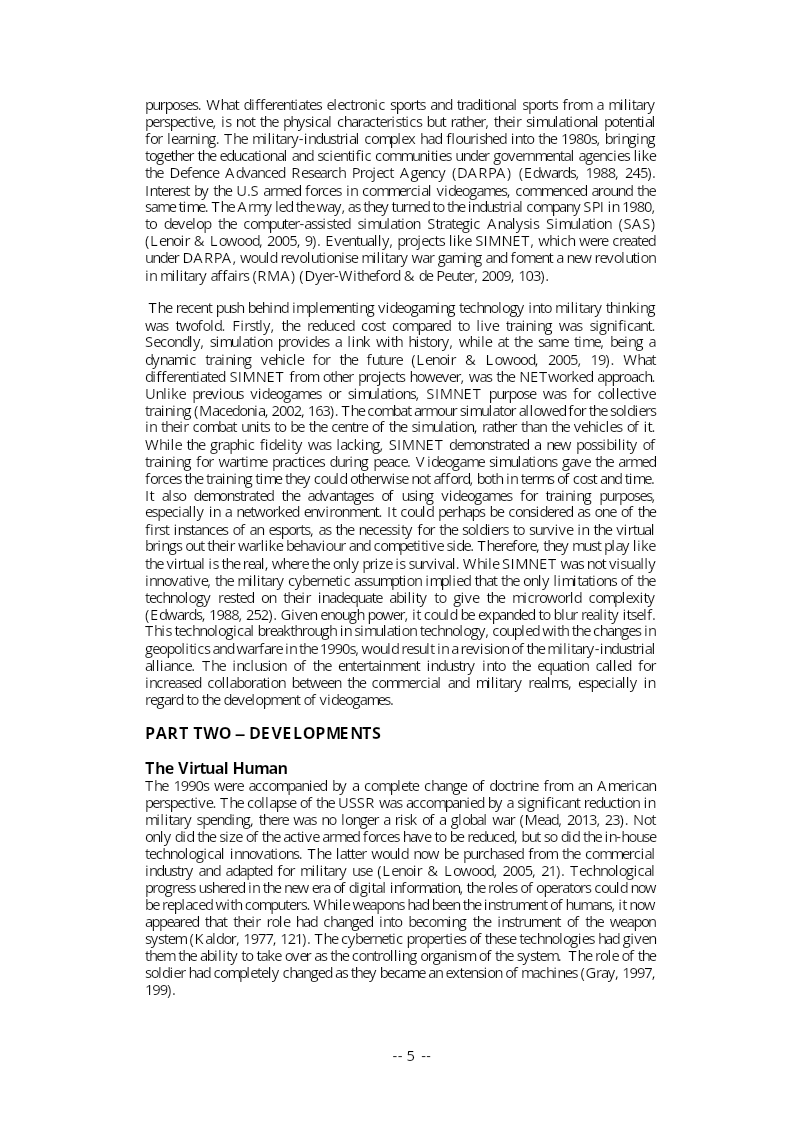
The report treats the industry's origins in the Cold War military-industrial complex as essential context. It also notes the conservative, male-dominated character of the workforce.
"Thanatogaming: Death, Videogames, and the Biopolitical State" argues that death can operate as a form of resistance to biopower, and that videogames, though themselves instruments of biopolitical governance, can become spaces where this resistance is performed. Drawing on Foucault's notion of meletē thanatou and Murray's concept of "thanatopolitics," the work contends that both the videogame industry and contemporary governance have shifted from managing individual bodies toward managing collective ones. The analysis situates the industry's roots in the Cold War military-industrial complex and notes the conservative, male-dominated character of its workforce, framing these origins as essential context for understanding how games organize power.
The study traces how the industry has built networked legal, technical, and economic control over its products. Nintendo's 10NES lockout chip and the Tengen lawsuit illustrate early mechanisms of proprietary control, while the World of Warcraft gold-farming case demonstrates how developers exercise a quasi-sovereign, "virtual biopower" over player economies and behavior inside massively multiplayer online games. Within this framework, death emerges as a core procedural concept. Titles such as September 12 and Limbo show that the mechanics of failure can carry social critique and shape how players come to understand mortality and consequence.
Comparative case studies sharpen these claims. Limbo-style and X-COM-style consequences, along with permadeath, are contrasted to show how different designs assign meaning to player death. The 2005 World of Warcraft "Gnome March" protest, in which players accepted account bans to resist Blizzard's authority, is presented as a clear instance of death-adjacent resistance to corporate control. America's Army and Joseph DeLappe's "Dead-in-Iraq" project are analyzed to highlight the gap between the game's realistic production values and its low-stakes death mechanic, arguing that in-game deaths can prompt reflection on real military casualties. The author concludes that procedural rhetoric makes games an effective medium for critiquing biopower, even as the industry's expanding control over virtual economies raises new thanatopolitical concerns. The closing argument extends this reasoning to Diablo III's real-money auction house, which blurs the boundaries between player and worker and between customer and subject, and proposes that games render death manageable, shifting the self-to-self relationship toward a self-to-virtual-self one.
DiGRA · 2023