Diablo III
2 documents in the library are about Diablo III, from writers such as Extra Credits and Quantic Foundry, the newest from 2016. Each has a summary and key insights with the page they come from.

Diablo III is the third installment in Blizzard's franchise. The game, like its predecessors, is a dungeon crawler in which the player fights against hordes of enemies ranging from beasts and undead to actual demons. The game has four acts, two game modes (normal and hardcore) as well as four difficulty levels: Normal, Nightmare, Hell and Inferno. A new addition to Diablo III is the auction house, where items are exchanged for in-game gold or real money, also usable to purchase Blizzard merchandise. The game features a wide array of achievements earned upon meeting certain requirements.
- Released
- May 15, 2012
- Developer
- Blizzard Entertainment
- Publisher
- Square Enix
- Genres
- Role-playing (RPG), Hack and slash/Beat 'em up, Adventure
- Platforms
- PlayStation 3, PlayStation 4, PC (Microsoft Windows), Mac, Xbox 360, Xbox One
- Links
- Official site, Wikipedia
Game data from IGDB.com
Documents about Diablo III
The Surprising Profile of Idle Clicker Gamers
Idle clicker games, often perceived as simplistic experiences for casual audiences, actually attract a demographic profile that mirrors the broader core gaming population.
- Idle clicker games attract a core gamer audience, with titles like Clicker Heroes ranking in the top 2% of most-played games on Steam, often outperforming major titles like Counter-Strike.
- The primary psychological drivers for idle clicker players are Completion and Power, while they score lowest on motivations related to Excitement and Fantasy.
- Idle clickers succeed by isolating and distilling the core progression and accumulation mechanics found in AAA RPGs and MMOs, stripping away secondary elements like narrative and complex combat.
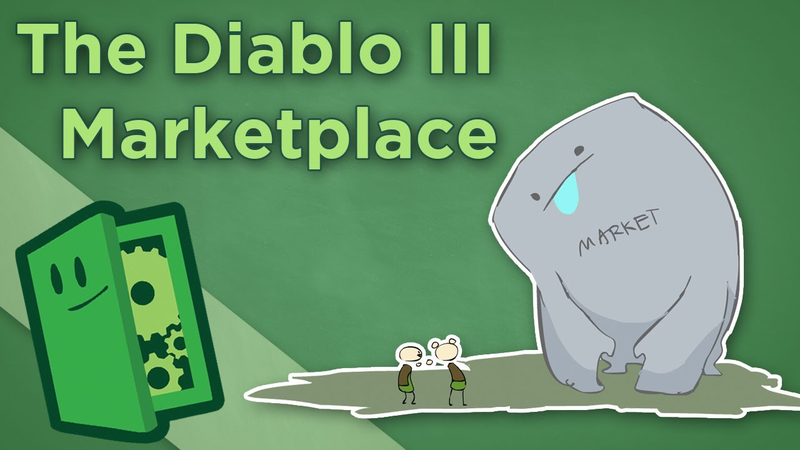
The Diablo III Marketplace - Economy Design in Games - Extra Credits
The introduction of a real-money marketplace in Diablo III represents a significant shift in game industry business models, moving beyond traditional retail sales toward sustainable, player-driven revenue streams.
- The Diablo III real-money marketplace shifts the business model from one-time retail sales to a sustainable, player-driven revenue stream that reduces the need for constant new content production.
- By formalizing the global gray market for virtual goods—an industry estimated to reach hundreds of millions of dollars annually—developers can capture significant revenue through transaction fees.
- The implementation of a real-money marketplace necessitates a persistent internet connection to ensure transaction security, a trade-off that sacrifices potential sales in regions with limited connectivity for projected transaction fee revenue exceeding tens of millions of dollars.