1 free read left. Create a free account for unlimited reading + AI research.
Create free accountArticle DiGRA
1 free read left. Create a free account for unlimited reading + AI research.
Create free accountArticleDiGRA
This paper offers a critical reading of board games that depict European settler colonialism in Anglo-America, examining how their maps are constructed and how players are invited to animate them through play. The authors argue that game maps function like geoglyphs: they achieve coherence only when viewed from a distance and dissolve into incoherence under close inspection. Drawing on critical cartography, postcolonial theory, and existing video game scholarship, the paper develops a parallel analytical framework suited to board games, whose materiality, player configurations, and cultural role differ from digital media.
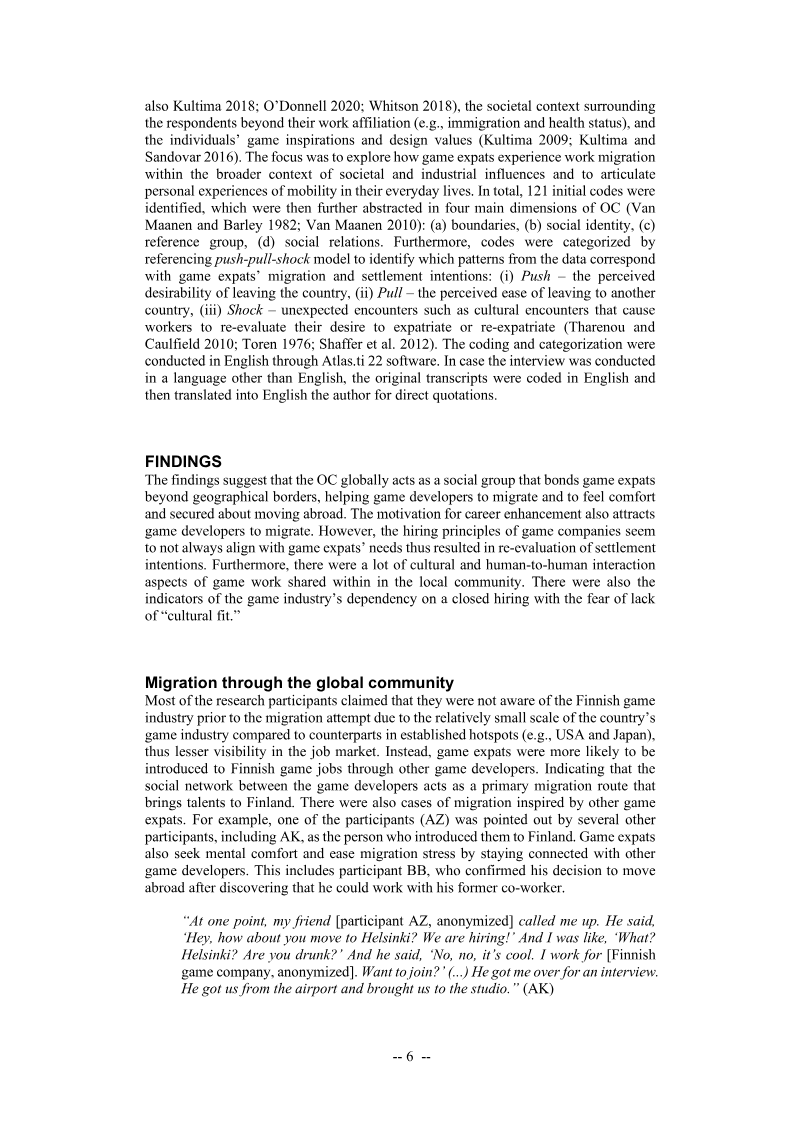
The analysis is built on a critical lexicon of recurring patterns the authors identified across their collection of more than two hundred colonialist-themed board games, of which over a hundred were played and analyzed. The patterns progress in a rough sequence: east-to-west "filling in" of the map in line with manifest destiny ideology, movement along geographically predetermined paths toward sites of colonial significance, zone enclosure and tile-racing to claim land and resources, rail lines marking the completion of continental connection, and an optimization phase in which expansion gives way to the west-to-east extraction of resources. The authors also identify a "palimpsest" pattern in which maps typically present an empty pre-colonial landscape, which they argue reinforces the terra nullius myth and renders Indigenous presence invisible.
The paper concludes that the design and repeated enactment of these games reinforce the perspective of a hegemonic occupier, inviting players to "see like a state" and to participate in the ongoing maintenance of settler colonial mythology. The scope is primarily North American, with the authors defining the region as the area north of Mexico, and the study is qualitative and interpretive rather than statistical.
DiGRA · 2023
DiGRA · 2023

DiGRA · 2023
DiGRA · 2023
DiGRA · 2023
DiGRA · 2023
DiGRA · 2023
DiGRA · 2023



DiGRA · 2023
DiGRA · 2023
DiGRA · 2023
DiGRA · 2023
DiGRA · 2014