
ArticleSuperJoost
PlayStation‑flation: Sony's Pricey Play for a Changed Game
12 Sept 2024~8 min full read
This analysis examines Sony’s evolving hardware and software strategies as the current console cycle matures, specifically focusing on the launch of the PlayStation 5 Pro and the challenges of cross-platform publishing. The primary thesis suggests that Sony is transitioning toward a "luxury gaming" model to maintain profit margins. By pricing the PS5 Pro at a 40-50% premium over the base model, Sony is targeting a limited but loyal enthusiast base rather than attempting to expand the total addressable market, which has seen stagnating growth and downward-revised sales forecasts.
The scope of the assessment covers the global console market in 2024, with specific data points regarding hardware pricing, sales projections, and recent software performance. Key statistics include an estimated 1.3 million launch window units for the PS5 Pro—slightly lower than the PS4 Pro’s 1.7 million in 2016—and the $100 million development loss associated with the failure of the live-service title Concord. These figures illustrate the high-risk nature of Sony’s expansion beyond its traditional "walled garden" into the competitive, price-sensitive world of multi-platform shooters.
Methodologically, the findings draw on market forecasts from Ampere, corporate financial reports from Games Workshop, and industry trends in intellectual property adaptation. Beyond Sony, the analysis highlights the success of Games Workshop’s licensing pivot, noting a 22% increase in licensing revenue to $40.3 million and the rapid sale of 2 million copies of Warhammer 40,000: Space Marine 2. Ultimately, the industry is seen as being in a state of flux where established giants must balance premium hardware loyalty with the volatile demands of live-service audiences and transmedia adaptations.

SuperJoost · 2026

SuperJoost · 2026
SuperJoost · 2026

SuperJoost · 2026

SuperJoost · 2026

SuperJoost · 2026
SuperJoost · 2026

SuperJoost · 2026

SuperJoost · 2026
SuperJoost · 2026

SuperJoost · 2026
SuperJoost · 2026
Newzoo · 2026
Aream & Co · 2026
Take-Two Interactive · 2026
Epyllion · 2026
Newzoo · 2025

Aldora · 2025

Aldora · 2024
Newzoo · 2023

Newzoo · 2023
Ubisoft · 2026
Newzoo · 2026
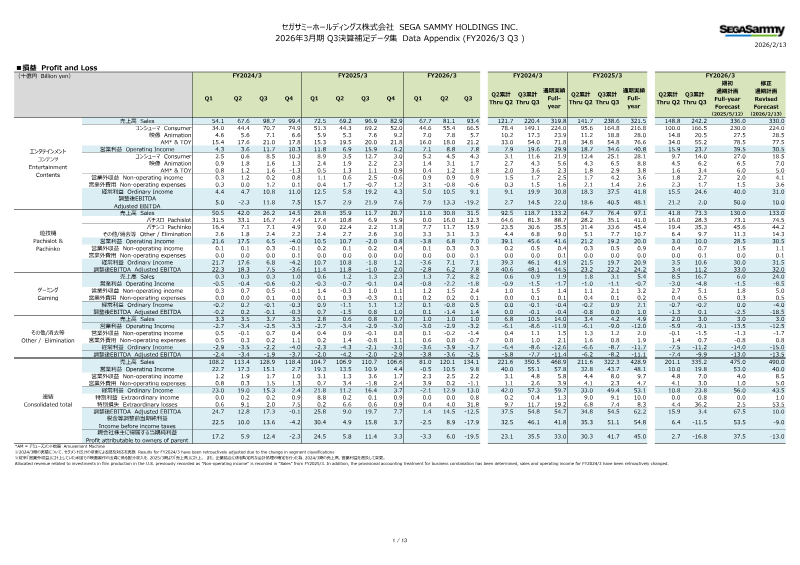
Sega Sammy Holdings · 2026