1 free read left. Create a free account for unlimited reading + AI research.
Create free accountArticle Board Game Studies Journal
1 free read left. Create a free account for unlimited reading + AI research.
Create free accountArticleBoard Game Studies Journal
The paper asks whether these objects were gaming counters, brothel tokens, or something else entirely.
Eddie Duggan's 2017 paper in the Board Game Studies Journal examines the Roman spintriae, small bronze or copper-alloy tokens bearing erotic obverse scenes and Roman numeral reverses, with the central aim of determining whether these objects were gaming counters, brothel tokens, or something else entirely. The inquiry is anchored by a 2010 Thames find that the Museum of London and the press had labeled "brothel tokens," and by Ted Buttrey's 1973 catalogue, which recorded roughly two dozen examples held by the British Museum. Buttrey found that obverse scenes and reverse numerals bear no meaningful relationship to one another, a finding the paper treats as pivotal to any interpretation of the tokens' function.
The paper gives particular attention to the competing theories of use and dating. Buttrey dated the imperial portrait series, which shares dies with the erotic tokens, to approximately 22–37 AD and favored a gaming function, while Simonetta and Riva promoted a brothel explanation and placed production between 70 and 95 AD. Duggan finds the brothel hypothesis weakly supported, observing that a burial at Modena predates the reign of Domitian and that Suetonius's literary account more plausibly reflects the tokens' existence than explains their purpose. He also questions the British Museum's online descriptions of several tokens as depicting male-male couplings, noting that the images themselves do not clearly support such readings.
Duggan's conclusion is that the evidence remains inconclusive. He rejects the argument that the lack of literary or archaeological support for a game function proves its absence, since only a small fraction of classical writing survives. Nonetheless, he judges Fishburn's proposal that spintriae served as bath "locker tokens" to be the most plausible account, chiefly because no sets of multiple spintriae have been recovered alongside dice or game board fragments, which would be expected if they were used in play.
Board Game Studies Journal · 2025
Board Game Studies Journal · 2025
Board Game Studies Journal · 2025
Board Game Studies Journal · 2025
Board Game Studies Journal · 2025
Board Game Studies Journal · 2025
Board Game Studies Journal · 2024
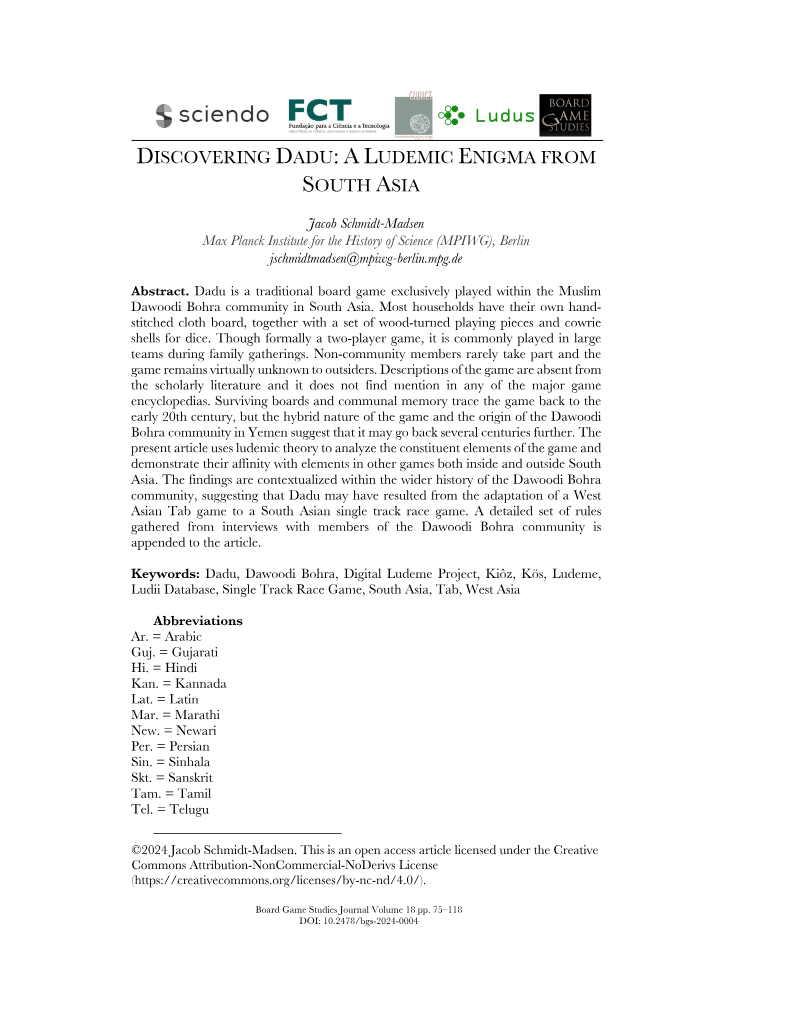
Board Game Studies Journal · 2024
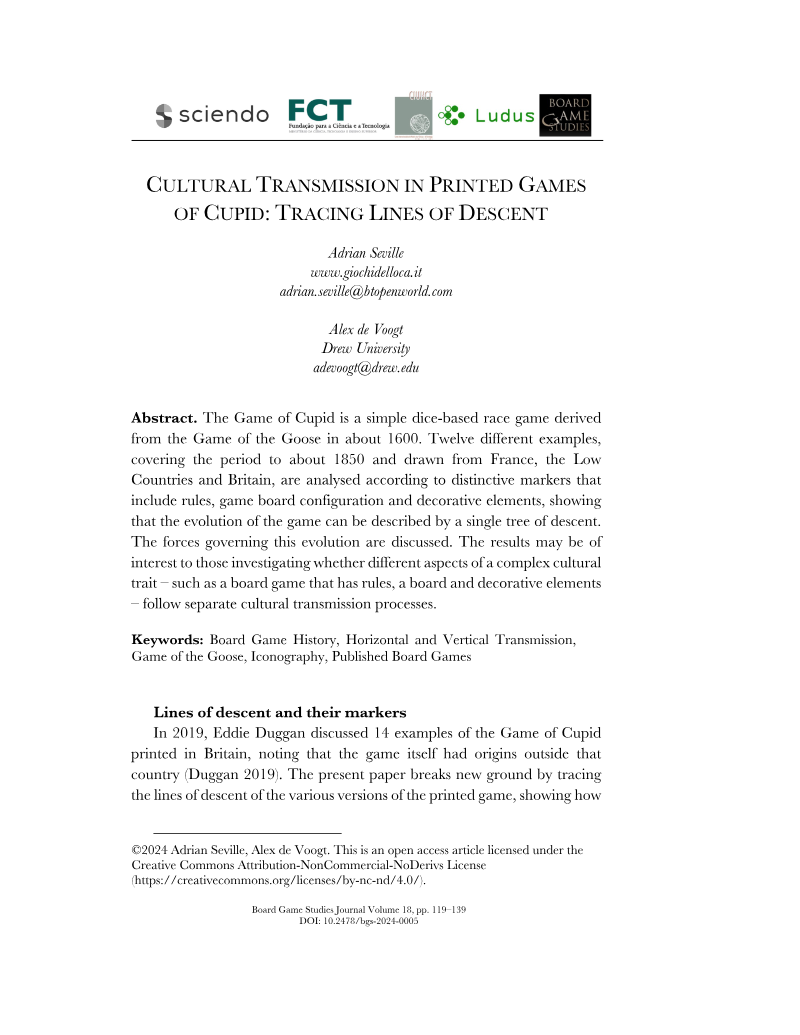
Board Game Studies Journal · 2024
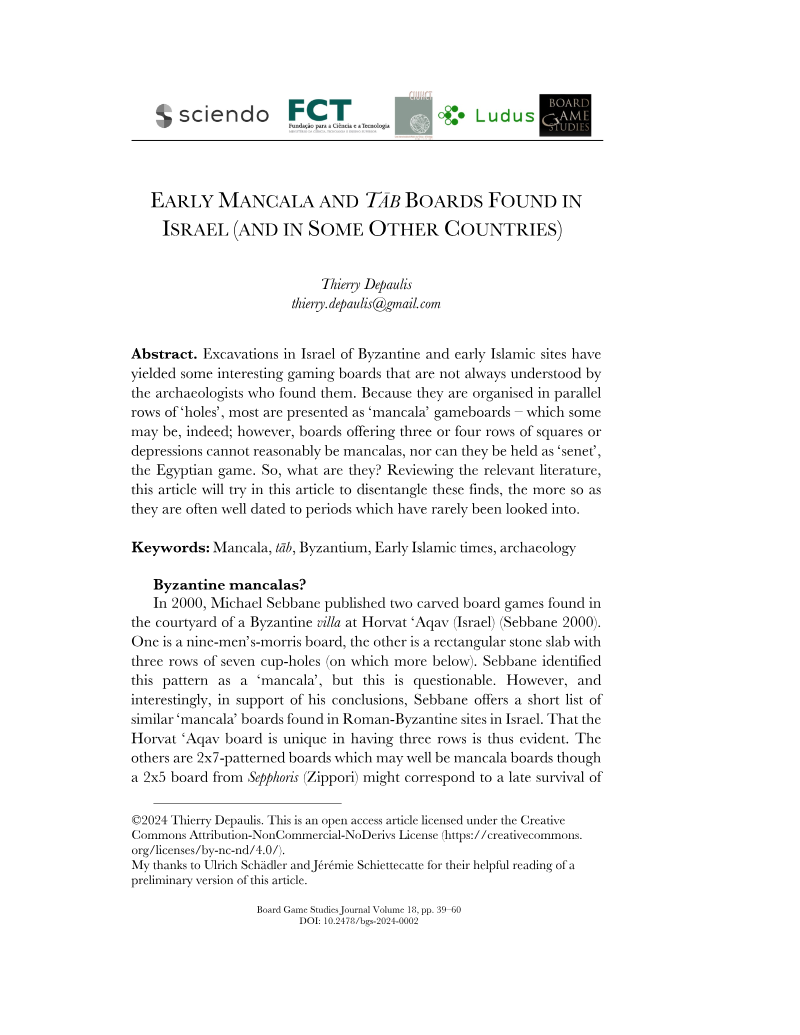
Board Game Studies Journal · 2024
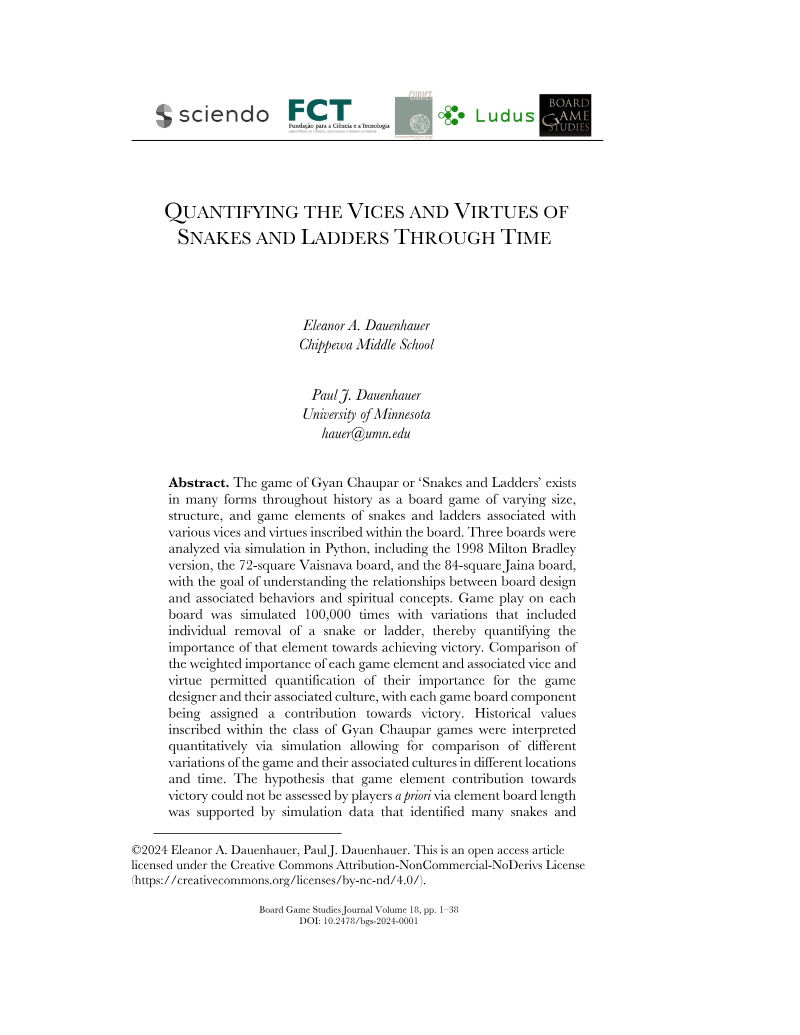
Board Game Studies Journal · 2024
Board Game Studies Journal · 2023
European Conference on Games Based Learning (ECGBL) · 2025