1 free read left. Create a free account for unlimited reading + AI research.
Create free accountArticle Board Game Studies Journal
1 free read left. Create a free account for unlimited reading + AI research.
Create free accountArticleBoard Game Studies Journal
The journal Frei Schach!, organ of the radical Greater Berlin section aligned with Red Sports Unity, used the phrase against middle-class clubs and the social democratic leadership.
This essay examines the relationship between chess, a rule-bound and historically elite pastime, and the concept of freedom, tracing the theme through three episodes of the twentieth century. The first concerns the German workers' chess movement at the end of the Weimar Republic, where the journal Frei Schach!, the organ of the radical Greater Berlin section aligned with Red Sports Unity, used the greeting "Free Chess" as a revolutionary battle cry against both middle-class clubs and the social democratic leadership. The author shows that the same rhetoric was appropriated by rival factions, by the reformist Free Workers' Chess Association, and eventually by the National Socialists, whose suppression ended both working-class chess movements.
The second episode turns to postwar Austrian avant-garde theatre, where Wolfgang Bauer's 1976 adaptation of Ibsen's Ghosts uses an improvised "Free Schach," played with everyday objects and without rules, as a parody of the conventional conversation play. Drawing on Bauer's biography and his earlier real-life performances of the game with Georg Janoska, the analysis treats this absurdist chess as a deconstruction of bourgeois dramatic structure and of Ibsen's modernist claim to truth, while noting the limited durability of Bauer's international influence.
The final section addresses digitalized chess, where the "Free Chess" label reflects global, online accessibility, the democratization of expertise through computer analysis, and the rise of quantified self-monitoring via ELO ratings. The essay weighs this apparent liberation against critiques such as Slavoj Žižek's view that capitalist freedom can be a form of enslavement, ultimately arguing that the game's intellectual and playful appeal persists despite these commercial and technological pressures.
Each row is a game or company this document names, each column a document, oldest first. A mark means that document names it. Select a row to see those documents.
Board Game Studies Journal · 2025
Board Game Studies Journal · 2025
Board Game Studies Journal · 2025
Board Game Studies Journal · 2025
Board Game Studies Journal · 2025
Board Game Studies Journal · 2025
Board Game Studies Journal · 2024
Board Game Studies Journal · 2024
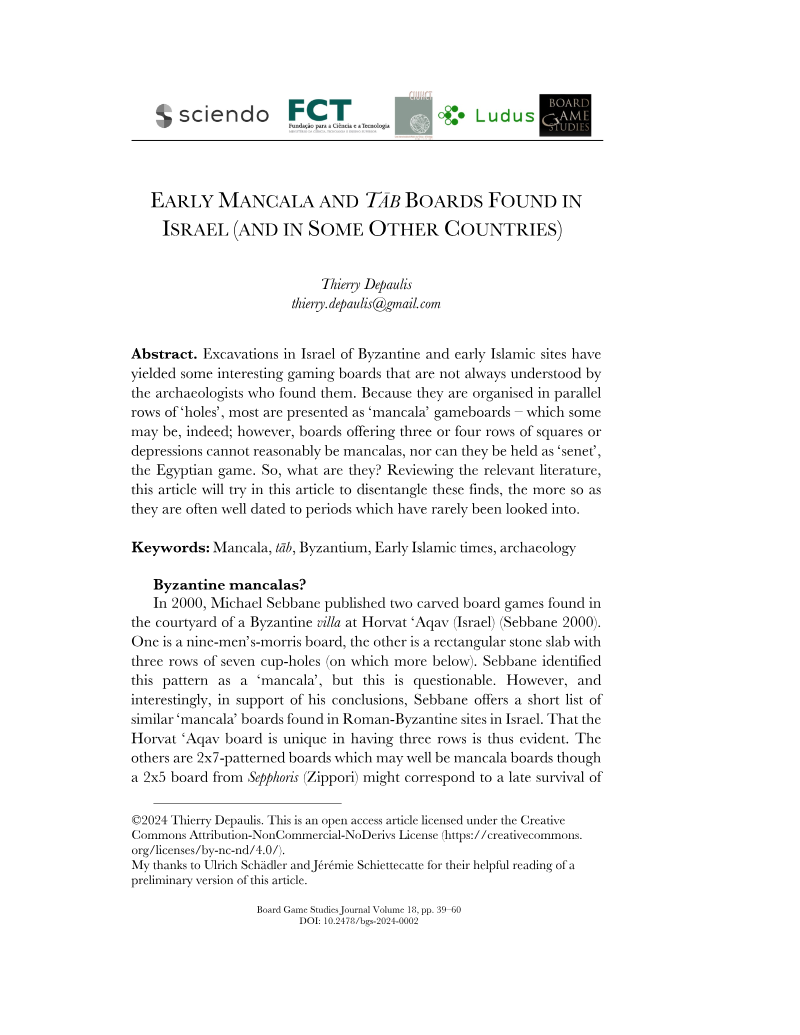
Board Game Studies Journal · 2024
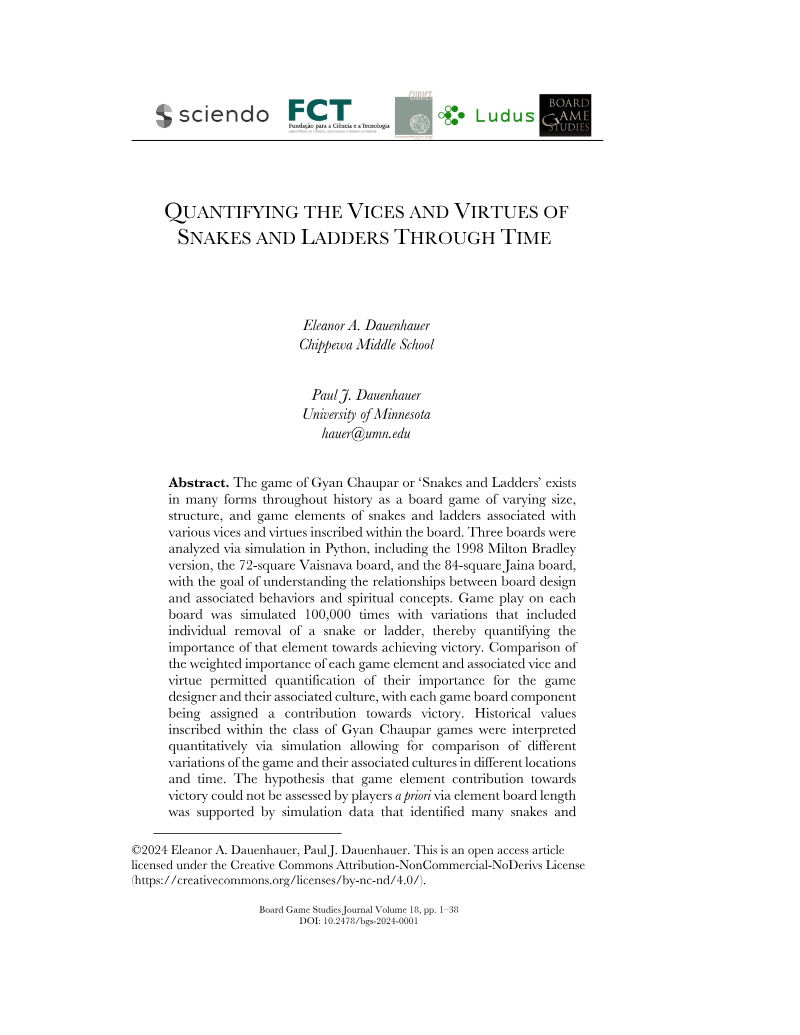
Board Game Studies Journal · 2024
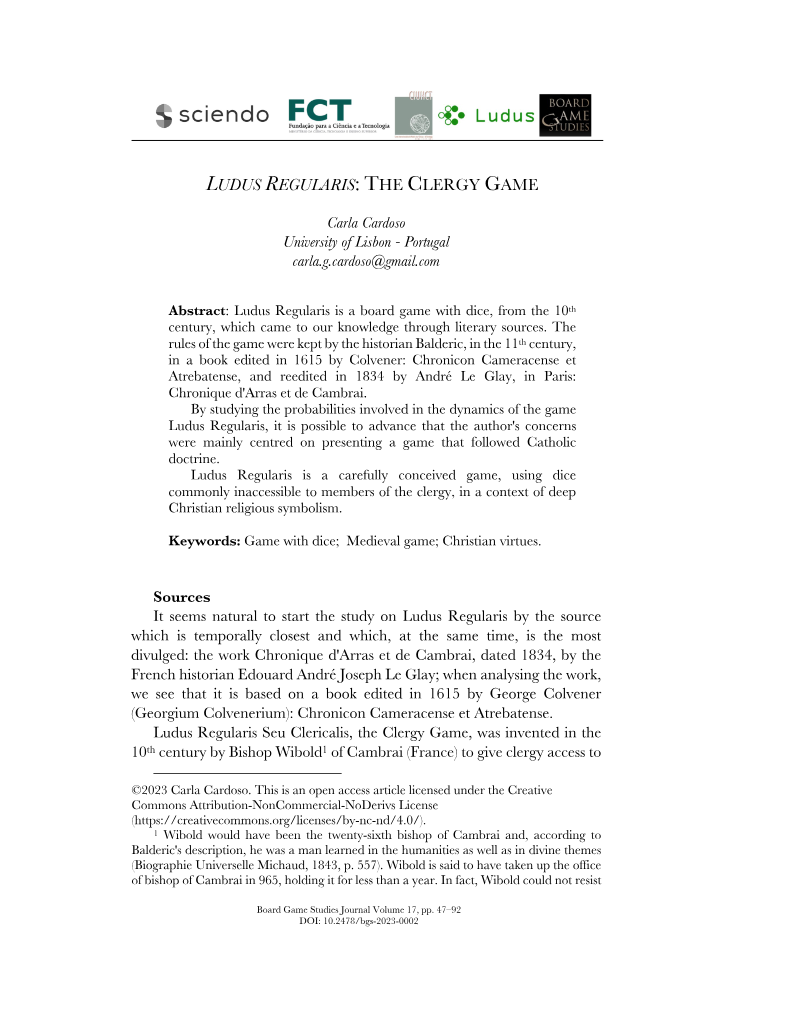
Board Game Studies Journal · 2023
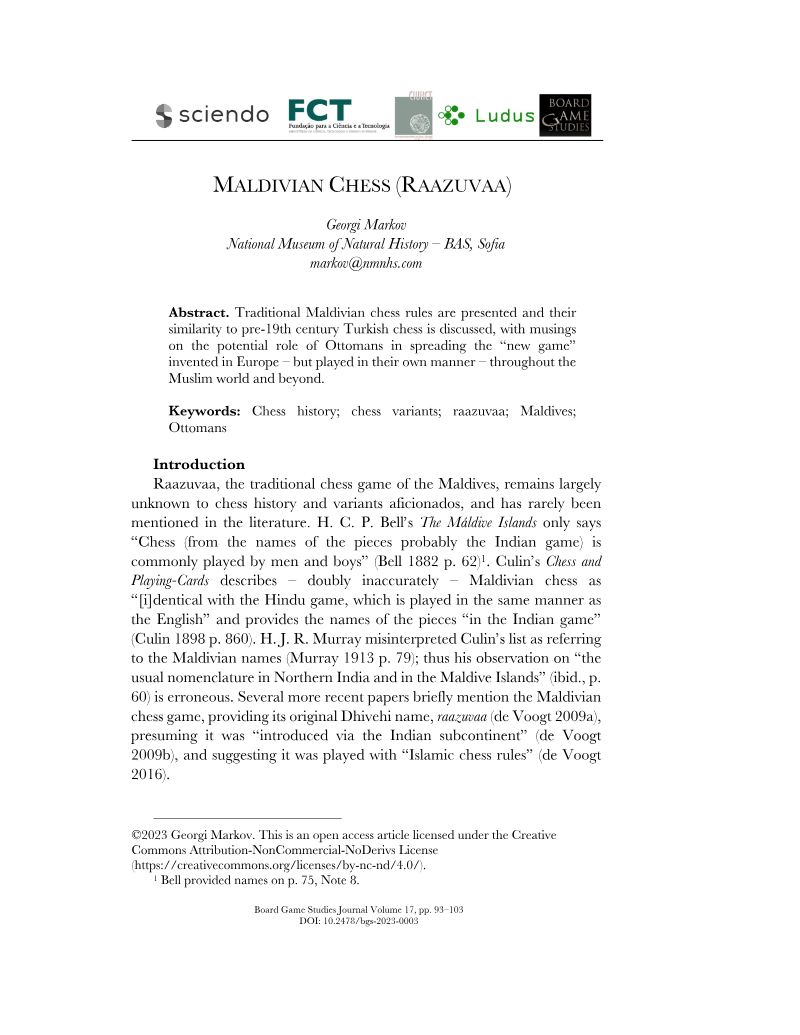
Board Game Studies Journal · 2023
DiGRA · 2026