1 free read left. Create a free account for unlimited reading + AI research.
Create free accountArticle Board Game Studies Journal
1 free read left. Create a free account for unlimited reading + AI research.
Create free accountArticleBoard Game Studies Journal
Tromholt (1851–1896) was also a northern lights researcher and photographer, and he is largely overlooked as a game designer.
Sophus Tromholt (1851–1896), a Danish schoolteacher, northern lights researcher, and photographer, emerges in this study as a largely overlooked inventor of board and puzzle games. The authors credit him with at least four or five designs, including Mona, Samson, Yum-Yum, Rocco, and probably Rococo, most of which were published by Otto Maier Verlag in Ravensburg and, between 1891 and 1894, by the Danish and Norwegian firms Schlichtkrull and Nygaard. Because primary documentation of his game-inventing activity is scarce, and because earlier references contain errors such as misidentifying him as Swedish, much of the historical record remains provisional.
The findings suggest that Tromholt's games achieved mixed commercial results. Mona was his most successful design, with reprints extending into the 1930s, while Samson never reached Scandinavia and none of the games appear to have been patented despite some copyright claims. Rocco and Samson are linked to the Halma family of games, and Rocco, Colorito, and Salta are early numbered-piece variants that were outperformed commercially by Reversi. Yum-Yum, a Tangram variant likely developed in response to Friedrich Adolf Richter's 1891 puzzles, sold well enough to be republished several times. The authors attribute the general lack of bestseller status to unfamiliar rules, limited promotion, competition from established titles, and Tromholt's early death, which precluded revisions. The original Rococo appears not to survive, leaving its nature speculative.
The article's scope is historical and bibliographic, centering on German and Scandinavian publishing in the 1890s through the 1930s and documenting surviving illustrations, rulebooks, and advertisements. One closing section adds descriptive rules and strategic guidance for an unnamed German-language game attributed to Tromholt, though it offers no quantitative data. Overall, the study's principal contribution is the reconstruction of Tromholt's designs and their commercial reach.
Board Game Studies Journal · 2025
Board Game Studies Journal · 2025
Board Game Studies Journal · 2025
Board Game Studies Journal · 2025
Board Game Studies Journal · 2025
Board Game Studies Journal · 2024
Board Game Studies Journal · 2024
Board Game Studies Journal · 2024
Board Game Studies Journal · 2024
Board Game Studies Journal · 2024
Board Game Studies Journal · 2023
Board Game Studies Journal · 2023



European Conference on Games Based Learning (ECGBL) · 2025
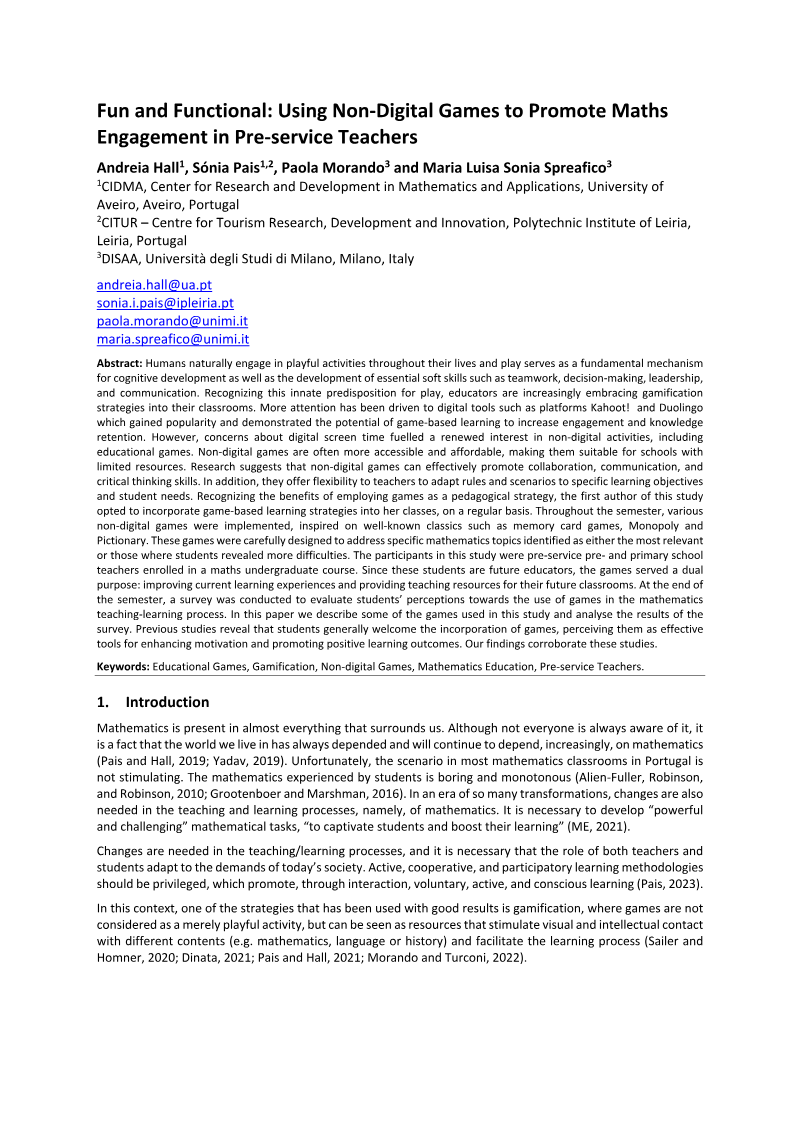
European Conference on Games Based Learning (ECGBL) · 2024
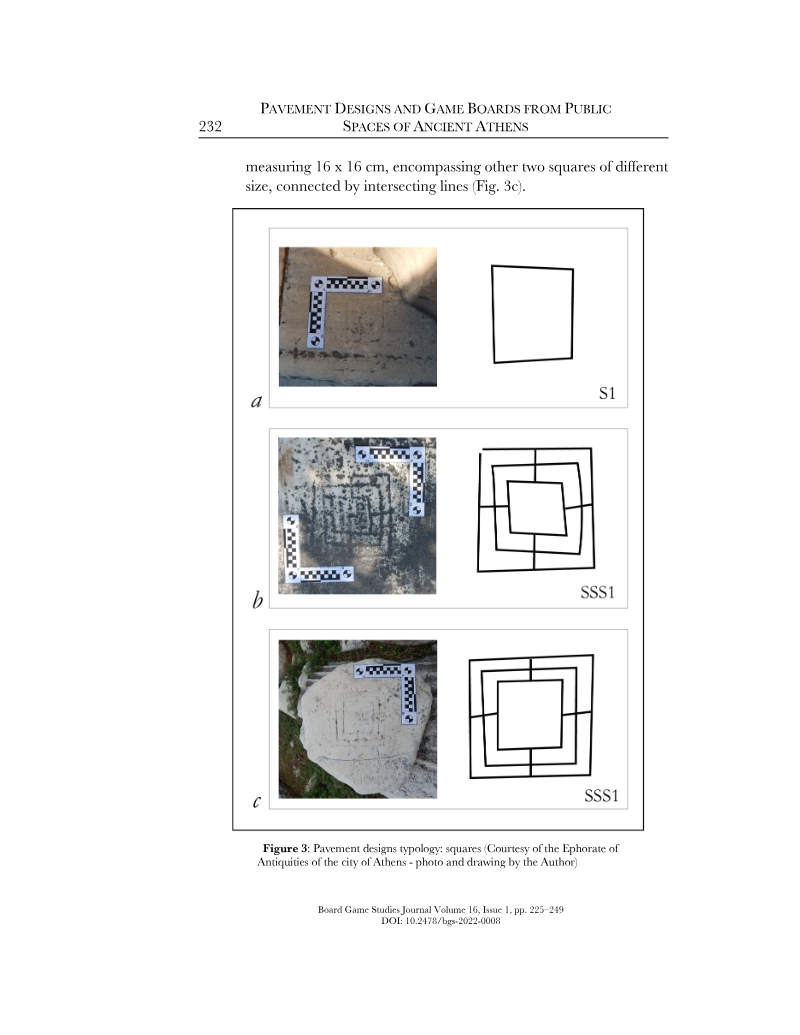
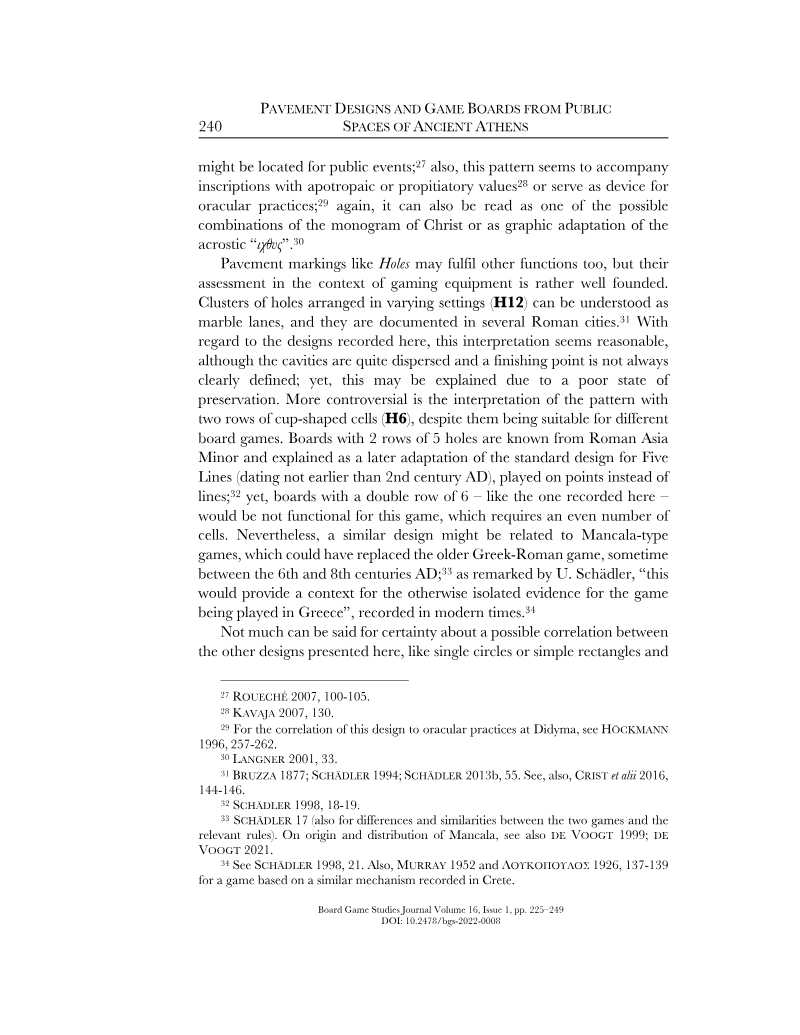
Board Game Studies Journal · 2022