Key insights
5 slides
New control method
The Maze BCI system allows hands-free avatar navigation using brain signals.
This brain-computer interface (BCI) application uses steady-state visual evoked potential (SSVEP) responses to control an avatar in a virtual maze environment.
Core function. The Maze BCI system achieves hands-free navigation by translating SSVEP responses from flickering visual stimuli into directional avatar commands via an eight-channel wireless EEG.
1 / 5
- 01The Maze BCI system achieves hands-free navigation by translating SSVEP responses from flickering visual stimuli into directional avatar commands via an eight-channel wireless EEG.See it on page 1
- 02Optimal gameplay balance is achieved using a three-second decision window and a minimum queue length of five, which manages the trade-off between classification accuracy and system latency.See it on page 8
- 03The system architecture utilizes PCA for spatial filtering and a client-server model where a decision-making queue confirms inputs based on a majority vote over a sliding time window.See it on page 6
- 04Experimental testing with six subjects aged 24 to 34 confirmed the technical viability of using occipital pole EEG signals for real-time interactive gaming control.See it on page 1
- 05Broader industry adoption of this technology currently remains limited by technical challenges, specifically the need for automated frequency selection and the mitigation of gaze-shifting errors.See it on page 8
Ask AI about this report
Summary
The research introduces "The Maze," a brain-computer interface (BCI) application that utilizes steady-state visual evoked potential (SSVEP) responses to enable hands-free navigation of an avatar through a virtual environment. By leveraging electroencephalography (EEG) signals recorded from the occipital pole, the system translates visual stimuli—specifically flickering arrows—into directional commands. The primary objective is to establish a functional, responsive gaming interface that balances control accuracy with system latency, addressing the technical challenges inherent in non-invasive neural signal processing.
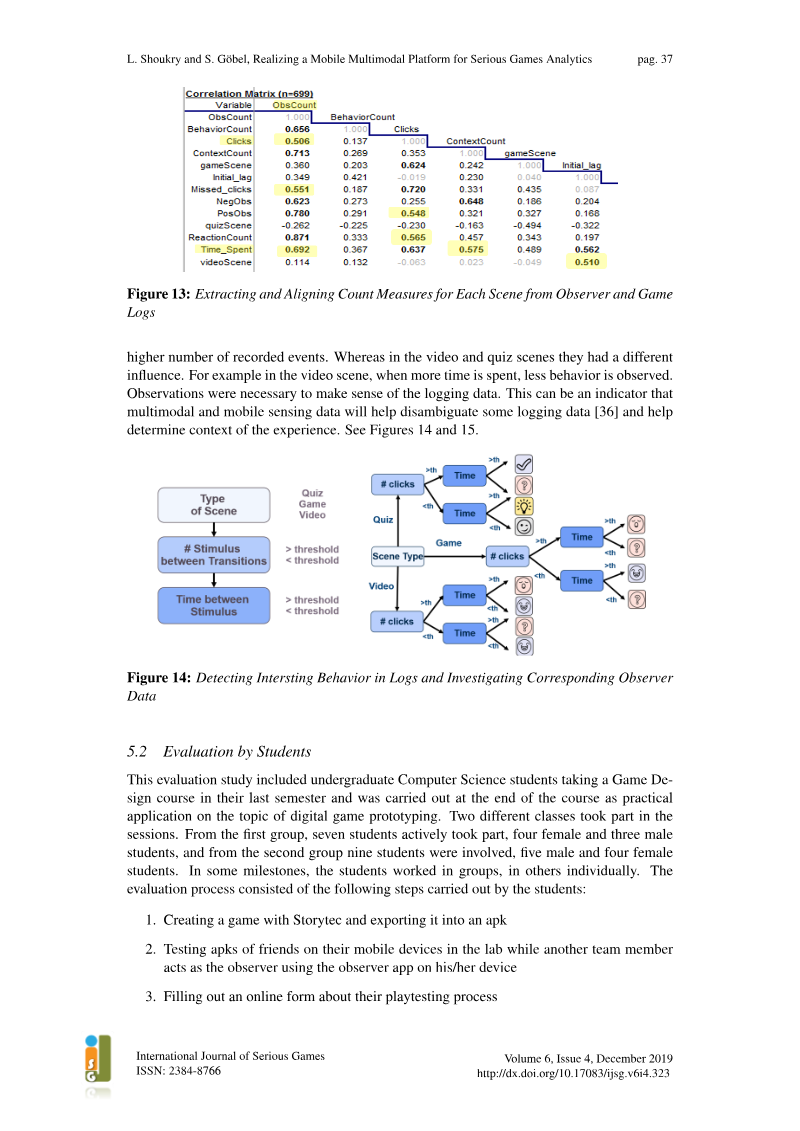
The methodology relies on an eight-channel wireless EEG system to capture brain activity, followed by a calibration stage that identifies subject-specific optimal stimulation frequencies. To enhance signal-to-noise ratios, the system employs spatial filtering via principal component analysis (PCA) and a classification algorithm that evaluates signal power against estimated noise levels. The game architecture uses a client-server model where the server processes EEG data and the client manages game logic, with a decision-making queue that requires a majority of votes over a sliding time window to confirm navigation inputs.
Experimental testing involved six healthy subjects, aged 24 to 34, who navigated through pre-defined maze levels. Findings indicate that increasing the decision queue length significantly improves classification accuracy, though it introduces a trade-off regarding system responsiveness. The researchers recommend a window size of three seconds and a queue length of at least five as optimal parameters for balanced gameplay. While the study demonstrates the viability of SSVEP-based control for interactive entertainment, it concludes that further refinement is necessary to address issues such as gaze-shifting and the need for automated frequency selection before such technology can achieve broader adoption in the gaming industry.