1 free read left. Create a free account for unlimited reading + AI research.
Create free accountWhitepaperKU Leuven
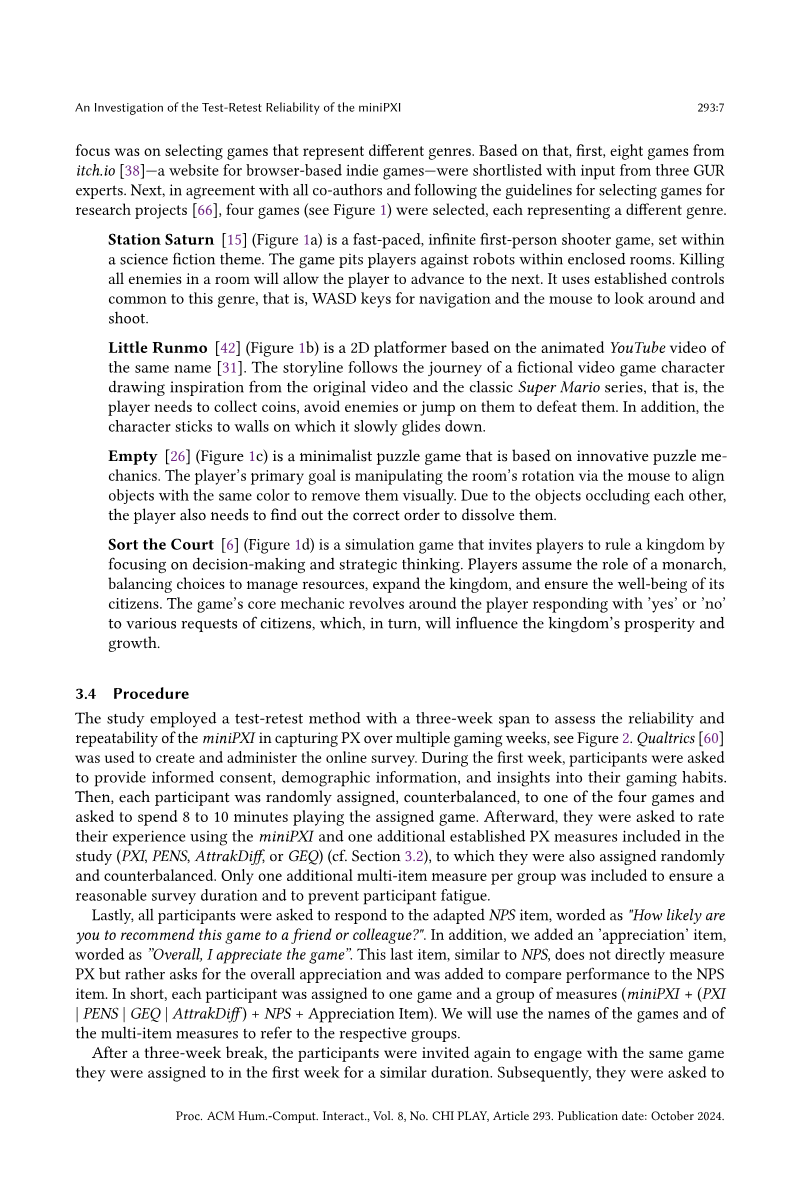
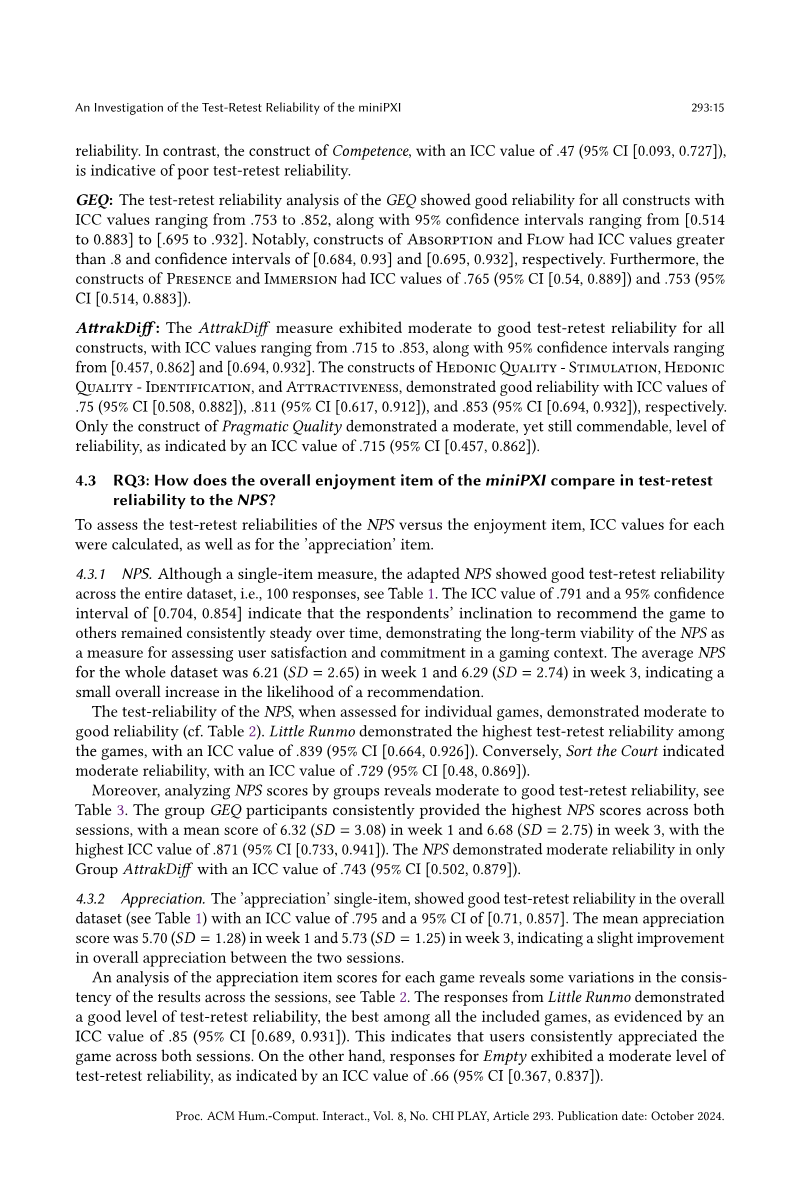
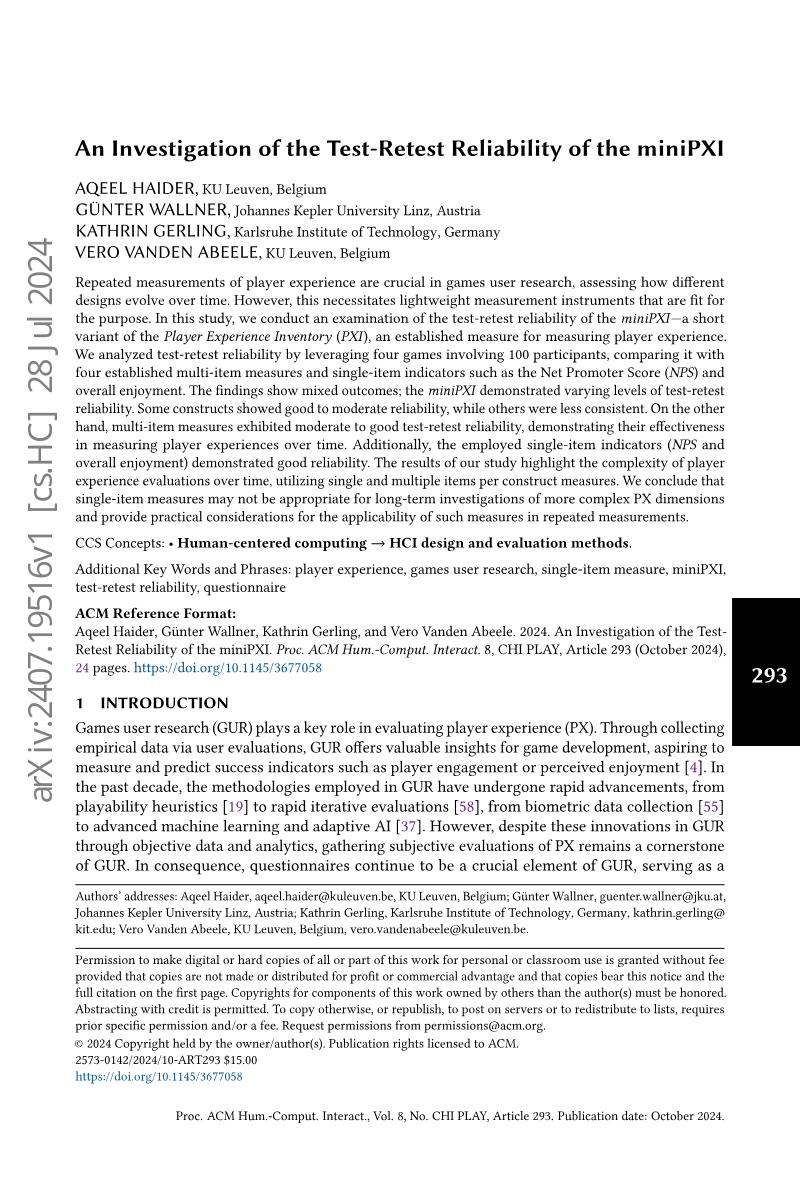
The miniPXI serves as a short-form instrument designed to measure player experience, yet its utility for longitudinal or repeated evaluations remains limited. By assessing 100 participants across four distinct game genres over a three-week interval, the research evaluates the instrument’s stability through Intraclass Correlation Coefficients. The primary objective is to determine whether this single-item measure provides the necessary consistency to track player experience throughout the game development lifecycle when compared against established multi-item frameworks such as the PXI, PENS, GEQ, and AttrakDiff.
The findings indicate that the miniPXI exhibits inconsistent reliability across different constructs. While the measure demonstrates moderate to good stability for global metrics—specifically overall enjoyment, appreciation, and Net Promoter Score—it performs poorly when assessing complex, multidimensional aspects of gameplay such as immersion and mastery. In contrast, established multi-item measures consistently outperform the miniPXI in capturing these nuanced dimensions, suggesting that the latter’s brevity comes at the cost of psychometric precision.
Ultimately, single-item measures like the miniPXI are best suited for high-level, iterative assessments where rapid feedback is prioritized over granular detail. Because player experience is inherently dynamic and context-dependent, researchers should exercise caution when relying on short-form tools for longitudinal data. For investigations requiring a deep understanding of specific player experience dimensions, the use of dedicated multi-item measures remains the more reliable approach. These results underscore the necessity of aligning the complexity of the measurement tool with the specific objectives of the game user research.
KU Leuven · 2025
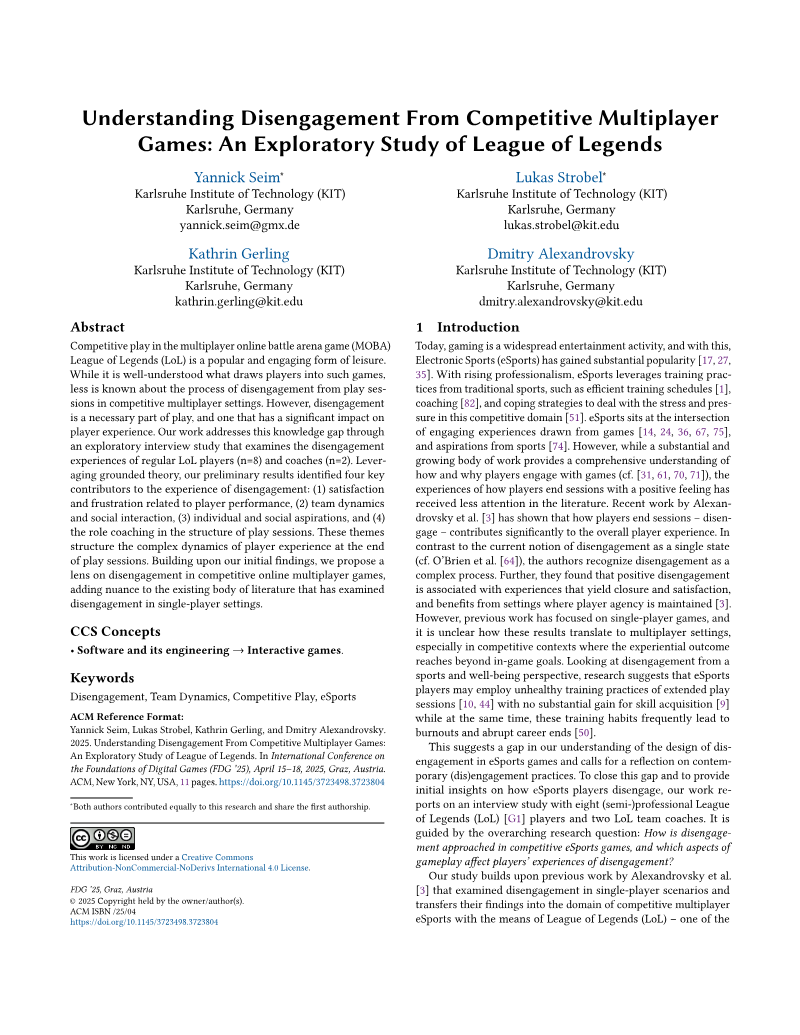
Karlsruhe Institute of Technology · 2025
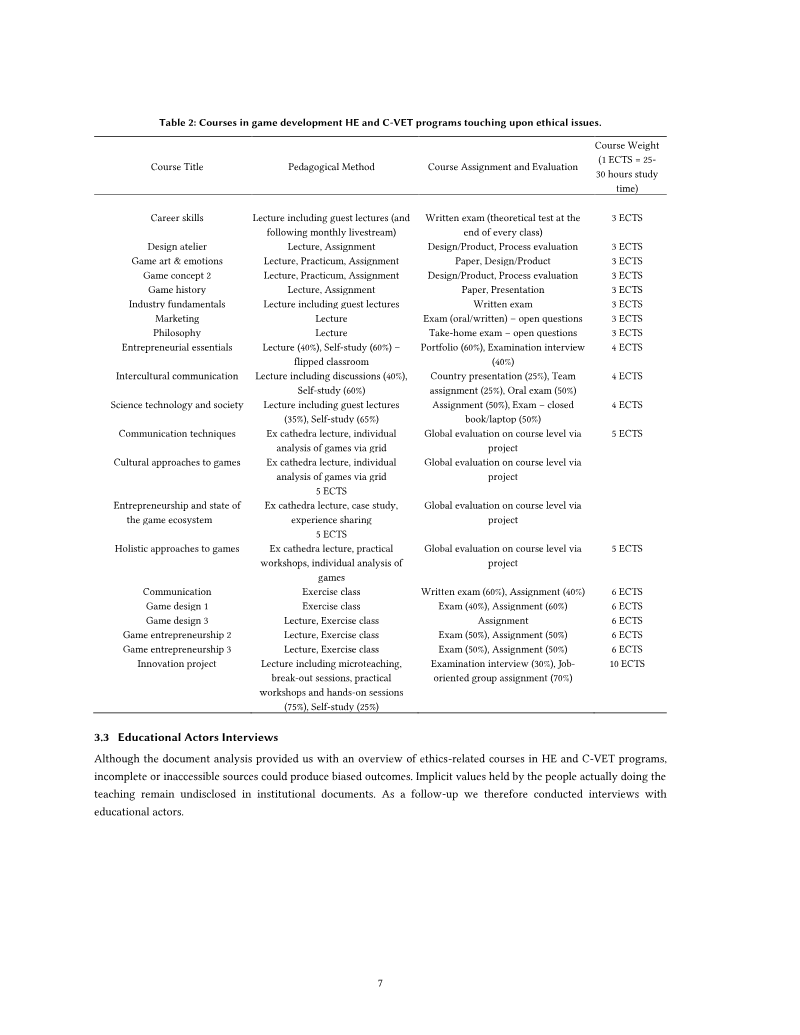
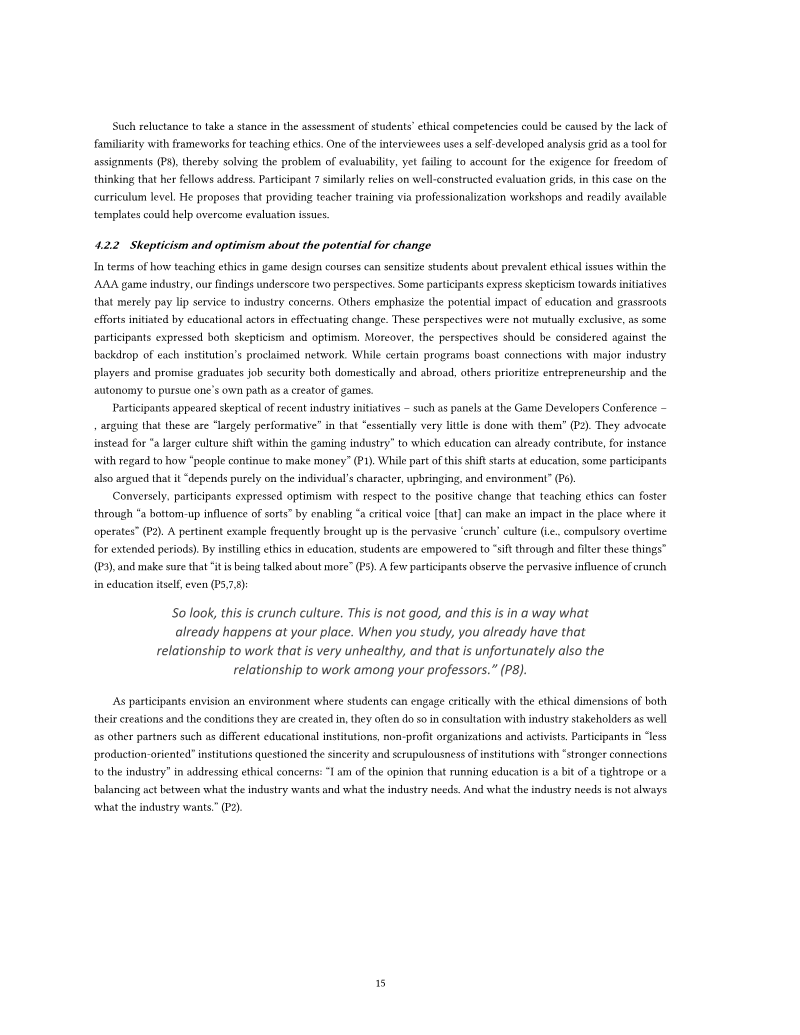
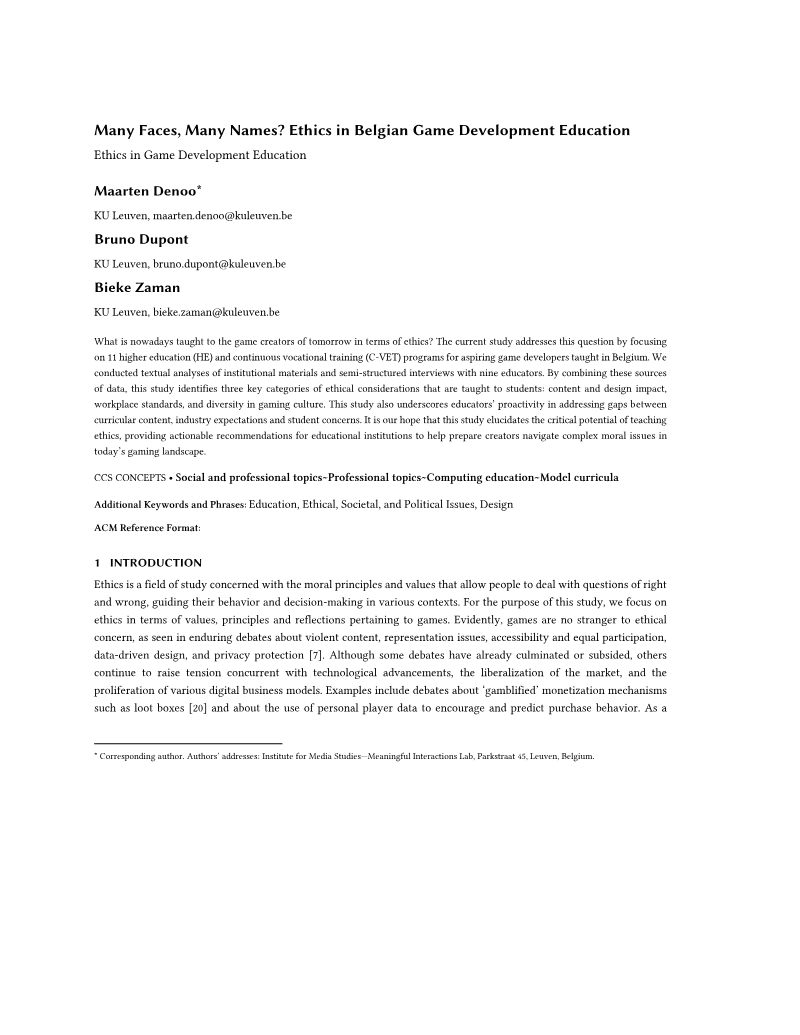
KU Leuven · 2024
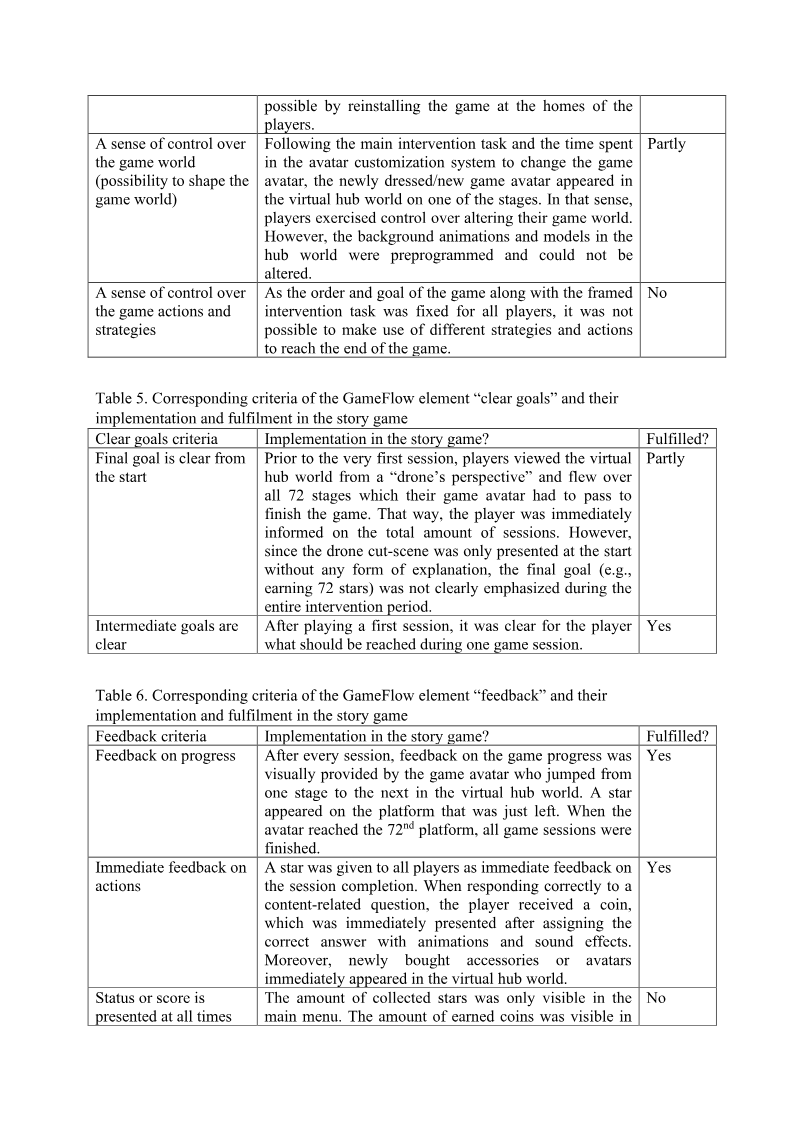

JMIR Serious Games · 2022
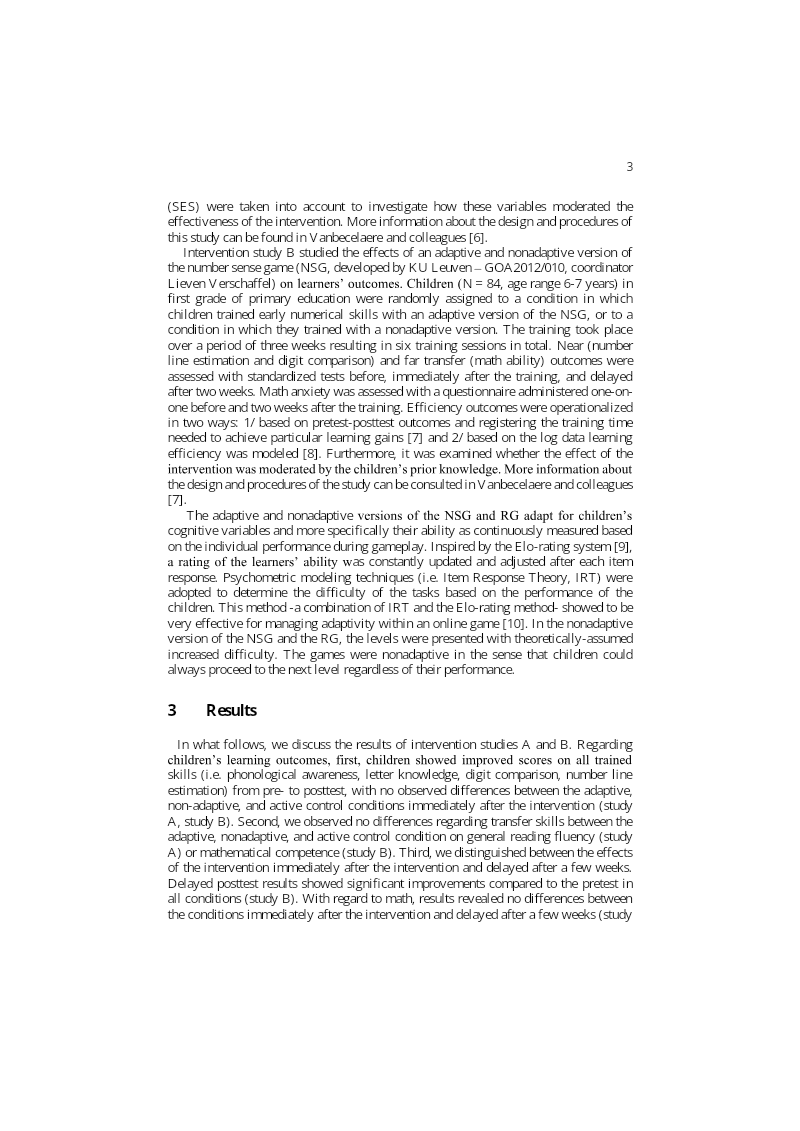
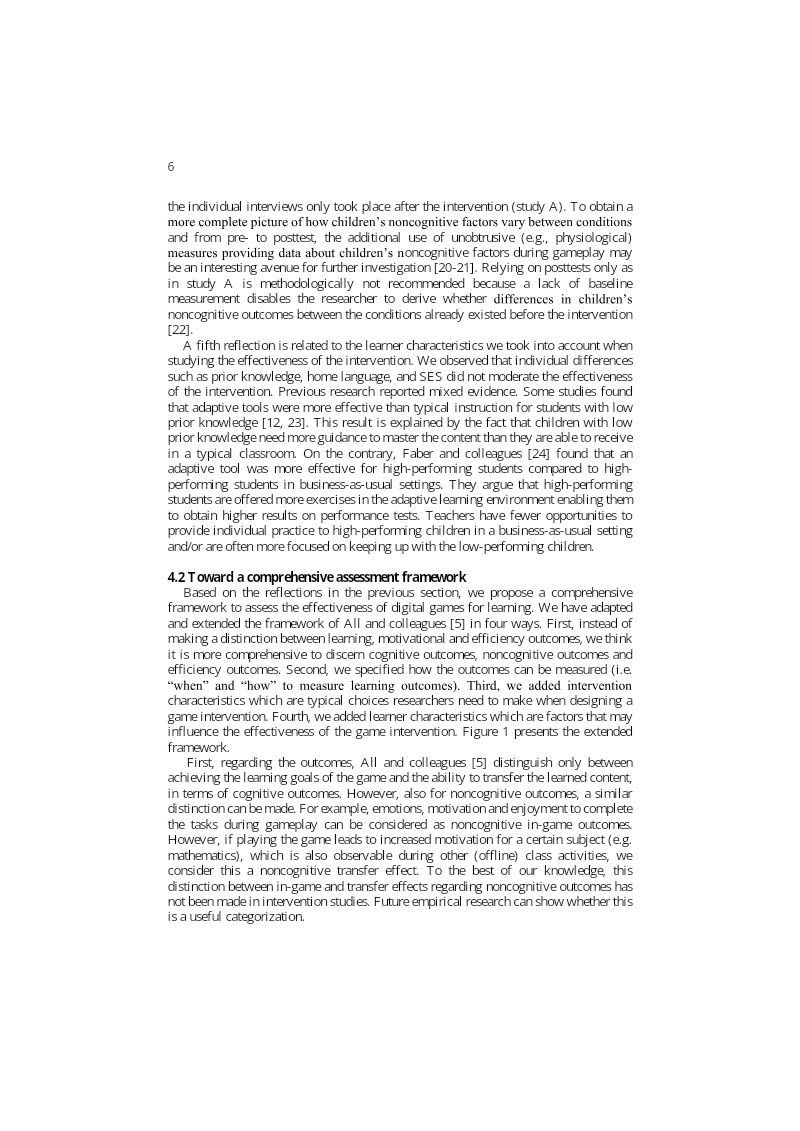
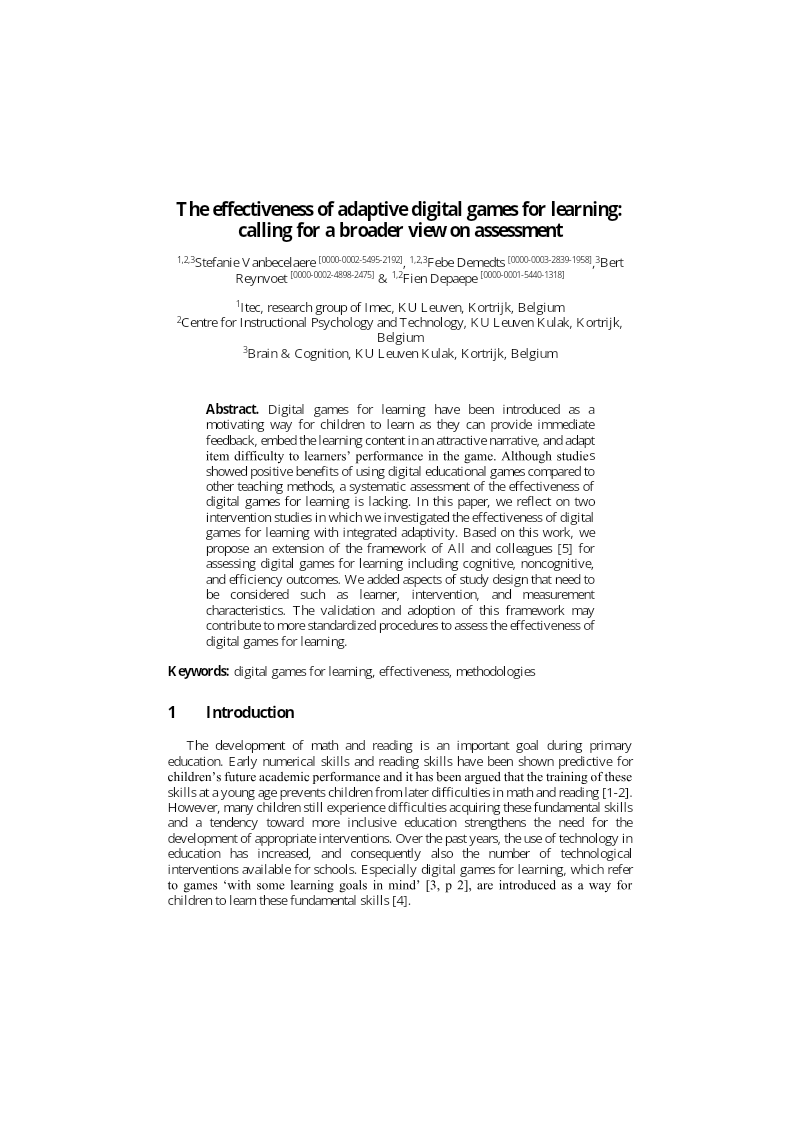
KU Leuven · 2022
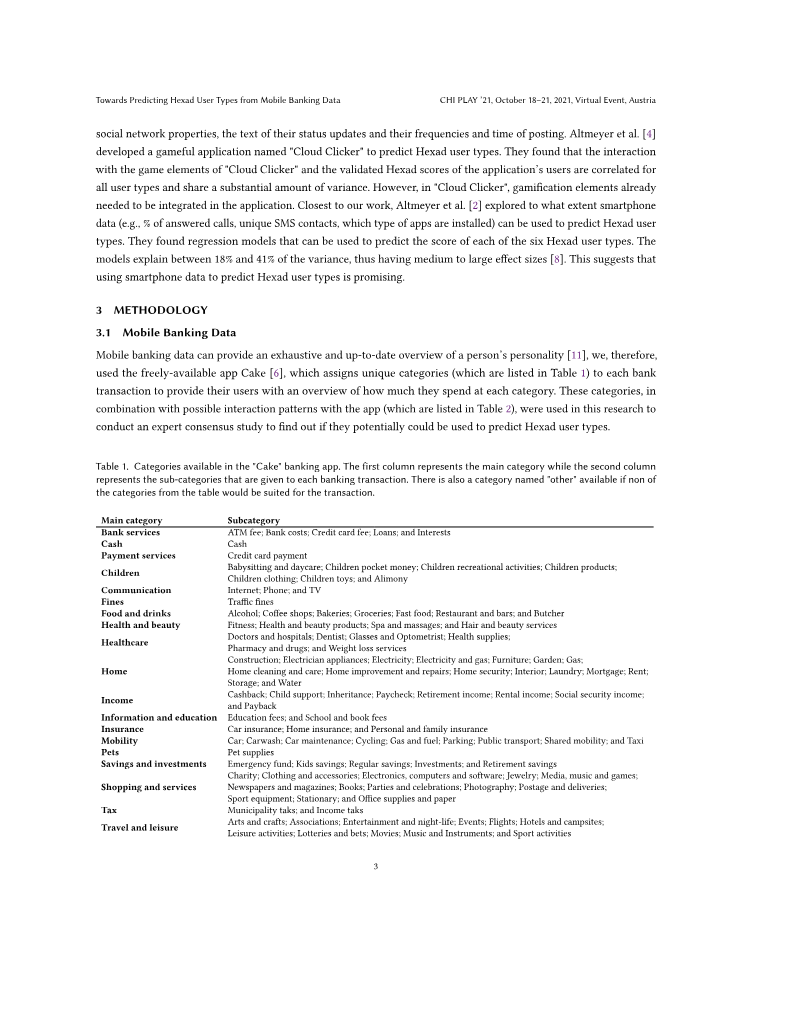
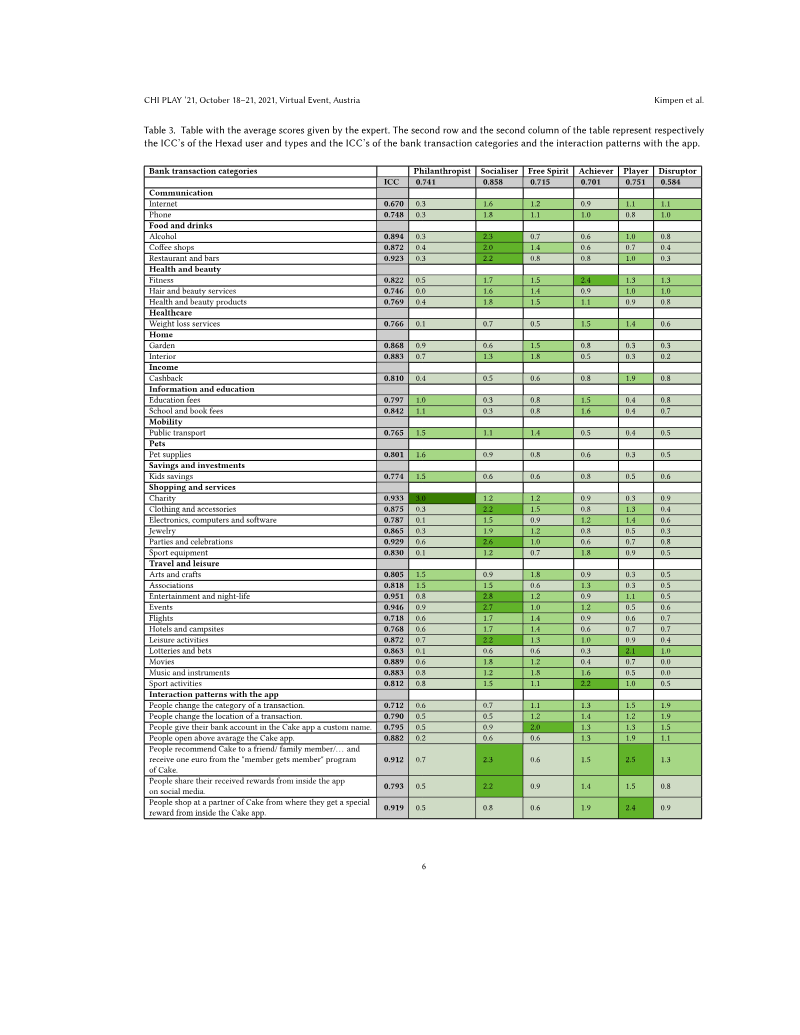
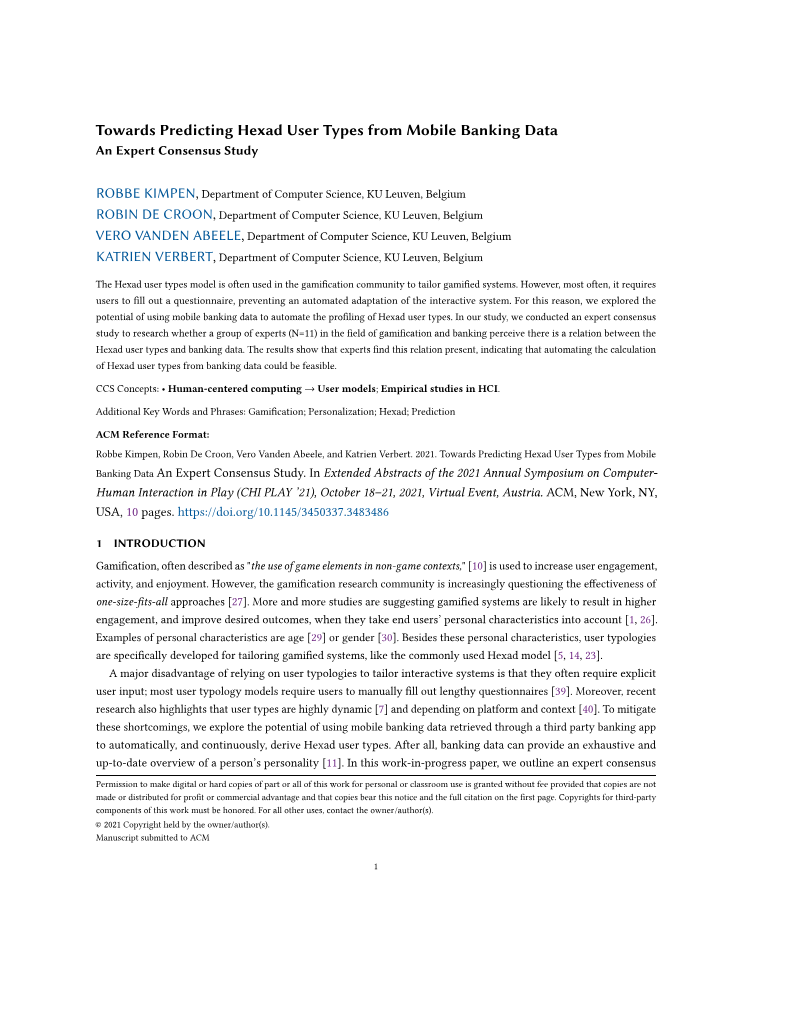
KU Leuven · 2021
KU Leuven · 2021
KU Leuven · 2020
KU Leuven · 2018
KU Leuven · 2017
KU Leuven · 2015
Association for Computing Machinery · 2014
Ludic Language Pedagogy · 2026



























Comments