The company aims to bridge the gap between casual accessibility and midcore depth.
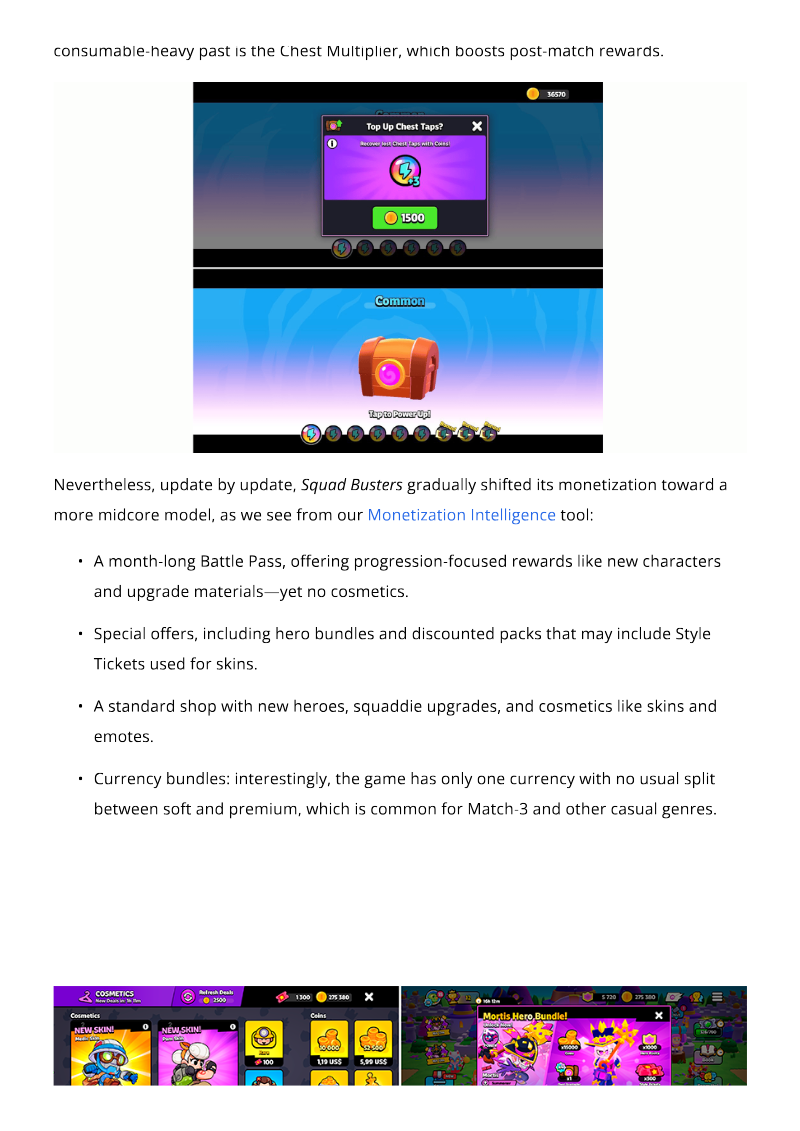
The game now uses a midcore-oriented framework for monetization.
This approach is a departure from Supercell's legacy models.
These issues have hindered long-term player retention and community growth.
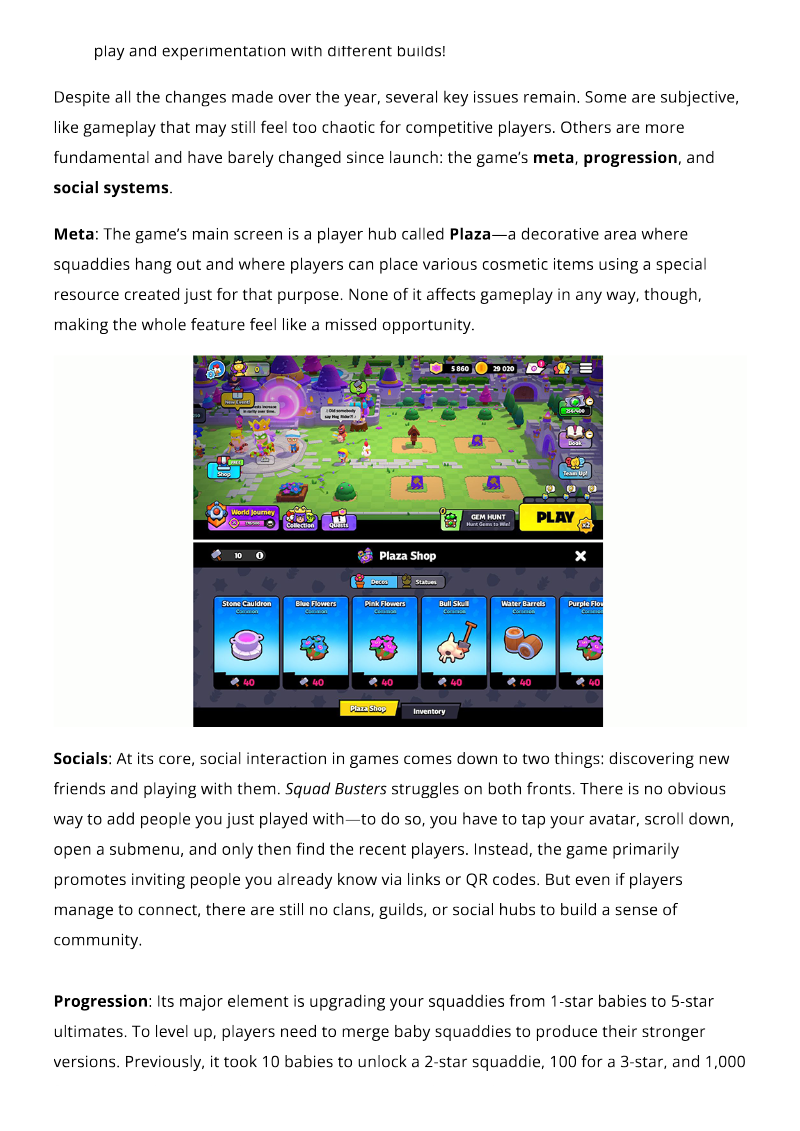
This balance must be achieved with more robust social features and clearer utility-based monetization.
Supercell is currently navigating a transitional phase characterized by aggressive experimentation with new titles, specifically Squad Busters and mo.co. The primary objective of these projects is to identify sustainable growth avenues that bridge the gap between casual accessibility and midcore depth. By bypassing traditional soft-launch protocols, the studio has sought to test divergent market directions, though both titles have struggled to meet the high performance benchmarks established by the company’s historical portfolio. These efforts underscore a strategic willingness to iterate on core fundamentals, even when initial market reception indicates a need for significant structural pivots.
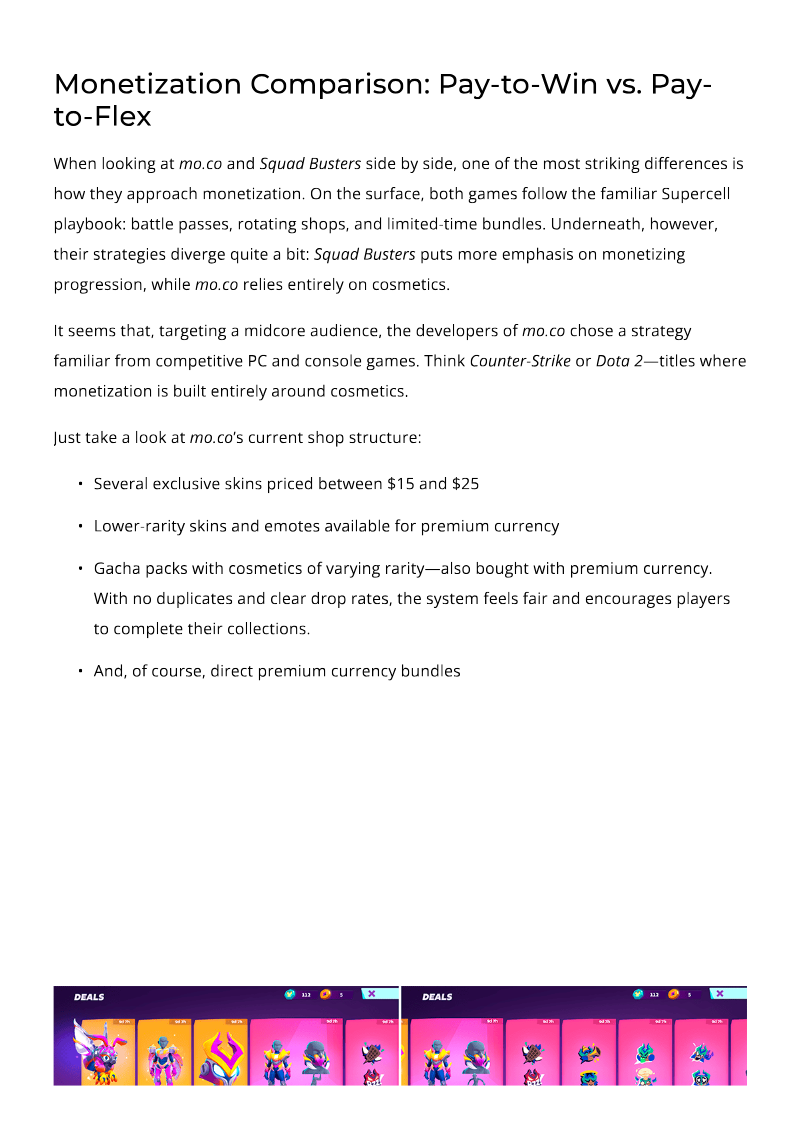
Monetization and engagement strategies across these titles reveal a departure from the studio's legacy models. Squad Busters has transitioned from gameplay-affecting consumables toward a midcore-oriented framework, while mo.co utilizes a cosmetics-only approach reminiscent of PC-based gaming. Despite the implementation of frequent LiveOps events and seasonal structures designed to drive daily retention, both games face persistent challenges regarding content variety and social system integration. The reliance on repetitive core loops has hindered long-term player investment, suggesting that current engagement mechanics lack the necessary depth to foster sustained community growth.
Ultimately, the performance of these experiments highlights a fundamental tension between simplified mechanics and the complexity required for long-term retention. While Squad Busters has undergone radical updates to refine its identity, mo.co requires a more substantial evolution to succeed. Future success for these titles depends on balancing casual-friendly progression with more robust social features and clearer utility-based monetization. These findings suggest that while Supercell remains committed to innovation, achieving the revenue and engagement levels of established hits like Brawl Stars requires a more cohesive integration of social depth and meaningful content variety.