1 free read left. Create a free account for unlimited reading + AI research.
Create free accountWhitepaper DiGRA
1 free read left. Create a free account for unlimited reading + AI research.
Create free accountWhitepaperDiGRA
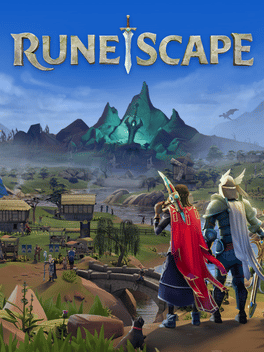
The paper, by Will Butler of Bath Spi University, is an ethnographic pilot study centred on Jagex, creators of RuneScape and Old School RuneScape. It draws on 15 interviews with developers, archivists, wiki editors and former staff, with further interviews planned.
This paper, presented at DiGRA 2026 by Will Butler of Bath Spa University, examines how live-service videogames can be preserved in cooperation with the developers who build them. Its central argument is that the governance structures of game companies, including non-disclosure agreements, monetisation models that continually overwrite earlier work, and corporate cultures that subsume individual credit, separate developers from the products of their labour. Because developers are often the most reliable source of game history, this separation poses a significant obstacle to preservation, and the paper positions worker perspectives as essential to advocating for cultural inquiry into these games.
The research is an ethnographic pilot study centred on Jagex in Cambridge, creators of RuneScape and Old School RuneScape. It draws on 15 interviews with Jagex developers, along with archivists, wiki editors, and former staff, with further interviews planned. The author notes that the industry's secrecy and contractual restrictions limited access to some key project contexts, and that the study sits at the tension between commercial interests and research participation. The methodology draws on anthropological-adjacent approaches and contemporary studio studies.
The findings suggest that Jagex developers largely prefer to focus on the game and its player community rather than the company's executive leadership. This orientation becomes contentious when executive decisions generate controversy, such as the 2025 rollback of Pride events in RuneScape. The company's "JMod" structure, which encourages staff to adopt online personas, gives individual workers greater visibility than is typical in commercial game development, complicating power dynamics between employees and the player community that ultimately shapes the company's direction.
The paper situates these findings within broader labour research, noting that game workers in precarious, project-based arrangements often make concessions on pay, working conditions, and career mobility to secure stability. It frames this study as a pilot for a new methodological subset of studio studies that examines how worker mobility and disconnection affect the long-term preservation of game history.
Each row is a game or company this document names, each column a document, oldest first. A mark means that document names it. Select a row to see those documents.

DiGRA · 2026

DiGRA · 2026



DiGRA · 2026
Game Developers Conference · 2026