Key insights
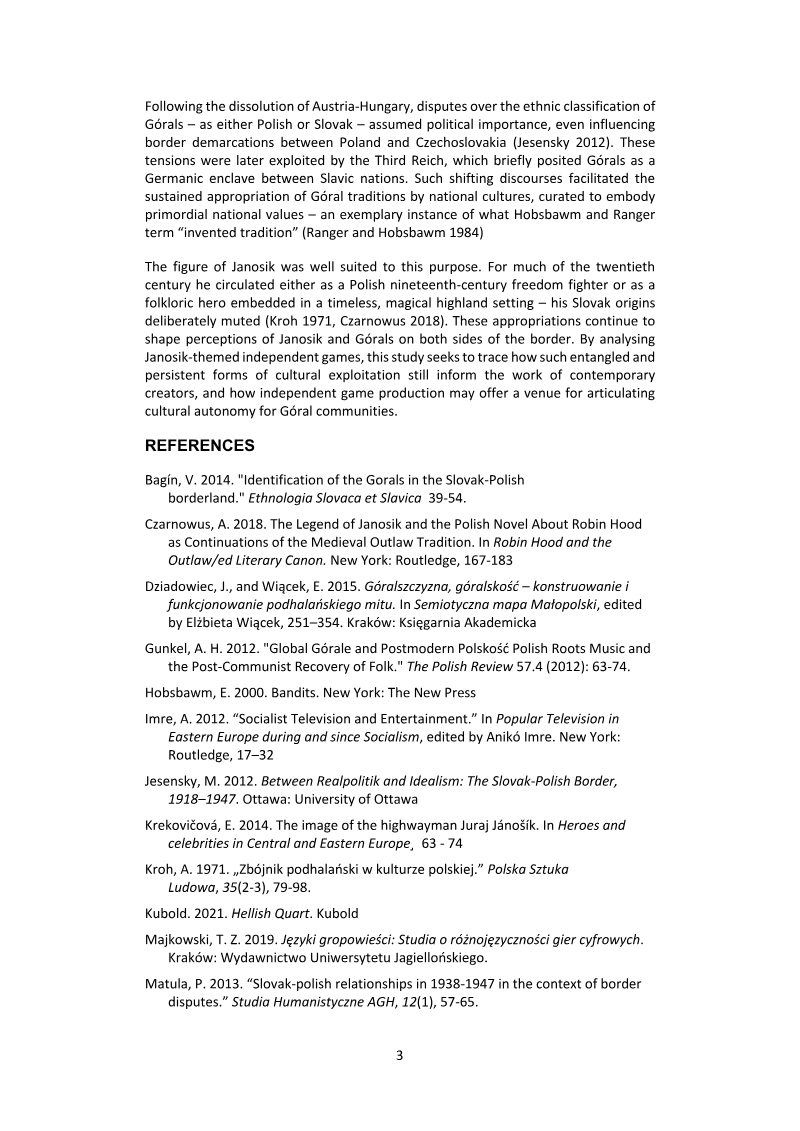
5 slides
Early days
Retrogaming began as a practical solution for software compatibility.
In Finland, the initial interest in older games was driven by the need to keep software functional on aging hardware.
1 / 5
- 01Retrogaming in Finland transitioned from a practical necessity for maintaining software compatibility on aging hardware into a formalized cultural movement focused on the canonization of digital artifacts.See it on page 1
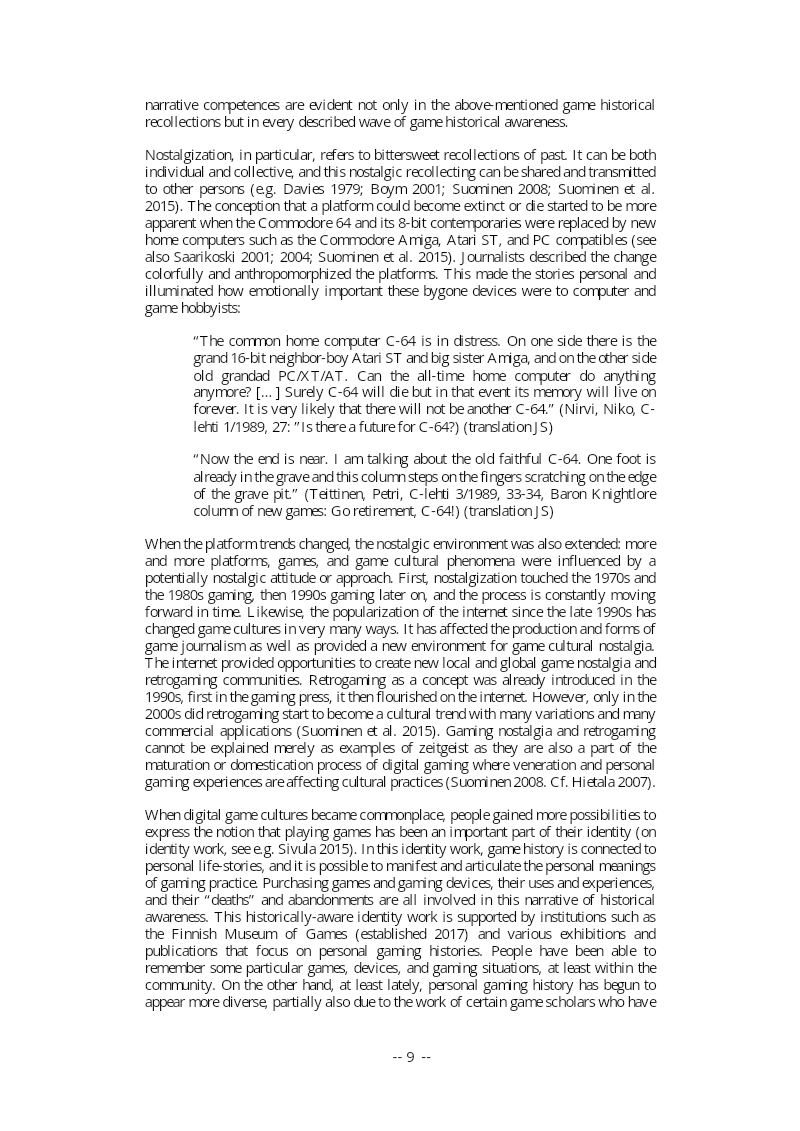
- 02The late 1990s served as a critical inflection point for the movement, driven by the proliferation of internet communities and the adoption of emulation technologies like MAME.See it on page 13
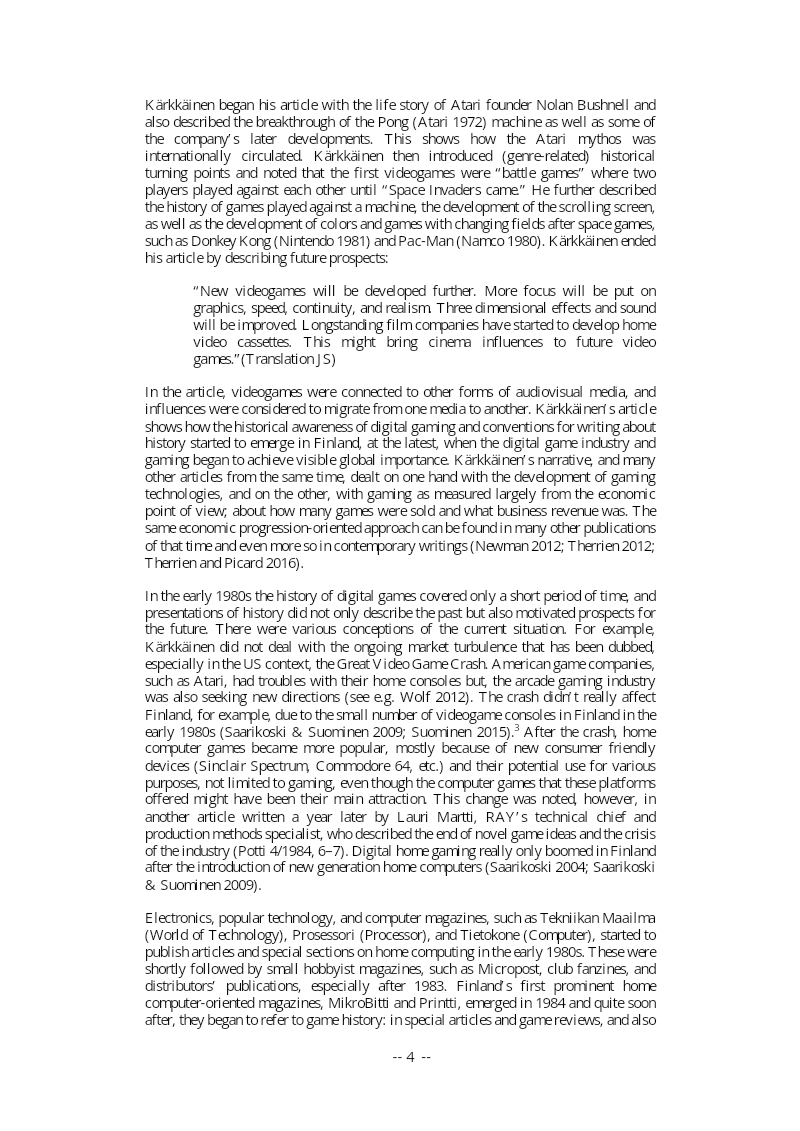
- 03Finnish computer hobbyist magazines acted as the primary architects of gaming heritage by publishing nostalgic columns and personal recollections that codified a shared history for the player base.See it on page 21
- 04The evolution of retrogaming reflects a broader shift from community-led, authentic preservation efforts to the commercial commodification of nostalgia through modern digital storefronts and plug-and-play hardware.See it on page 15
- 05The canonization of classic games functions as a fundamental response to the threat of technological obsolescence, ensuring that early digital experiences remain relevant in contemporary discourse.See it on page 6
- 06The discourse surrounding retrogaming has migrated from traditional print media to specialized online platforms, which continue to document the lifecycle and cultural impact of iconic hardware.See it on page 12
Ask AI about this report
Summary
Retrogaming in Finland evolved from a practical necessity for software compatibility into a formalized cultural movement that defines how digital history is preserved and consumed. Spanning the 1980s through the 2000s, this phenomenon reflects a transition from early technical curiosity to a structured, mainstream commercial industry. Initially, interest in older titles was driven by the need to maintain functionality on aging hardware, but as the gamer demographic matured, these practices shifted toward the intentional canonization of digital artifacts.
The movement gained significant momentum in the late 1990s, catalyzed by the rise of internet communities and emulation technologies such as MAME. Finnish computer hobbyist magazines played a pivotal role in this transformation, serving as the primary venue for establishing a shared gaming history. By incorporating nostalgic columns and personal recollections, journalists helped codify a sense of heritage, distinguishing between generations of players and fostering a dedicated community. This discourse eventually moved beyond print media to online platforms and specialized publications, which continue to document the lifecycle of iconic hardware.
Ultimately, retrogaming represents a dynamic cultural shift from authentic, community-led preservation to the broader commodification of nostalgia. The emergence of plug-and-play devices and digital storefronts signifies the mainstreaming of these once-niche interests. By analyzing the Finnish media landscape, it becomes clear that the ongoing canonization of classic games is not merely a fashion-oriented trend but a fundamental response to technological obsolescence. This process ensures that early digital experiences remain relevant, shaping modern game journalism and the ongoing discourse surrounding the preservation of interactive media.