1 free read left. Create a free account for unlimited reading + AI research.
Create free accountWhitepaper Breda University of Applied Sciences
1 free read left. Create a free account for unlimited reading + AI research.
Create free accountWhitepaperBreda University of Applied Sciences
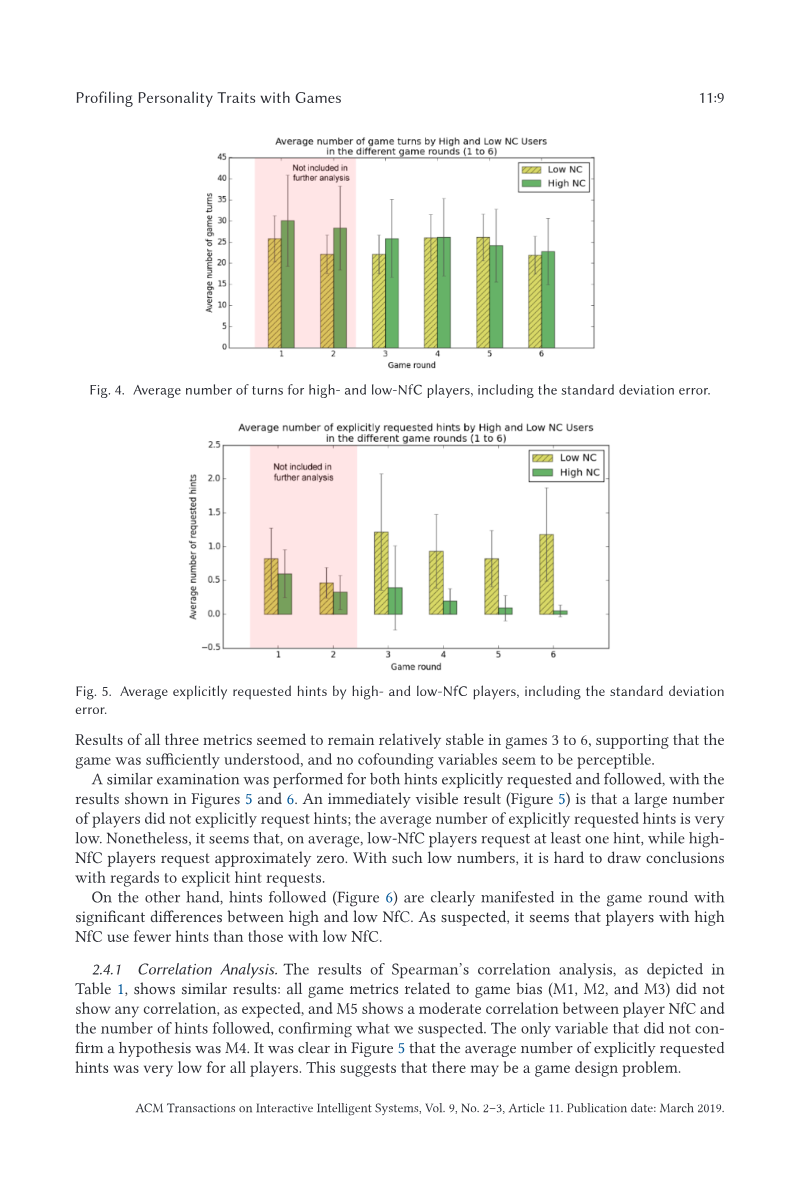
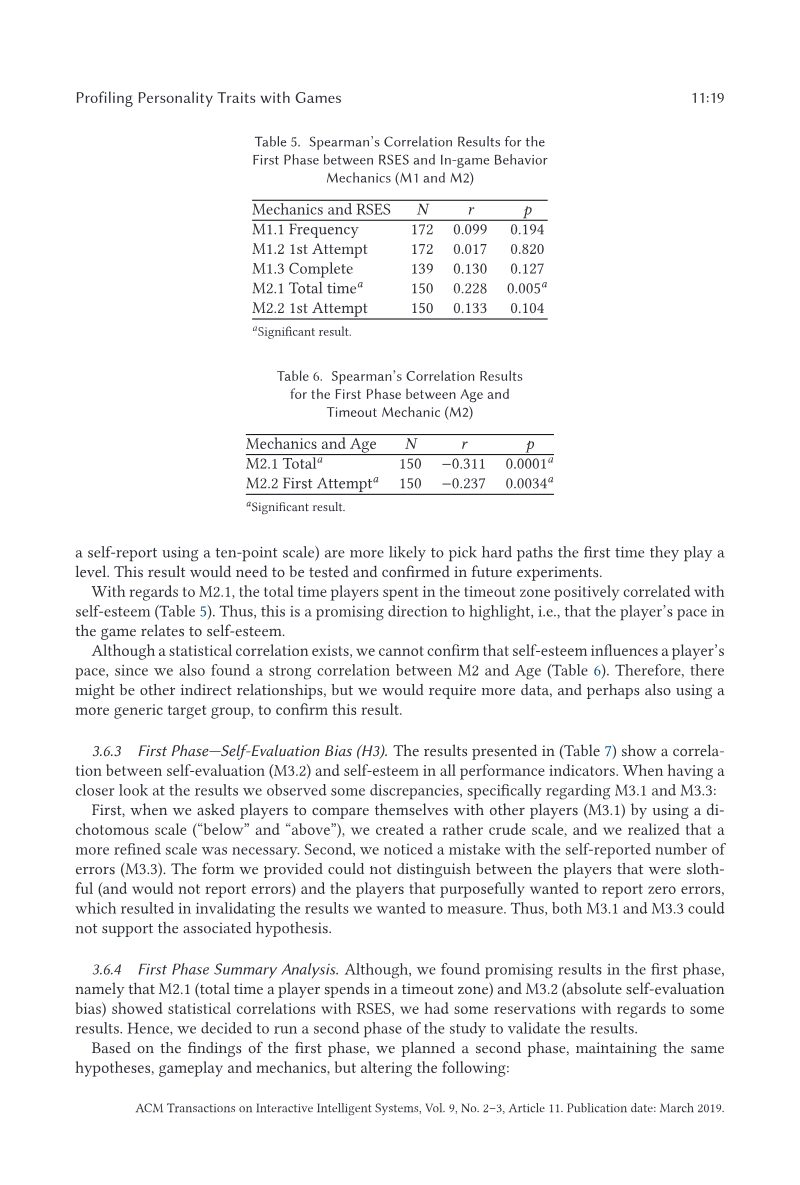
The paper extends player modeling from adapting games to users toward player profiling. It claims games offer sustained engagement, reduced reactivity, and the ability to combine implicit and explicit data.
The paper "Profiling Personality Traits with Games" argues that in-game behavior can be used to infer personality traits, extending player modeling from adapting games to users toward what the authors call player profiling. Its central premise is that games offer advantages over traditional self-report questionnaires and other implicit measures, including sustained engagement, reduced reactivity, and the ability to combine implicit and explicit data. The authors present two studies as early evidence that traits such as need for cognition and self-esteem can be profiled through gameplay, with potential applications in screening and preventive healthcare.
The first study, conducted with a turn-based puzzle game called Nanobots, tested whether players low in need for cognition would rely more heavily on hints. Performance metrics such as win-lose ratio, round time, and number of turns showed no meaningful relation to need for cognition, supporting the view that the game design is not biased toward that trait. Hint behavior was the key signal: hints requested automatically by the game showed a significant negative correlation with need for cognition (r = -0.223, p = 0.028), while explicit hint requests were too infrequent to support firm conclusions.
The second study examined self-esteem using a minimalist platformer, Runner, in a two-phase design with 98 and 85 participants compared against Rosenberg Self-Esteem Scale scores. Neither performance nor path choice predicted self-esteem in the second phase, and pace produced only inconsistent, weak signals. Time spent in timeout zones correlated with self-esteem in the first phase, but this association was confounded by player age. The most robust finding was that self-evaluation bias, comparing oneself to others and rating one's own performance, correlated significantly with self-esteem and supported moderate-accuracy regression predictions, which the authors propose as a promising mechanic for future games.
Overall, the authors conclude that game behavior can meaningfully reflect certain traits, while others, notably self-esteem's effect on objective performance, remain elusive. They highlight applications in personalized game design, targeted advertising, healthcare, education, and hiring, and call for ethical guidelines governing such profiling.
Breda University of Applied Sciences · 2026
Breda University of Applied Sciences · 2026
Breda University of Applied Sciences · 2026



Breda University of Applied Sciences · 2026
Breda University of Applied Sciences · 2026
Breda University of Applied Sciences · 2026



Breda University of Applied Sciences · 2026

Breda University of Applied Sciences · 2026

Breda University of Applied Sciences · 2026
Breda University of Applied Sciences · 2026
Breda University of Applied Sciences · 2026
Breda University of Applied Sciences · 2026













Comments