1 free read left. Create a free account for unlimited reading + AI research.
Create free accountArticle DiGRA
1 free read left. Create a free account for unlimited reading + AI research.
Create free accountArticleDiGRA
Taylor's paper challenges the popular image of the power gamer as either an isolated cheater or a joyless grinder.
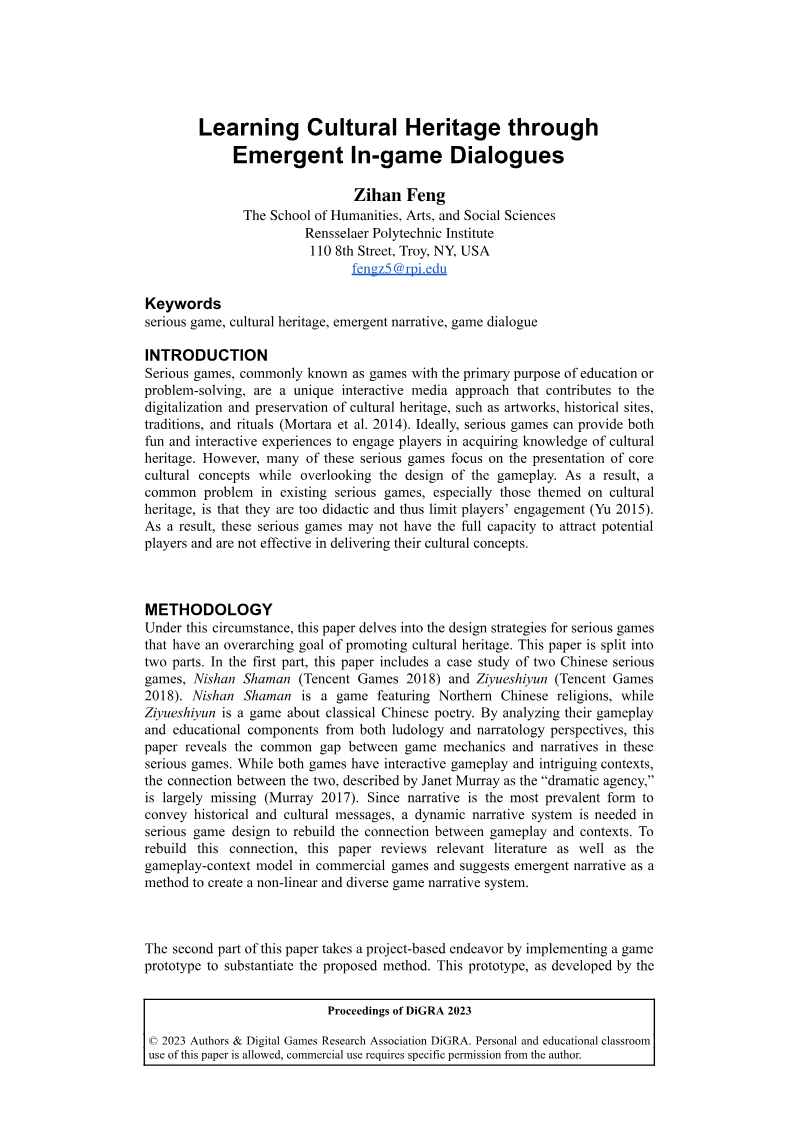
T.L. Taylor's paper, "Power Gamers Just Want to Have Fun?: Instrumental Play in a MMOG," challenges the popular image of the power gamer as an isolated cheater or a joyless grinder. Its central thesis is that power gamers pursue a rigorous, efficiency-driven style of play that deserves recognition as legitimate play rather than dismissal as a corruption of fun. Drawing on ethnographic research in the massively multiplayer online game EverQuest, the analysis focuses on players who set dynamic goals, endure long sessions and repetitive grinding, treat failure as a learning opportunity, and transfer game knowledge across titles.
The paper's most significant finding is that power gaming is profoundly social rather than solitary. Players rely on practices such as 2-boxing and 3-boxing, consult community tools like ShowEQ and strategy websites, and depend on friendship networks and "uber" guilds to access high-end content including epic items and difficult raid encounters. Reputation systems and collaboration shape what it means to be a power gamer, so efficiency in EverQuest is achieved through collective effort as much as individual skill.
The research also interrogates the conceptual boundary between play and labor, particularly the distinction drawn by Roger Caillois. Taylor argues that power gamers often describe their engagement as rewarding skill-building and mastery, and that the dichotomy between play and work fails to capture how these players, and professional gamers, actually experience their activity. The study is grounded in a single MMOG and a specific ethnographic setting, so its scope is bounded by that context, but its conclusions invite a broader rethinking of what counts as fun and how the pleasures of rigorous, instrumental play should be understood.
Each row is a game or company this document names, each column a document, oldest first. A mark means that document names it. Select a row to see those documents.
DiGRA · 2023
DiGRA · 2023
DiGRA · 2023
DiGRA · 2023
DiGRA · 2023
DiGRA · 2023
DiGRA · 2023
DiGRA · 2023
DiGRA · 2023

DiGRA · 2023
DiGRA · 2023
DiGRA · 2023
The Game Business · 2026