1 free read left. Create a free account for unlimited reading + AI research.
Create free accountWhitepaper DiGRA
1 free read left. Create a free account for unlimited reading + AI research.
Create free accountWhitepaperDiGRA
The report argues that these articles, written to dismantle the stereotype, ended up reinforcing it through reductive framing.
Core argument. The report argues the 2014 wave of articles reinforced the toxic gamer stereotype it aimed to dismantle.
The document examines how the "gamer" identity was framed in the wake of the 2014 Gamergate controversy, focusing on the wave of "Gamers Are Dead" (GAD) articles that appeared in game media in August and September of that year. Its central argument is that critics' rhetoric, though aimed at dismantling the toxic gamer stereotype, ended up reinforcing it. Drawing on Goffman's stigma theory and Shaw's work on identity, the analysis contends that the gamer label is vague and stigmatized, and that discourse about it forms a cyclical relationship with stereotype, identity investment, and conflict. The author explicitly disclaims any aim to assign blame or defend Gamergate, and acknowledges that the eight articles studied constitute a representative but one-sided sample.
The analysis highlights the reductive framing of these pieces, which cast gamers as childish, pitiable, or monstrous. Leigh Alexander's Gamasutra essay is singled out as emblematic. Rather than prompting self-reflection, this rhetoric largely provoked defensiveness among self-identified gamers, many of whom rejected misogyny yet felt their identity was under attack. The document also cites a 2020 study of 725 self-identified Gamergate participants, which found that about 41.8 percent identified with the white, male, heterosexual gamer stereotype and that the group was generally politically left-leaning and not primarily motivated by misogyny.
The scope centers on the 2014 controversy and the English-language game media discourse surrounding it, with supporting scholarship on gamer identity, toxic geek masculinity, and stereotype threat. The concluding argument calls on critics and academics to recognize their own role in shaping conflicts within game culture, and to consider how their rhetoric affects players whose identities are fluid and not defined by the stereotype.
Each row is a game or company this document names, each column a document, oldest first. A mark means that document names it. Select a row to see those documents.
DiGRA · 2022
DiGRA · 2022
DiGRA · 2022
DiGRA · 2022
DiGRA · 2022
DiGRA · 2022
DiGRA · 2022
DiGRA · 2022
DiGRA · 2022
DiGRA · 2022
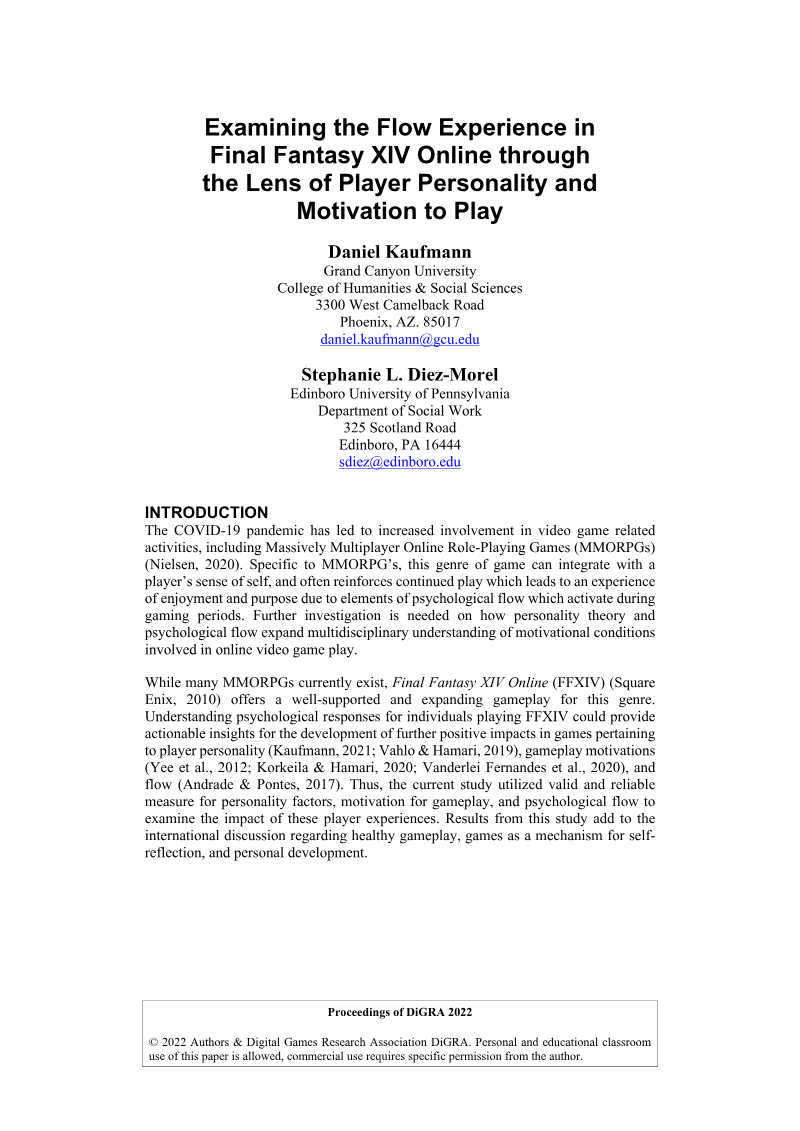
DiGRA · 2022
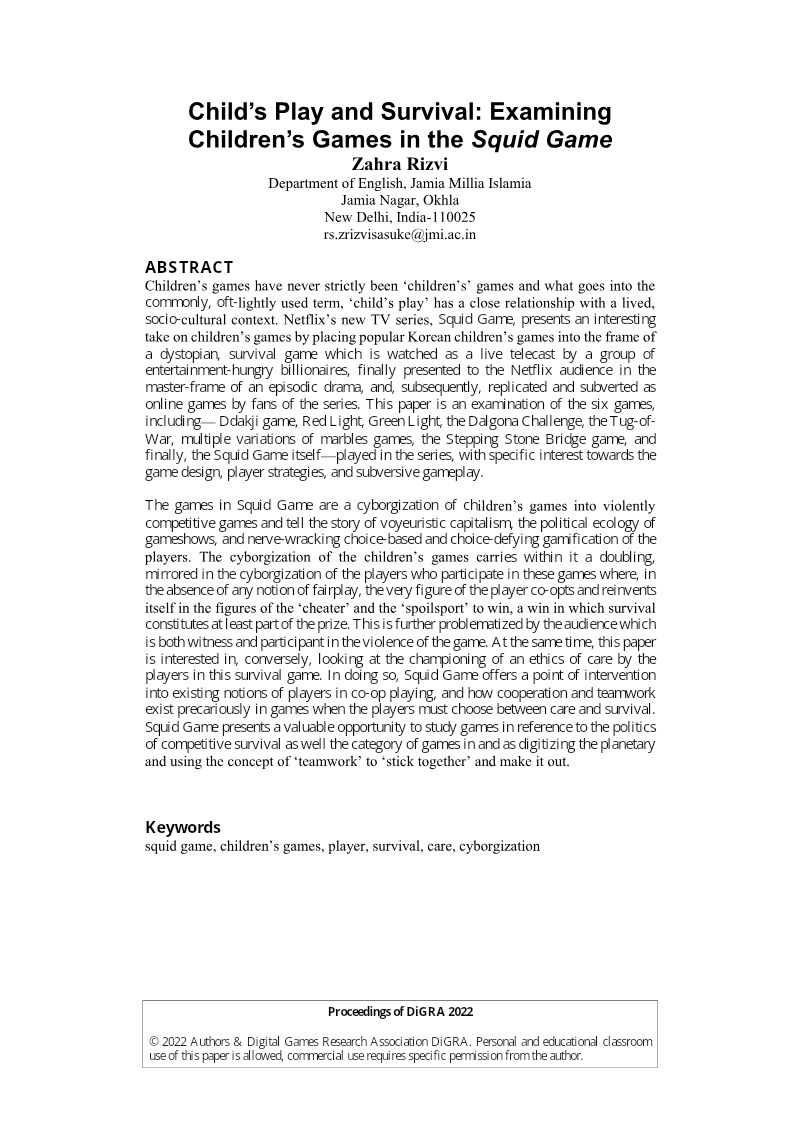
DiGRA · 2022
Game Developers Conference · 2022