1 free read left. Create a free account for unlimited reading + AI research.
Create free accountWhitepaper DiGRA
1 free read left. Create a free account for unlimited reading + AI research.
Create free accountWhitepaperDiGRA
The 2003 study portrays children of this age as active and articulate participants in game culture.
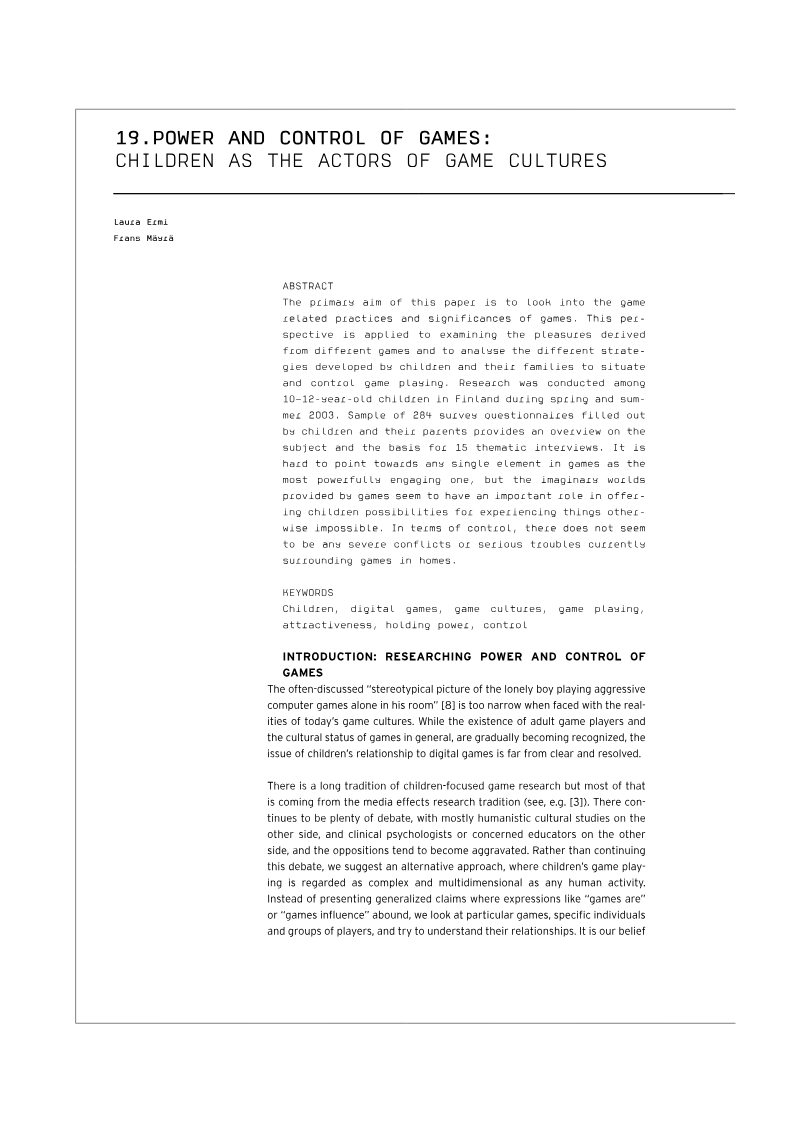
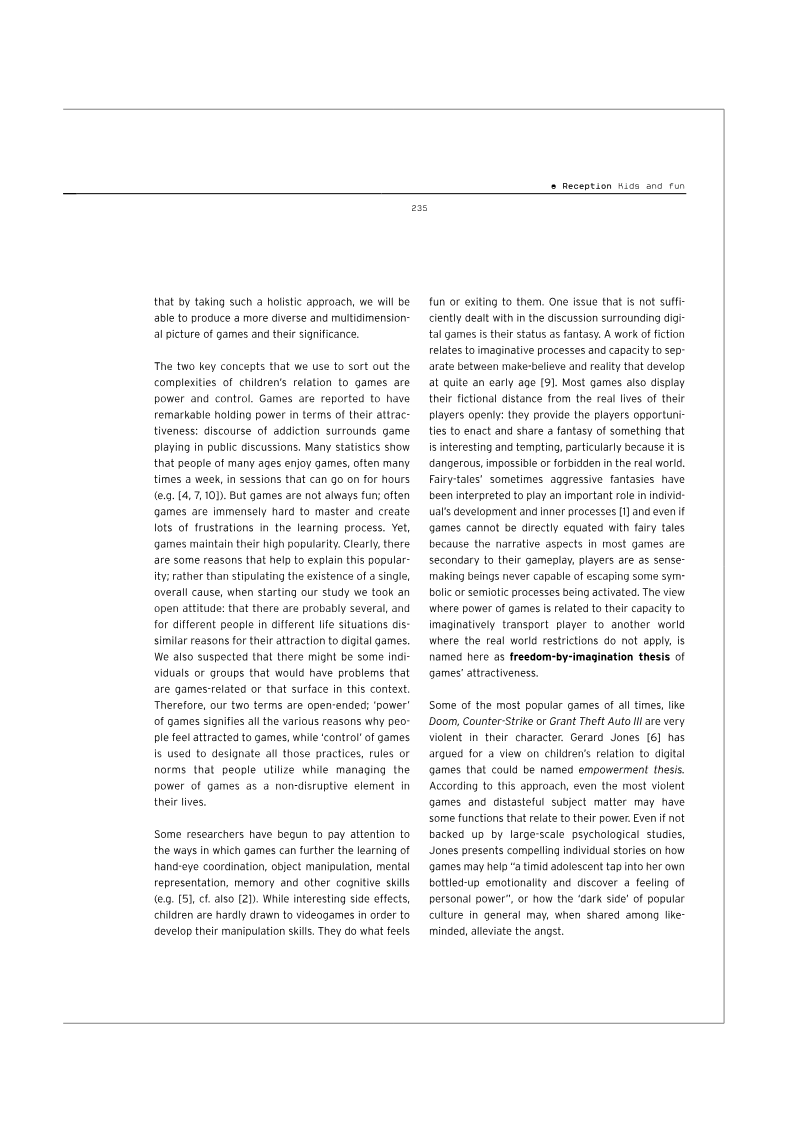
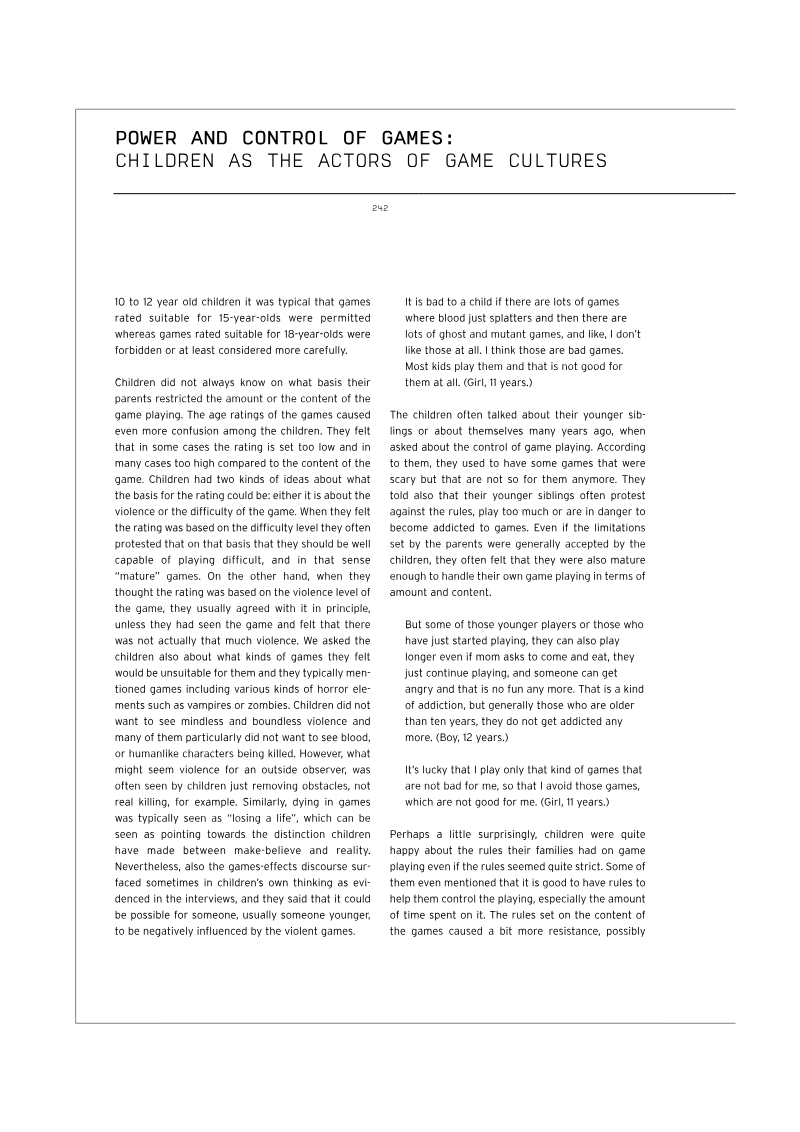
Ermi and Mäyrä's study examines the appeal and regulation of digital games among 10- to 12-year-old children in Finland, with research conducted in 2003. Drawing on a survey of 284 children and parents and fifteen thematic family interviews, the work asks where the "power" of games lies and how families exercise "control" over them. Its central argument is that children are active, articulate participants in game culture rather than passive or vulnerable consumers, and that the games themselves hold appeal through several interacting qualities rather than any single dominant feature.
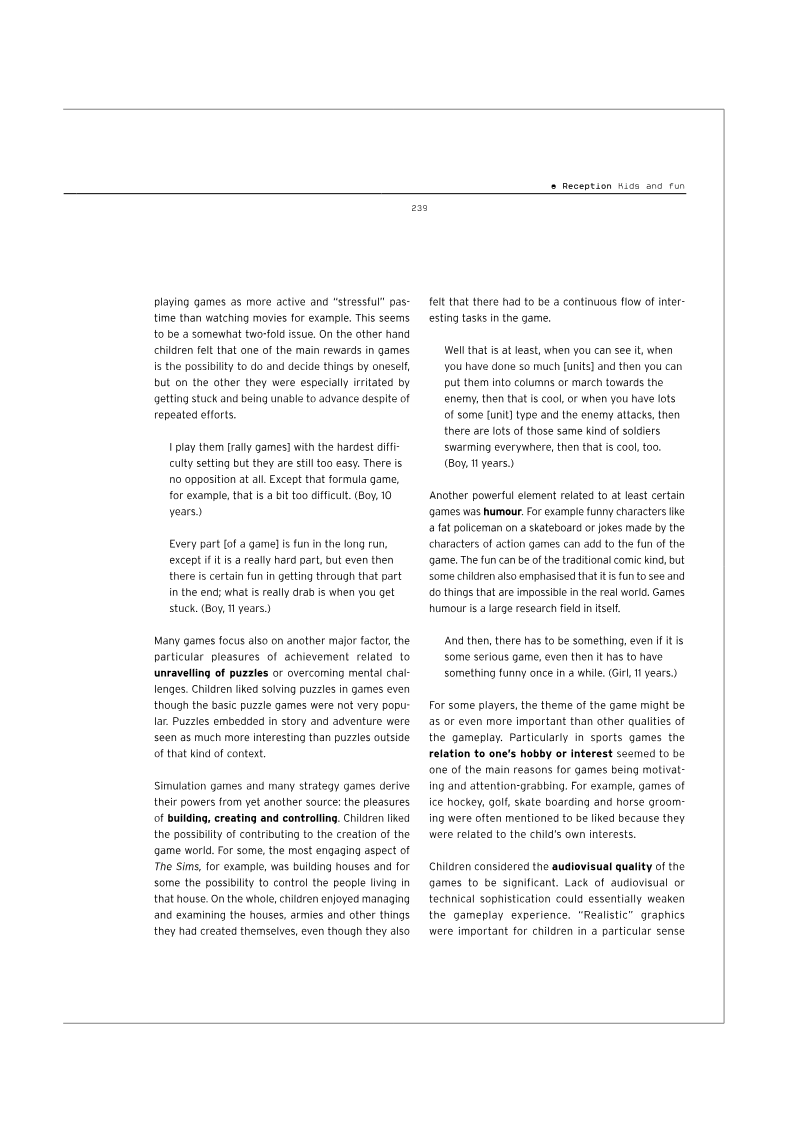
The findings identify imaginary worlds as especially compelling, since they make possible experiences that would otherwise be out of reach. Alongside this, novelty, adventure, persistence, a balance of challenge, and humour emerge as major sources of engagement. Children enjoy games for fun, puzzle-solving, achievement, building and controlling fictional worlds, and audiovisual quality, with interest frequently linked to their existing hobbies. Such enjoyment suggests that games are integrated into children's broader leisure and creative lives rather than standing apart from them.
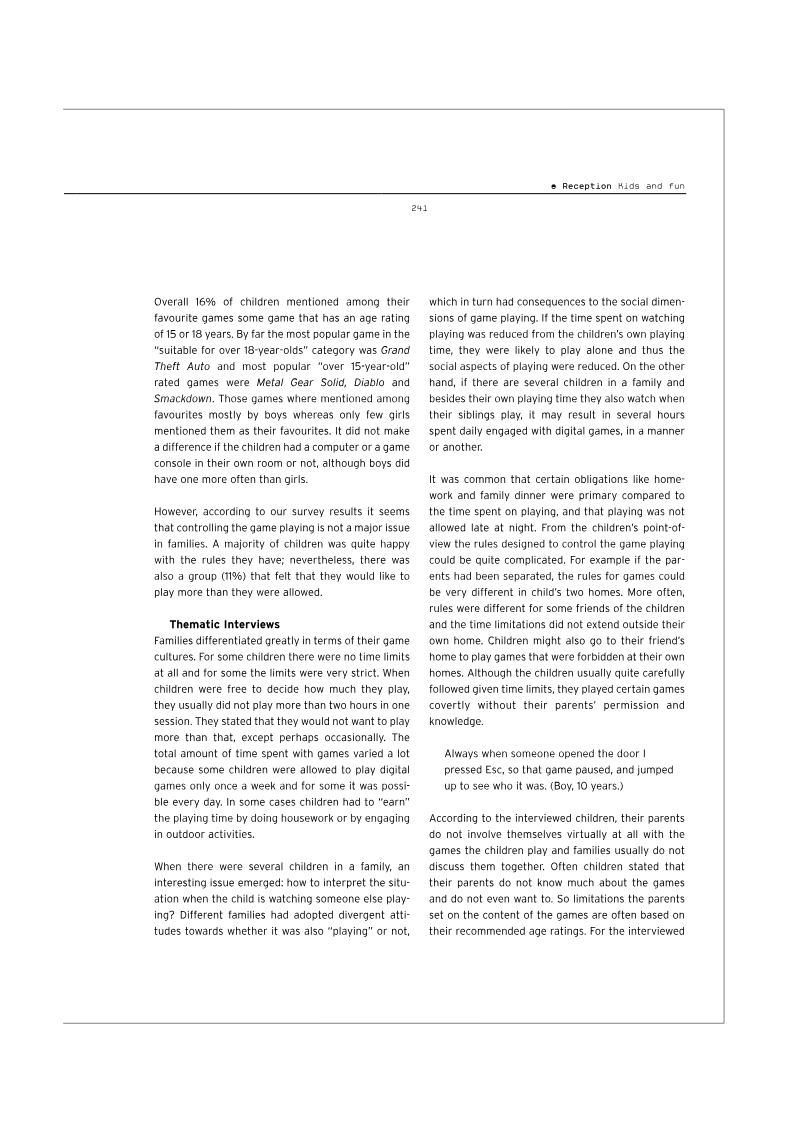
On matters of control, the study finds that parents more often regulate playing time (48 percent) than game content (29 percent). Most families impose limits, typically one to two hours per day, and children generally accept these rules, though many find age ratings confusing or inconsistent. Importantly, the research reports no severe conflicts or serious problems surrounding games in the homes studied, leading the authors to conclude that families have developed fairly sophisticated strategies for managing games' appeal. The scope is limited to one national context and a specific age group at a single point in time.
DiGRA · 2023
DiGRA · 2023
DiGRA · 2023
DiGRA · 2023
DiGRA · 2023
DiGRA · 2023
DiGRA · 2023
DiGRA · 2023
DiGRA · 2023

DiGRA · 2023
DiGRA · 2023
DiGRA · 2023