1 free read left. Create a free account for unlimited reading + AI research.
Create free accountWhitepaper DiGRA
1 free read left. Create a free account for unlimited reading + AI research.
Create free accountWhitepaperDiGRA
Prior work defines initiative as the ability to control an opponent's moves, which has been difficult to operationalize.
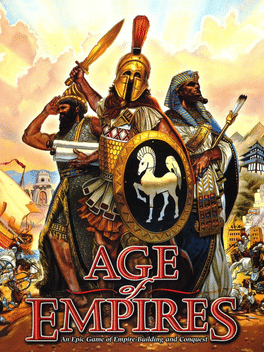
This study, by Oxenstierna et al. and presented at DiGRA 2024, proposes an attention-based model for quantifying competitive initiative in real-time strategy games and tests whether that initiative is linked to match advantage and player skill. Motivated by the difficulty of operationalizing initiative, which prior work defines as the ability to control an opponent's moves, the authors model initiative through the distribution of player actions across space and time. The analysis is grounded in 73,770 Age of Empires II matches involving 18,849 players, totaling roughly 49,679 hours of play, with matches restricted to players rated above 900 Elo.
The model partitions each map spatially using Voronoi regions anchored at each player's starting position and temporally from a first escalation point. It derives six control features and three initiative features from ratios of actions, subjects, and objects. Predictive power is assessed with Random Forest classifiers under 10-fold cross-validation, measured against a 50% random-chance baseline.
The principal findings indicate that initiative features distinguish winners from losers, though this separation narrows as Elo increases. Predictions made from the first escalation achieve roughly 60% accuracy, improving as matches progress, and the choice of feature set shifts accuracy by about 5%. Elo difference dominates early prediction, and the authors note possible overfitting of the Random Forest in later time segments.
The authors conclude that initiative is a measurable and useful construct for game-theoretic analysis of RTS play. The work's scope is confined to a single game, Age of Empires II, and to a skill band above 900 Elo, so its generalizability to other titles and to higher-skill populations remains to be established.
Each row is a game or company this document names, each column a document, oldest first. A mark means that document names it. Select a row to see those documents.

DiGRA · 2026

DiGRA · 2026



DiGRA · 2026



DiGRA · 2026



DiGRA · 2026



DiGRA · 2026



DiGRA · 2026



DiGRA · 2026

DiGRA · 2026



DiGRA · 2026



DiGRA · 2026

DiGRA · 2026
DiGRA · 2026