1 free read left. Create a free account for unlimited reading + AI research.
Create free account
Playraven on why you should burn the boats to win in mobile
Key insights
6 takeaways- 01PlayRaven mandates a 'burn the boats' strategy by exclusively developing original IP in the mobile free-to-play strategy genre, strictly prohibiting the cloning or reskinning of existing titles.
- 02The studio prioritizes the creation of entirely new game categories, a focus that has resulted in three consecutive global launches reaching top-ten status in multiple countries.
- 03The studio's high-performance benchmark for new titles includes day-one retention rates that often exceed 60 percent in the United States.
- 04Development cycles have been compressed to five months, shifting from long production periods to early, data-driven soft launches in markets like Canada and Australia.
- 05The team utilizes two-week sprint cycles during soft launches to gather quantitative user data and actively iterate on game mechanics.
- 06Success is measured by the shape of the retention curve rather than absolute metrics, with the goal of achieving a 'flat' trajectory that signals long-term player engagement.
Ask AI about this video
Transcript
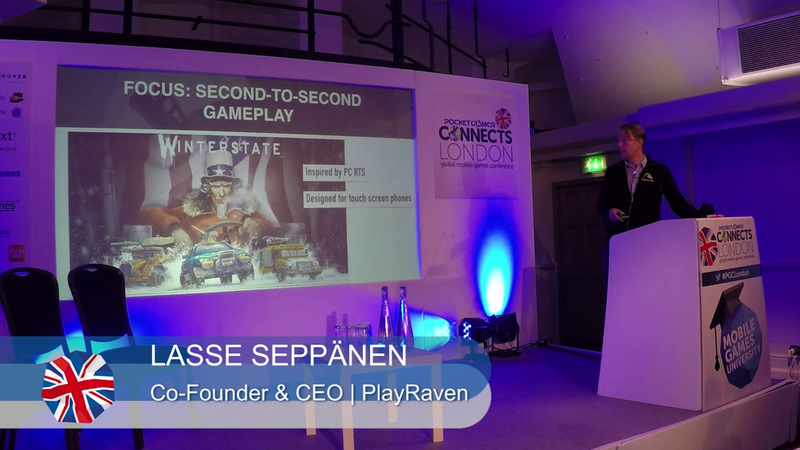
hey good morning we have the slides here ok so I'm talking here about burning some boats and I think we just skip to the last slide so the talk is over no just kidding so my name is Las aceptan and I work on games for almost 20 years now vilhelm had a fantastic presentation I hope you were all here to cede 30 minutes ago where he outlined the history of Finnish mobile gaming and I would I saw but most of the steps I was involved in with so mmm I've been in three waves of mobile so far and I've headed a 20 million dollar triple-a a project during my career but now I'm
heading a new start up here in Helsinki called play Raven and we are focused on on a free-to-play completely let me tell you a little bit about burning the boats first and then I will also share some some of the latest development techniques we've using to create success so here's the team at the moment we're 22 people the maybe special thing for us is that most of us are foreigners fins are a minority and we come from a number of different companies technology companies like unity supercell free-to-play company and so on and also we have launched three games so far globally and the thing about play Raven is that we don't only want to make a game that's not big enough dream for us
we want to make games that can create new categories what does that mean it means like civilization created a new category of games clash of clans in its way established a new mobile game category I think clash Royale doing it Pokemon go is doing it that's our that's our dream that's our goal we want to establish new categories of games that will then be a broad category developed by many developers of course that's a huge challenge because what we are basically doing is we're getting out of the comfortable pockets where everybody else is and leave their company and try to find new pockets where we're all alone and that's a bit of a scary prospect it's a bit bit like searching for new continents let's say Christopher Columbus when he started out he thought he was going to India he was pretty sure about it but he had no idea how long the journey really was and what he discovered was completely different but still if if we search for India and
we find America I'm pretty happy with that but what does all of this have to do with the burning the boats then why would we burn the boats that's a fair question it's it's something that I've held dear to my my heart throughout my career it's it's pretty important and this comes from ancient history where Alexander the Great when he landed in Persia with his army the first thing he ordered was bernal the boats and then he turned to his men and said we're going to go back home in person votes or we die that's a little bit melodramatic of course in the games industry here but there's a lot of truth to that because making games is hard and making successful games even harder this is a huge challenge that we're taking on and I think it we have to refuse the easy
road it's so easy to stay in your comfort zone like I said and just make a copy or a clone of an existing game maybe you reskin it to something like hey there's a fantasy version of this game let's make a sci-fi version of that that's going to be a huge killer but it's usually not that's that's the easy road and people think it's a safe and sound business strategy but often it's not the way we think of play Raven is that we have to face the challenge head-on on and forget about everything else we can't go back we have burned the boats and the most important thing that comes out of this is full focus we're just completely focused on the task at hand everything we do everything will learn during the journey is applicable to only that problem that we're solving and often how many here have their own game studio cool so you people know that
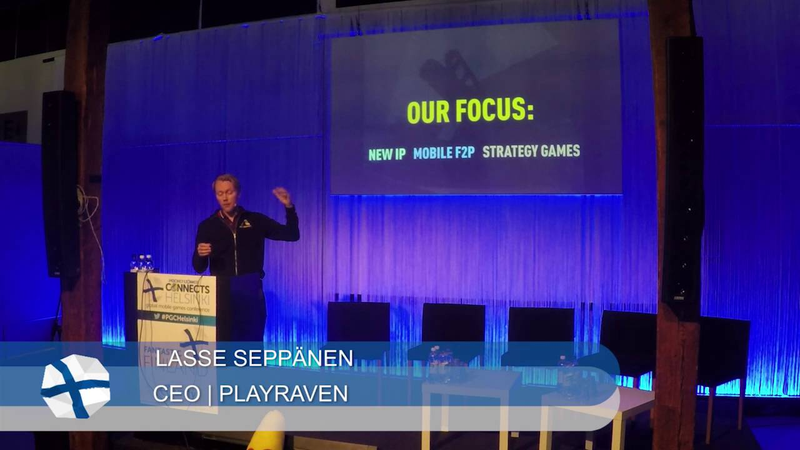
running a game studio is often like this it's just going too fast things are coming your way I could do this there's this opportunity they want to talk to us and so on if you don't have a clear focus then you're sort of grasping for all of these opportunities rather than going directly to your goal at the fastest possible speed you're kind of advancing on a broad front slowly so what we chose us focus at play Raven is basically we only make new IP so that's the category creation part we're obsessed with new I would say even to a fault at times so some of the design discussions we've had are just going far too wide and that's why it's important to curb that opportunity space in other ways so we only focus on mobile and free to play some of our people have a premium background from triple-a for instance so we just rule out premium completely and we don't discuss it we
don't talk about how about what if we just get point back to premium the other thing is strategy games so we chose that focus from like from the start and that's super helpful because then we don't deviate into discussions about you know maybe we should make a puzzle game you know match three or whatever which is completely focused on this genre although I have to say that these days it seems that the RPG genre and the strategy game genre are kind of overlapping a bit so we are also borrowing some RPG stuff in our games well now thinking about yourself why is focused so important i mean i already mentioned game design but everything else is also dependent on it it makes your work much easier if you have a clear focus recruitment all of the people we have recruited we openly said we only work on new things and we search for those kinds of people who have the mindset and the bold attitude that they can they can create these new things take the leap which is a
difficult leap and a big challenge but also investors we found great investors who are really focused on what we are focused on so they want to support us on our journey and they want to support making new things opening new categories it effects everything basically everything you do people you talk to meetings you choose to take and so on so what are the results from our focus so far we released three games our first game came out in 2014 top ten in ninety nine countries second game earlier this year februari number one in 41 countries especially happy about us number one because us is always our main target market when we're designing anything and then finally winter state top fine strategy in 123 countries so all of the games have been top ten upon launch very happy about this and all of them were very original Rob aside for instance has a very very unique game mechanic Heidi
one retention over sixty percent in the US market and so on so this can work but like I said it's a huge challenge and gotta be laser-focused on it but i wanted to conclude this top talking about our new title because i'm actually even more excited about this one here we're applying all of the learnings we've had all of the focus we've had has come to this point and this game is the news by master so we're making a new game we went back to the basics and thought about what does it really mean to be a spymaster what do you deal with in the first game you were building intelligence networks in europe and after all this experience and all of this work on these games with there's a couple of things that come together so being a spymaster actually is dealing with people and lots of
people they can look ordinary but they can be pretty deadly or they can be pretty devious people so we built this whole game around collecting these characters but we don't just copy some character collecting game we make our own unique game mechanics for this game and I wanted to share a few things about the development methods were using so this game we started from scratch with a new team it would have been so easy to put the same team to make another spy master key game but we felt that the first game just didn't it we know the brand and the the idea of being a spy master has huge potential but just didn't hit that mark didn't ring the right notes from the instrument so we decided to recruit the whole new team that's what we did last year we started
from scratch and said don't make a sequel to the old game forget about the old game think about what it means to be a spy master the other very important thing we did was we have never soft launched the gaming under 12 months we've always polished it to a degree and then said you know now it's ready for measurement on the real market and so on we've used testing methods like playtest cloud closed beta and so on but we found that those things while helpful they also can be a bit misleading because the qualitative feedback you get from a closed beta for instance does not necessarily correlate with what you will see on the market latest cloud the same thing fantastic tool for figuring out the usability problems in your first time user experience but unfortunately we've realized it doesn't really correlate with the things we really need the most which is d 14 d 30 and beyond a
retention so this game we put it in soft launch after only five months in of development it's out on the markets I since June and Canada Australia Netherlands are the markets where we have it at the moment the other thing we changed was bring it to soft launch very early and then start developing it with data so we move to a two-week sprint schedule where we have a build every second week and once we have deployed the build to the Android store we start buying users and we see the actual data from actual users instead of some qualitative or some clothes or some sign up a system where people have to opt-in to to play the game and keep qualitative feedback so we have representative data sample sizes now and we are also making a big change in which metrics we track
so for instance we used to be really excited about the Heidi one a day one retention for instance now forget about those absolute numbers it's far more important to find a curve that is flat enough because there are many things you can do later for for instance improving the first time user experience but if your curve is not flat enough you will not have that long tail and this shape of the retention curve we've been measuring every two weeks with this method and the results I mean a lot of people tell us you can't really raise retention in in soft launch I think we disagree because we worked on this for two months now a little bit over two months our d14 retention is double our d30 is pretty close to doubling at the moment we're going to deploy a new build this week's Friday so let's see if we
can get there but I just wanted to finish this by saying think about what you're doing and consider carefully have you burned enough boats because i think if you enough boats then you have a good chance to win thank you
Summary
The core strategy for success in the mobile gaming industry, as practiced by the Helsinki-based studio PlayRaven, centers on the concept of burning the boats—a metaphor for eliminating all fallback options to ensure absolute focus on innovation. By intentionally rejecting the "easy road" of cloning existing titles or reskinning successful games, the studio commits exclusively to developing original intellectual property within the mobile, free-to-play strategy genre. This rigid focus serves as a guiding principle for recruitment, investor relations, and daily operational decision-making, preventing the company from being distracted by peripheral opportunities that might dilute their creative output.
The studio’s primary objective is to establish entirely new game categories, similar to the market impact of titles like Clash of Clans or Pokémon Go. This approach has yielded significant commercial success, with three consecutive global launches achieving top-ten status in numerous countries. Key performance indicators for these titles include high day-one retention rates, often exceeding 60 percent in the United States.
To maintain this momentum, the studio has evolved its development methodology, moving away from long, polished production cycles toward early, data-driven soft launches. By deploying builds to markets like Canada and Australia after only five months of development, the team utilizes two-week sprint cycles to gather quantitative data from real users. Rather than focusing on absolute day-one retention numbers, the studio prioritizes the shape of the retention curve, aiming for a "flat" trajectory that indicates long-term player engagement. This iterative, data-backed approach allows the team to actively improve retention metrics during the soft launch phase, demonstrating that consistent, focused innovation is a viable path to achieving sustained success in a competitive global market.













Comments