1 free read left. Create a free account for unlimited reading + AI research.
Create free account
Inside view into the process and development of Battlelands Royale
Key insights
7 takeaways- 01Development strategy focuses on a 'Massive Online Competitive Casual Arena' (MOCCA) framework, prioritizing rapid iteration based on player feedback gathered during soft launches.
- 02The studio employs a lean, senior-only team that utilizes weekly sprints and avoids extensive documentation in favor of early, playable prototypes.
- 03Futureplay Games developed Battlelands Royale from initial prototype to global launch in under six months by targeting the underserved mobile battle royale market.
- 04Battlelands Royale has achieved significant scale with 11 million downloads and approximately five million matches played daily.
- 05The game demonstrates high organic growth, attracting 4,000 organic users for every single acquired user.
- 06The primary player base for Battlelands Royale is 80% male, concentrated in the 18-34 age demographic, with the United States as the largest market.
- 07Futureplay utilizes a hybrid monetization strategy, transitioning from a purely cosmetic-driven skins economy to incorporating advertising as a core revenue stream.
Ask AI about this video
Transcript
[Music] so I think we have about 18 minutes to talk about inside future play games battle lines Royale or in other words help to brew mocha but you're too afraid to ask what we call mocha is massive online competitive casual arena games and it's the newest thing that we started building a little bit over a year ago but actually this week marks the 18th year in mobile games for me so it's been a long time coming in other words just very briefly I mean you mentioned we've gone from casual to midcourt yes we started then more of the kind of what is now called hyper casual we coined the term beauty play and started with kind of ads first mentality and and that's how the company got started then we launched four games in the Idol series on that three years old about three million in funding about 25 people 13 million in revenues 40 million downloads seven launch games four cracked eggs when you're making an omelet you can't do that without cracking some eggs we actually did kill
or the team killed one product in soft launch battle bomber's arena last week as well and three prototypes that we axed so we still have six live games actually out there in the market and due to our ad heritage we have a big number of ad views 780 million a little bit over now in our last checked so that's not some numbers but getting into into kinda what I promised in this talk is that how do we view in terms of product strategy and how we look at the market then on how do we build the company and how do we come up with the ideas for what kinds of products we want to want to build so first of all from a kind of company company strategy point of view we really wanted to build a company not just build a game and get funding for a particular game for example to build a studio but we wanted to build a company in the first place and we also wanted to focus on doing things fast it doesn't mean half-assed it doesn't mean poorly it doesn't mean with mediocre quality it actually means doing everything with very high quality but it
means being very very rigorous in in kind of prioritizing and focusing on what you're doing because focus is actually the opposite of what people think focus is not what you are doing focus is not what not doing is all the things that are left out of your focus and that demands rigor so what we always developed to be fast is minimum awesome product Minimum Viable Product is not gonna cut it if you launch a mediocre game out there you call this off launch or beta you might give some downloads but more likely than that you're actually gonna need to pay to get users to play your game and stick around at center I mean it's not gonna work in the current market like we heard in in Jeremy's talk how competitive it is so if you're gonna launch something even if it's early on it's got to be awesome so we're focusing very much on making it minimally awesome and also one of the things that we've done I said that we've launched four games in the Idol series so we want to always launch a few similar products to learn more of the market then learn more of our own strengths and also kind of leverage
production synergies and and cross-promotional synergies but we think that we learn the fastest if we launch like four idle games and one of them I'm farming one about City one about minecraft one about youtubers and influencers etc that way we can see is there a theme that works better for this mechanic is there a theme that works better for this part of the market and and we can see if it's a genre or part of market where we want to stay for long or do we want to move on and try something else and what we're always looking for is trying to really align the stars can we get the timing right where the market is moving what is the mega trend er what is the whole thing that summer next year etc can we find openings in a market that's already saturated if it's a level playing field that's really crowded how we're gonna stick out from there what's gonna be our differentiation how we're gonna be stand out from the crowd and is it something that we actually want to build because if we don't want to build it if it's an uphill battle from a motivational inspirational point of view it's never gonna happen fast it's never gonna be good we're never gonna have fun we're never gonna laugh at the end of it that's it or its it's just gonna be
miserable so we're trying to align all those things and and when you're not big all you have is your speed and your agility so we try to do things very fast it doesn't mean that we work ourselves to death we don't we actually I don't think we even work 9 to 5 we work less than that but that don't tell anyone like Chris said is actually between friends here so it's not going to leave what I have over there is something old something new and something blue something that works for everything I've used it for 18 years for getting married entering Asia strategy or tech tragedy and everything you know it always works and it works for products beautifully as well so we always try to look for kind of hybrid product thinking where we kind of take something old something new something blue and this is an example of how we originally thought about our idol Idol games and view to play games so take the kind of quality stamp that we have in execution I mean the end user experience use the new monetization of focusing on ads first with V to play and take the simplicity of the underlying math and everything eternal scaling of
the game and the content in the Idol games and make it super approachable super simple to play hyper casual and go after massive themes and tried to offer in an innovators dilemma fashion the faster simpler funnier quirkier cheesier to play alternative done hey day or Sim City etc and tried to see if we can capture the market that way so there's always an idea how we go about it by anyway last summer or last spring already we had a strategy meeting our first ever and a last last tense with the board in Stockholm in may 2017 and that's when we first said hey we want to build something else after Idol games we'd only launched two Idol games so far but we have two other other games in production and we knew we're gonna be out with them by q1 2018 at the latest so we knew that we have a very good outlook for the kind of 25 people that we had already pretty much then for this year's revenues this year's profits like a solid base for a company to kind of take a little bit more risk and go after something where we think there's higher
retention higher monetization yes more competition or try to see where the puck is moving in an ice hockey analogy and tried to go there so we were looking for those kinds of opportunities and we did a top-down analysis at the same time as the teams were you know playing around with prototypes and playing around with tech and stuff like that at that point this is all data so don't take this as a reflection of today this is from last May we looked at revenue per download per month as a new metric from a penny numbers to kind of look at what's the accumulation velocity of the lifetime value of that game based on how long it has been live in the market how much revenue has gathered in those months that it has been live over how many downloads so what is the lifetime value in those months generated for all the downloads it's not a metric that existed anywhere else outside outside of the excels that we have but it was one way to cut through the quarter and look at different parts of the market while we find out while we were actually building a prototype one of the killed
products for clash royale was that there's only clash royale that's sticking out and everybody else is dead by the way side of the road that's not a part of the market to that we want to go in because we tried the prototype and we thought that it's gonna be really hard to make a better game that clash royale and it's a pretty kind of dealt market with so let's not try to go exactly there we looked at a couple other things like casual sports golf clash is actually the two other big bars over there on both platforms eight ball pool from Miniclip and all that there would have been an opening there but at the same time we're also looking at match tree which was actually a lot more healthy spread in terms of them there's always a new entrance to the market somebody who's making 10 50 100 million dollars in yearly revenues they have a tiny twist on the theme or a tiny twist on the metagame not so much success on the twist on the on the core mechanic itself trying to innovate too much on that but it's a staple category it's like toilet paper everybody needs it every single day many times a day so we thought okay Matt tree is there it's up there for the taking if we figured out
the right way and the right passion to go into that market but then something happened in in May we started playing pop G last May that's that's not actually those two middle pictures from our future line parties the one on the right is but we started playing it pretty much like every month every other month with the guys and the girls at the office and then every night on discord cetera and we started thinking over the summer how do we do battleground so mobile how do we do battlegrounds for mobile and at the same time we killed the clash royale prototype and then we started to build our Bomberman disk game during the fall as well so we decided to put the Matsuri on hold because we thought that that market is not going to go anywhere so let's go after mochas let's go after massively online casual competitive arena games so what we mean by that is that we want to take the kind of excitement every match tells a story of the mobis where you really want to get deep into the game and you really want to be good at that and you want to learn and be better and it's so exhilarating you have the the pain the
agony the glory the fu that I got use all those emotions all those feelings and at the same time what we can learn from the kind of IO games the agario source leader is of the world the accessibility jump right in and yes every match tells a story as well but how do we add a little bit more depth than retention and meta games so that people stick around for longer and want to stay and want to pay one way or another and how do we kind of get into the eSports vein not just to make it like we have a buzzword a slide deck we don't we're not raising money to use eSports in a slide deck for it for funding or anything like that but if every match tells a story it means that it's very share worthy and if it's share worthy it's also a watch worthy so it's very spectator friendly people want to watch this type of content so let's make sure that we make that easy to do and and kind of cater to that later on and keep our quality mark and that's the kind of hyper product strategy and product thinking on on the mockers for this one and in hindsight when you look at gamer fineries data for
example mastery is like toilet paper it's the biggest part of the US market in q3 this year with almost 20 percent market share eighteen point eighty eight but there's a new category that didn't exist a year ago or last summer which is called battle royale so battle rail is there that's why I wanted to go and go quickly because it didn't exist it but we knew it's gonna come so we had our first prototype at the end of October we showed it around everybody loved it we started pre-production last December looking at how we're gonna build it what it's gonna look like what are gonna use for the multiplayer technology and what are we gonna use for this and that on the backend side actually really three people only started on the 2nd of January and two others joined in in January 1st of February due to some Southeast Asia winter escapades that what they were doing in Thailand we saw up launched less than three months later on March 28th in Finland Poland Ukraine and then we added up more countries for
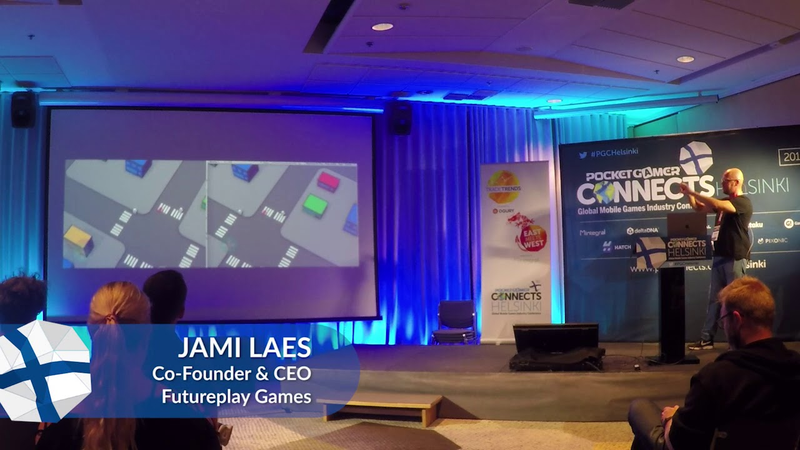
the next three months and we scaled the team to eight in May once we were already like two months in soft-launched at that point and we did like by weekly soft-launched updates really trying to kind of add to the core Morgan's more more features adding armor etc on all kinds of UI things and adding on the monetization side and we went live a little bit less than two six months from starting officially the project on both platforms On June 28th so I'm just gonna show you very briefly what the first prototype looked like this is not from a phone this is from the editor but it was exactly the same on the phone just imagine you know only kind of part of it cut out so very kind of similar in terms of the what is the field of vision and how much we see it at the same time on the screen obviously a little bit more clunky to play with the mouse and choose to play at this point and everything but that was their first starting point in October then a quick visit to the unity asset store to make a little bit more kind of objects there and and buildings look a little bit more interesting still nothing
really done for the characters at this point we were basically just testing the tech testing the kind of visibility testing the third-person view at some point we did a camera version we're actually in first person but one of the things that we decided early on what was the whole point of this kind of game was that we want to go third-person to make it more fitting for the mobile screen so that you can kind of it's more about pacing and placement rather than accurate controls on three dimensions with the twin sticks for shooting like it is in first-person shooters this is more tactical and and more strategic in in terms of do you going to the fight or do you go and stock up do you avoid the fight or do you want to be the third man going into the fight so you wait that one gets killed first etc so there's more more of that in game when you see more of more of the scene at the same time and you kind of see ahead more than you do in a first-person view then there was some visual development we tried a lot of different kind of styles for the characters and for the environments and we tried to kind of stay as clean and
simple as possible so that we don't over complicate the readability of the game but we tried a lot of different characters because we're thinking that we want these characters to be enough so that they could be you know like plushy toys or statues or kind of portray some of the kind of more stereotypical pop culture memes or characters from other other universes and stuff like that but we're trying very kind of unique designs as well but then where we ended up was a little bit more polish a little bit bubble head kind of visuals what you see currently in the game but actually next Monday there's going to be an upgrade for the whole visuals as well production I'm not gonna go into a lot of details about that super simple one week Sprint's build after every week everybody does their own and takes care of themselves very senior team I didn't have to do anything I was just looking at the bills every every week and laughing my way all until midsummer because it was so I've never seen such a smooth production and I think one of the
things that is not mentioned there but I think we had this conversation with one of the lead developers mica at one point that what really helped a lot was that we had a prototype that made it super clear what we want to do based on that prototype we didn't need a lot of design documents or or anything because the prototype told everybody exactly what we want to get out of the final game but the minimum will awesome launch plan what we went out with then on June 28th this year it had the metagame with the battle pass we had a lot of content in there kind of the basic stuff what you expect in the skins economy like what fortnight has but at the same time we knew that it's really a minimum awesome launch plan it's not the full launch plan a lot of companies wouldn't have launched the game where it is but we think it's actually better to go go out early and here's the reason because I've been involved involved maybe somewhere between two 250 games over the 18 years that we've launched and you never know you can just never know it doesn't matter if you're two years in soft
launch for six months or two days it might be different when you go global and that's happening quite a few times and I'm sure there's people in the room where your soft launch metrics your beta metrics are not actually kind of representative or of full launch or a global launch and this kind of game what is kind of battle royale on mobile we didn't really know so we wanted to really kind of develop it together with the community and kind of get out there as early as possible and take a hit in some respects with the golden cohorts knowing that we don't have a lot of social features we don't have salons or or squads for for people and all the kinds of stuff and bells and whistles that people are expecting from the bigger battle Royales now on also on mobile but we wanted to get out early and based our kind of future verdict thinking and direction on actual data and actual community and actual kind of feedback what's happening there so far it's pretty good we have about eleven million downloads since the launch there's about five million battle started every day about ten battles per
player and what we didn't expect well we kind of needed that it's it's gonna work to our favor that we go after the whole genre brawlers or battle royale on mobile that is not oversaturated yet but we haven't done a lot of paid user acquisition but we do it every day at small scale like couple under two a couple of thousand bucks a day stuff like that but for every player we acquire we have four thousand players organically on top of that so there's a lot of players who want to play this type of game and we've seen the same thing on the social side as well we have this own battle lines real creator Club which the youtubers that the influencers that are there they have were 13 million subscribers half a million active followers over the different social channels we got 60,000 people on our discord server talking about the game and setting up their own clans and own servers and own voice chats and stuff like that a lot of uptick in our own official channels and we've got a lot of fans tuning into our live streams that we host with the
development team from time to time to do different challenges and and play around with with some of the community and we've also kind of extended our team into the community so we have 30 volunteer moderators who help us actually regulate and answer and foster the communication and conversation over the different platforms whether it's ready at this court or Facebook for now and it is very male for now but it's actually being growing on the female side is about 80% male over the whole lifetime that we've been live over both platforms USA is our biggest market about 20% of daily sessions over there and 62% of all players are in the car now hardcore came a gamer male category of 18 to 34 years old and yes these gamers want to play the coolest newest things in sitar so the very trend driven so young trendy gamer oriented audience and we're actually going live next Monday I can't tell you all the details about season 2
but season 2 is gonna add a lot in terms of how players can progress in the game a lot faster and go through the season levels a lot more content even new types of content that we haven't had before lots of new guns and this is something that we've been we've been doing together with the community but I think it's just wonderful to see that we've actually been able to combine what's happening in the market what is the right timing what we want to build and how do we do it with our way with no no kind of overthink and let the team design and let the team run with it and go after the market opportunity and the timing that we have and that's what we've done with battle ends and we're just getting started thank you any questions sure great talking great game thank you so much I was curious as you were developing it what did you see that was already out in
the space that was what was one as you were you know prototyping and then bring it into soft-launched what did you see in the space that was working in like working in in terms of similar games and then sort of how did you position your game alongside those well in terms of what we saw working late in the process of us went for tonight launched with the battle paths and we decided that we want to try to be a true skins economy a visualization only so Cosmetics and no power progression no selling of power no kind of play to win sorry paedo and stuff for anything like that that's what I wanted to try and go clean with that we're gonna be moving a little bit away from that because without the kind of huge brand and hype what fortnight has we haven't seen the monetization levels that we hope we would see it's still profitable and still growing and it's it's fine but we know we can do a lot better for example sometimes we break our own code and sometimes we break our own formats so I don't know if anybody noticed but we didn't put any ads into battle on Israel when we launched even though we have about 800 million ad
impressions so far and 70% of our 13 million in revenues is from ads but we wanted to see how does it work without so you will be seeing ads later and battle lines as well and let's see how well that works but in terms of like gameplay we didn't see any anybody else where we will look at what's happening from the gameplay point of view yes we were looking at the big big guys in publishing and 49 in terms of what types of content and what kind of you know content they have in terms of modes and dances and skins and and guns and all that so it's gonna feel familiar but different for the players as an environment than as a game awesome thank you do you have any more how many users do you have to have to like your game is a PvP game so how many downloads do you have to have to have enough players to play the game well we actually also have bots in our game I don't know if anybody has noticed
a lot of people hadn't but you can play against bots as well and you don't even realize that the biggest telltale that it's about this actually the naming they're the boats can be told away from the names but in terms of like in soft-launched we thought that we need at least like 20,000 downloads and maybe a thousand a day or something like that so the we can have enough concurrent players to really kind of test the kind of simultaneous gameplay with the server rooms to see that is the network messaging number two hi what is the kind of situation in terms of lag or is there gonna be any kind of lost men lost packages or whatever I think we were looking like like 20,000 downloads well we needed initially to get like a single market going and test it there but what ended up happening was that we we had a lot of downloads in all the markets where we went live in Google early access on Google Play and later iOS as well and then we didn't need to acquire users the users just wanted to download the game in those markets enough to test everything on the server side it wasn't a problem we thought initially
it was a problem our lead developer said that we can never develop a game like this we need to spend so much money buying the user so I said well we'll cross that bridge when we get there let's just do it [Applause] [Music]
Summary
Futureplay Games emphasizes a strategy of rapid, high-quality development centered on the concept of Massive Online Competitive Casual Arena (MOCCA) games. The company’s approach prioritizes agility and the creation of a minimally awesome product over traditional, lengthy development cycles. By leveraging a hybrid product strategy—combining established mechanics with new innovations—the studio aims to identify market gaps and capitalize on emerging trends, such as the rise of the battle royale genre. This methodology relies on rigorous prioritization, small senior teams, and a commitment to community-driven development, where player feedback during soft launch informs subsequent feature updates and monetization adjustments.
The development of Battlelands Royale serves as a primary case study for this strategy. Following a top-down market analysis that identified battle royale as an underserved category on mobile, the team moved from initial prototyping to a global launch in under six months. The game utilizes a third-person perspective to optimize for mobile controls and emphasizes tactical gameplay. Despite initial plans to rely solely on a cosmetic-driven skins economy, the studio has remained flexible, planning to integrate advertising—a core competency of the company—to improve monetization. The game has achieved significant scale, reaching 11 million downloads and generating approximately five million daily matches.
The studio’s operational model is defined by a data-informed, lean production process. By utilizing weekly sprints and maintaining a small, senior team, the company avoids the overhead of extensive design documentation, relying instead on the clarity provided by early prototypes. The studio also leverages cross-promotional synergies and organic growth, noting that for every acquired user, the game attracts 4,000 organic players. Currently, the audience is primarily male (80%) and concentrated in the 18-34 age demographic, with the United States serving as the largest market. Future development focuses on seasonal content updates and refining progression systems to enhance long-term retention.