1 free read left. Create a free account for unlimited reading + AI research.
Create free account
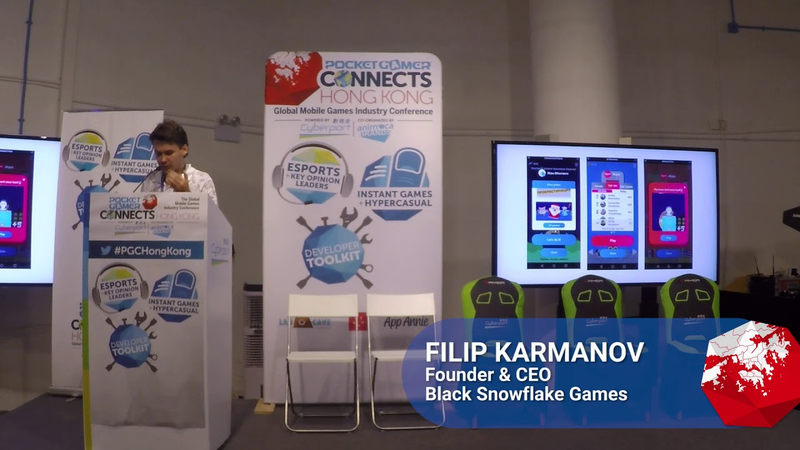
PGC HK 2019 - HTML5 in 2019: Took Off, What's Next? - Filip Karnamov
Key insights
6 takeaways- 01HTML5 gaming has evolved from simple chat-based mechanics into robust, app-store-like ecosystems on major platforms such as Facebook, WeChat, and VK.
- 02The analysis is based on the professional management of over 60 HTML5 titles, confirming that the instant gaming sector remains a high-potential market for developers who master social integration.
- 03The decline of 'quiz-style' apps, caused by platform-imposed restrictions on user data, serves as a strategic blueprint for developing more sophisticated, sustainable hyper-casual titles.
- 04Creating a unified brand ecosystem across multiple games allows for the use of shared APIs and streamlined development, which significantly deepens long-term community engagement.
- 05Developers must build scalable, independent backend architectures rather than relying solely on platform-provided tools to manage the traffic surges associated with high-volume user acquisition.
- 06Sustainable growth in the instant gaming market requires blending hyper-casual, short-session gameplay with native social features like viral loops and community leaderboards.
Ask AI about this video
Transcript
Okay, so first of all I would like to send the Facebook game connects team for an an excellent opportunity to speak at this public event at public city of Hong Kong. But so let's come to actual topic. I'm going to share some insights of how the casual games can bite with our HTML 5 gaming ecosystems on the mobile web. But first of all I would like to introduce myself. So Excuse me. Ah, okay. My name is Philip Kaman and I'm a serial founder of Black Snowflake Games where a game develop I where a game development studio which has strictly focused on HTML 5 mobile first games since like 2013. So we work with HTML 5 games with like
around 6 years. And have released over 60 HTML 5 games till now. But so now let's come to the actual topic. So nowadays many social platforms has already rolled out their own HTML 5 platforms with most notable being of course Facebook instant games which is a worldwide which is recognized worldwide, but also there are other platforms to mention. For example, in China it's WeChat mini games and mini programs. It also may be TikTok or and even to tell you sub each with its own features. Also right now we can see a street a shift from a strict chat based gaming gaming solutions to a more app store like approach which means that it's possible to play games without starting a chat. For example, if you remember the very early days of Facebook instant games it was very strictly tied to chat features. You need to send the game to another user in order to start the game. But right now we can see that you can
play alone as well at the end or invite players when you are already playing. So, coming back to the current state of instant gaming, I have to say I cannot not mention that a huge boost in Facebook instant games which occurred like last autumn and and last winter. Which it was called by trivia apps like the most notable I home or OMG Wow and so on. According to instant intel.co, the Facebook instant games, those quiz rate proof of platform used base since October of 2018. You might probably have seen those games like like you've probably seen even the post from them on your Facebook friends newsfeed like I'm I'm 100% badass. Tap to check how badass you are something stupid or similar like recently in your newsfeed. While some some might consider those apps non-games, they clearly have mastered the art of virality around the
games purpose down to share this with your friends. It was nothing to mention that quizzes are easier to make which resulted in which resulted and eventually led to instant games platform literally flooded with really low quality content and Facebook obviously didn't like it and decided to strip so-called minimum utility apps. It's how they call those quiz with from main viral features especially user info which helped to personalize shared post. For example, access to user profile picture which can which previously could Oh, I'm I'm sorry. I'm sorry. Sorry. Can you hear me right right now? Okay. Okay, thank you. So, the Facebook decided to strip quiz apps from main social features which resulted in a coming down of the world. But can we learn something from
from the from the rise and the fall of quiz apps? Definitely, since there are ways to use this approach in more advanced games. Like for example, hyper casual games, one of the modern trends of mobile defined around 5 years ago and getting its hype for the last two. If you compare this trend to trivia apps I mentioned before and more traditional social games aimed for a long lifetime such as match three with 100 health levels. Hyper casual will be somewhere in the middle of in terms of casual user engagement. You can see that trivia has traits like tap, see results and share to your feed. While social big games, as we can call them, are more toward are more um may not may not be so viral, but they're definitely much more easier and more more perspective to monetize. And hyper casual games can be built like tap, see results, repeat and share.
One additional step is not so much in order to catch the viral flow of this if this stream is used properly. Sounds like a neat opportunity indeed, but what if we'll take a different approach and focus on promoting our own games brand rather than one game. Actually, we could even drip and launch a whole hyper casual ecosystem in order to engage users better. So, our first case study of our ecosystem was a game brand Garage launch in social network VK, which is the biggest social network in Russia, but this case can also be applied worldwide as well. So, for initial launch we chose VK of contact, which is the biggest social network in Russia, and as we already had experience in publishing games, right there. But most features from this case can be repeated on other platforms as well. The ecosystem consists of a unified brand, graphical user interface, and social functions, while utilizing social network's native
features. Garage also offers its own solutions such as advance leaderboards and score promotion in order to promote user engagement even more. Compete with friends and to get to all-time leaderboard or the daily one. You can even play on behalf of your favorite community on VK to increase its overall score with each of your records. This feature is a blast for attracting large communities with a big user base. Not to mention that the unifying approach also means that we can write an API once and then use it in all games along to focus on game design and deploy even faster. The key point is to utilize each social platform's features to engage users better and build a community around games. For example, VK did come up with to dynamically change the community's cover, which we used to display today's game of the day and today's top three results in it. Also, usually there are plenty of things which can be done with platform's API.
For example, we can offer a custom skin based on Sorry. For example, we can offer a custom skin based on user's profile picture as seen on the screenshot on the left. Or journeys for game for journeys the game community or another one for trading in-game currency with friends as seen on the screen from on the right. Basically, anything aimed at growing your user base besides the main standard sharing and in your feed, which is actually represented as a big red button under the replay one in our ecosystem. Thanks to those tricks, our community is still growing. Even since it's a beginning state right now, we plan new games even more often and expanding to other platforms such for example as Facebook which are maybe in the TikTok and so on. One thing to note is that a strong backend is very important when when going this way instead of only instead of only using the social platforms built-in features like the leaderboards
and so on. The Christmas we with we have delivered a same game together with VK who were in charge for big like very big user acquisition which resulted in a very big user flow. Our servers are capable of handling user load of well, 5 to 600 users simultaneously. But when the promo just started, it turns out that it turns out that the traffic was too much even with all sorts of with all sorts of content delivery networks like CloudFront and so on, which resulted in a simple server falls because there simply wasn't enough hard drive power to and the infrastructure also scaling was not working as expected. Many users got web page errors while opening the game for the first time. From this experience, I can say that and advise planning the backend to handle a well above amount a well above expected amount of users.
But what about the games actually? Well, I think that there are 20 discussions of key key points to develop successful and hypercasual games. But I don't forget that we have them integrated in a social platform so we can have more access to social features unlike the native games. As I stated before, hypercasual games model can be supplied to launch, play, share, repeat, which is very close to Trivia Burst which got a very big viral wave on Facebook well last year as I said before. So from our experience, there are several basic things to note if you want to fit your game into this paradigm. The first one is short sessions but many attempts, also known as easy to learn and hard to master. The most obvious example is Flappy Bird. Although I feel that this game may be a bit too difficult and frustrating, it has a very notable combination of one-tap gameplay,
difficulty, and addict- and addictiveness. Let the player fight for some rewards, which means not only in-game goodies in form of new weapons, maybe currency, and so on, but also something visible for other players, like top places in leaderboards. Since our games live in a social environment, uh those socializing rewards can encourage to invite others just to show off, resulting in a loyalty boost. Of course, we should not forget about retention mechanics. And again, as a rule, there are not so much difference from native games. We can use rewarding mechanics such as daily prizes s- for just opening the game, notifications which can be implemented in most social networks. And even bots, which is also can be a great way to communicate with the audience via private messages. By the way, be sure to check out the social platform's rules, as there may be restrictions to guys what you can send to your players.
One of the examples that we actually implemented is a daily read about in combination with not a fun users about their place at the end of the day. If they submitted any new record today, some games even rewards top 10 players, encouraging them to play again and and again. The next point is to encourage encourage to play again and again, but also encourage to share, which speaks for itself. It's It is the best way to boost games for all time and reward players for sharing. Is a bulletproof way designed to game to make players to make the player want to share my results naturally going through. But here comes the art of content making. It's up to you decide what should your game what should make your game shareable. But little hint is to look at the current internet culture trends actually. Maybe what's so popular in the internet right now, maybe make a game about this one thing. And finally, keep it minimal but not very minimal. The purpose mentioned just
just as an example of a gameplay model. But not as a whole game to take as an earth as a reference. Well, looking at at our points, it lacks unlockable rewards for attention mechanics and and straight for all the drivers like instant sharing and so on. We can say it's trophies content based, but it doesn't actively use social sharing. It's a native game after It's a native game after In conclusion, instant games platform are on the rise and it may be great time to start considering entering this emergent market. Not to mention that it's also great way to engage non-gamers whose priority is social interaction. You can play game and share it with your friends right there. And while you can basically fit any games there, hyper-casual simple and viral is think a new bomb on social net on mobile social platforms. And I hope really to see that we'll have
many new hits on social networks with instant gaming. So thank you so much. I'm a bit nervous, but if you have any questions, I'm ready to answer. Thank you very much. Thank you, Philip. So we actually have a little bit of time before our panel comes to the stage. So yeah, we definitely have time for some questions here. So I've got a mic. Does anyone have any questions for Philip on this topic? No one at all. It's a quiet here. It's too hot. Maybe everyone's kind of fallen asleep. Well, if people do have questions for Philip, of course, you're sticking around for the rest of the afternoon, I hope and people can reach you on Pitch and Match perhaps. Yeah, and also of course share this email just there. So, please do please do catch up with him there. Um, if there's no more questions, I thought that was great. Well, I thank you very much. Then you're done. Thank you again. Thank you Philip.
Summary
The evolution of HTML5 gaming on mobile social platforms represents a significant shift from chat-dependent mechanics to robust, app-store-like ecosystems. The primary thesis posits that developers can achieve sustainable growth and high engagement by integrating hyper-casual gaming models with the native social features of platforms like Facebook, WeChat, and VK. By leveraging viral loops, social sharing, and community-driven leaderboards, developers can effectively reach both traditional gamers and casual users who prioritize social interaction.
Key findings indicate that while "quiz-style" apps previously dominated the space through aggressive virality, their decline—driven by platform restrictions on user data—offers a blueprint for more sophisticated hyper-casual development. Successful implementation requires a balance of short, addictive gameplay sessions, clear reward structures, and social incentives that encourage organic sharing. Case studies demonstrate that creating a unified brand ecosystem across multiple games allows for shared APIs, streamlined development, and deeper community engagement. Furthermore, the analysis highlights that technical infrastructure is a critical bottleneck; developers must prioritize scalable backend architecture to handle sudden surges in traffic, as reliance on platform-provided tools alone is insufficient for high-volume user acquisition.
The scope of this analysis covers the global mobile web gaming market as of 2019, with specific focus on the Russian and international social gaming landscapes. The methodology relies on professional experience in game development and studio management, drawing from the release of over 60 HTML5 titles and the management of cross-platform game ecosystems. The conclusion emphasizes that the instant gaming market remains a high-potential sector for developers who can master the art of blending minimal, hyper-casual design with deep social integration to foster long-term player retention and community growth.














Comments