1 free read left. Create a free account for unlimited reading + AI research.
Create free accountWhitepaper DiGRA
1 free read left. Create a free account for unlimited reading + AI research.
Create free accountWhitepaperDiGRA
Hobbyist boardgamers value control over lighting, temperature, noise, and component protection at home. They still choose to attend Meeplecon, which offers little of that control.
This study examines why hobbyist boardgamers attend a public convention, Meeplecon, a small annual event in Melbourne, Australia, that draws around 400 attendees, most of them returning participants. The authors are interested in an apparent contradiction: hobbyists who value control over their play environment, including lighting, temperature, noise, and the protection of their components, nonetheless choose to attend an event that offers little of that control. Their central argument is that participation in a community of players and hobbyists can outweigh these practical drawbacks, and that the experience of attending an event can align with or exceed players' everyday enjoyment of play.
The research is qualitative and draws on two sources: observation of the convention, including photographs and field notes, and interviews with 22 attendees (11 men and 11 women, aged 28 to 64). Thematic analysis yielded eight key themes. Playing games was central for all participants, with subthemes including trying new games, playing long sessions, and sharing games with others. Participants also valued setting aside dedicated time away from everyday obligations such as housework and childcare, and the convention's community was notable for its diversity, its welcoming atmosphere, and its role in forming new friendships. Several attendees came specifically to meet people.
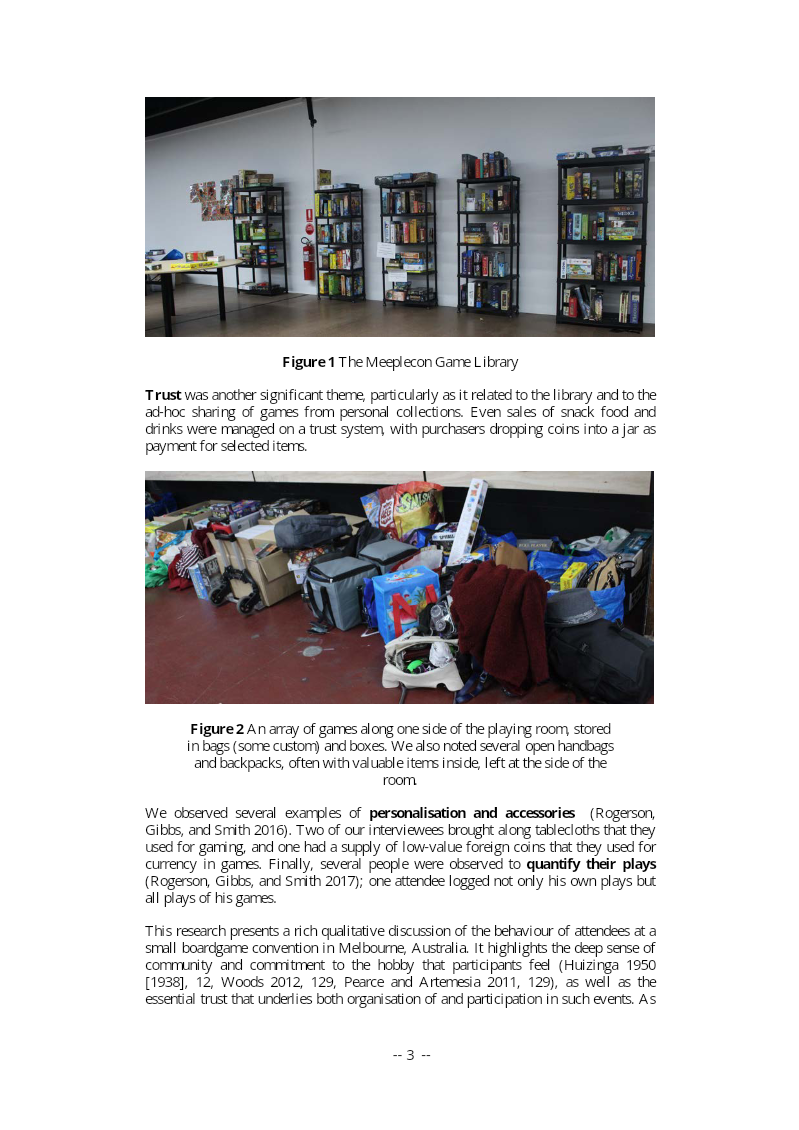
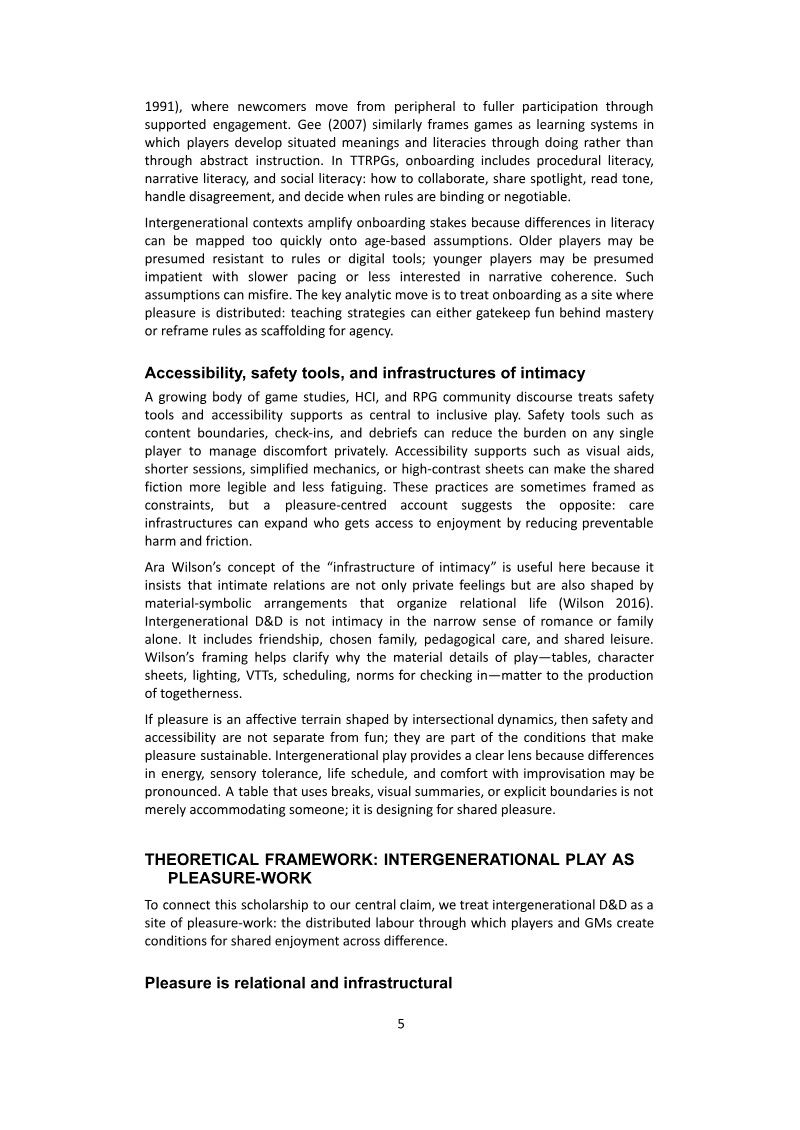
Practices of trust and informal exchange emerged as another significant finding. Meeplecon operates a freely accessible game library with no formal borrowing process, relying on a text-message request system for two shelves of members' games. Attendees bring games to share, and snack purchases are paid for by dropping coins into a jar. Personalisation and accessories, such as custom tablecloths and in-game currency, and the quantification of play, such as logging plays, were also observed. The authors also situate attendance within research on sports and media tourism, where visiting a place or event can serve as a pilgrimage or defining moment in a hobbyist's engagement, though the study itself is limited to a single small convention and a modest interview sample.

DiGRA · 2026

DiGRA · 2026



DiGRA · 2026



DiGRA · 2026



DiGRA · 2026



DiGRA · 2026



DiGRA · 2026



DiGRA · 2026

DiGRA · 2026



DiGRA · 2026



DiGRA · 2026

DiGRA · 2026
DiGRA · 2025