1 free read left. Create a free account for unlimited reading + AI research.
Create free accountWhitepaper DiGRA
1 free read left. Create a free account for unlimited reading + AI research.
Create free accountWhitepaperDiGRA
The paper argues that existing player-experience frameworks fragment fun into smaller constructs without explaining how rules produce it.
This paper proposes a qualitative method for tracing how players' experience of fun arises from the rule systems of analog abstract games. Its central motivation is that fun has been under-theorised in game research, and that existing player-experience frameworks fragment it into smaller constructs without explaining how rules produce it. Rather than relying on post-hoc conversations or single data sources, the authors ground their analysis in players' in-game experience, using a modified phenomenological interview approach applied to two narrative-free systems, Jenga and Ludo.
The method proceeds through four player-driven phases: contextualisation, interviews, imaginative variation through rule modifications intended to increase or decrease fun, and validation. Applied with eight children aged 10 to 12, the study found that Jenga's fun centres on the tension of a swaying and possibly falling tower, and that modifications to tower height and block choice mainly alter the feedback, frequency, and intensity of those moments. Feedback thus emerges as the primary mechanism shaping Jenga's fun. In Ludo, modifications chiefly manipulate player-to-player interaction, particularly the act of eliminating opponents' pegs.
Across both games, the analysis maps experiential variables, such as events and player actions, onto design elements including feedback, interaction, and agency, and onto conditions of fun including uncertainty of outcomes, player agency, prohibition, and inequality. The authors find that events produced by system interaction and those produced by player interaction have distinct attributes, and that uncertainty and agency recur as conditions of fun in both games.
The paper concludes that gameplay should be understood as a "ludic form": a sequence of player-experienced events generated through interaction with a rule system. This form is the vehicle through which fun is experienced rather than fun itself. Validated by removing fun from the games and observing players recreate it, the method yields gameplay constituents, designable attributes, and rule-system conditions. The authors position it as a practical tool for playtesting, troubleshooting serious games, and applied ludology, while acknowledging that the resulting list of experiential elements is not exhaustive.

DiGRA · 2022

DiGRA · 2022



DiGRA · 2022



DiGRA · 2022

DiGRA · 2022

DiGRA · 2022



DiGRA · 2022

DiGRA · 2022

DiGRA · 2022



DiGRA · 2022



DiGRA · 2022

DiGRA · 2022
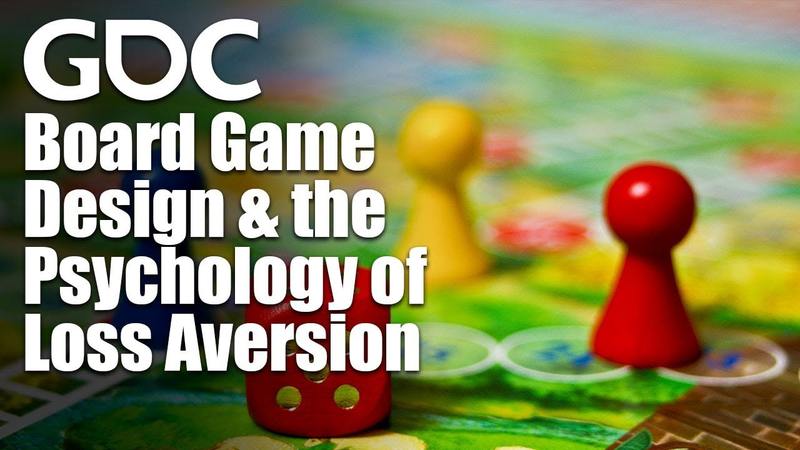
Game Developers Conference · 2018