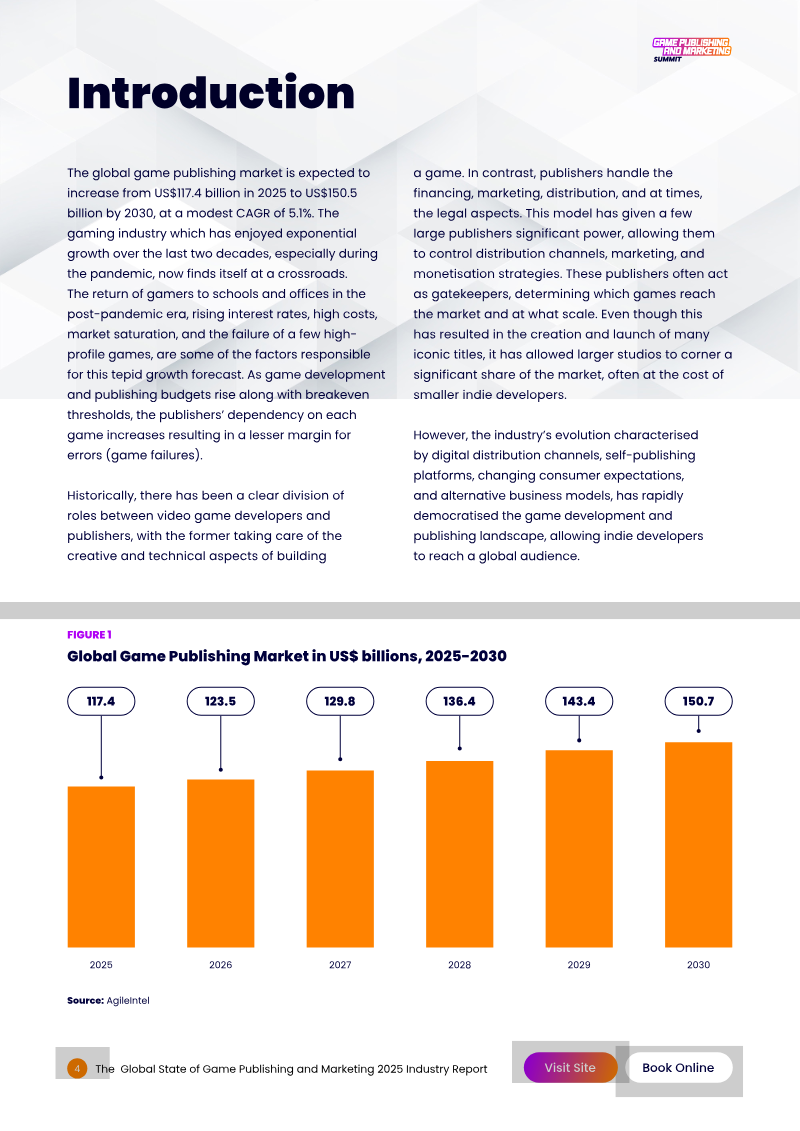
The market is expected to expand from $117.4 billion in 2025 to $150.5 billion by 2030. This growth is driven by a strategic pivot towards cross-platform accessibility and live-service models.
This shift fuels a transition toward self-publishing and direct-to-consumer engagement strategies. The industry is moving away from traditional publishing paradigms.

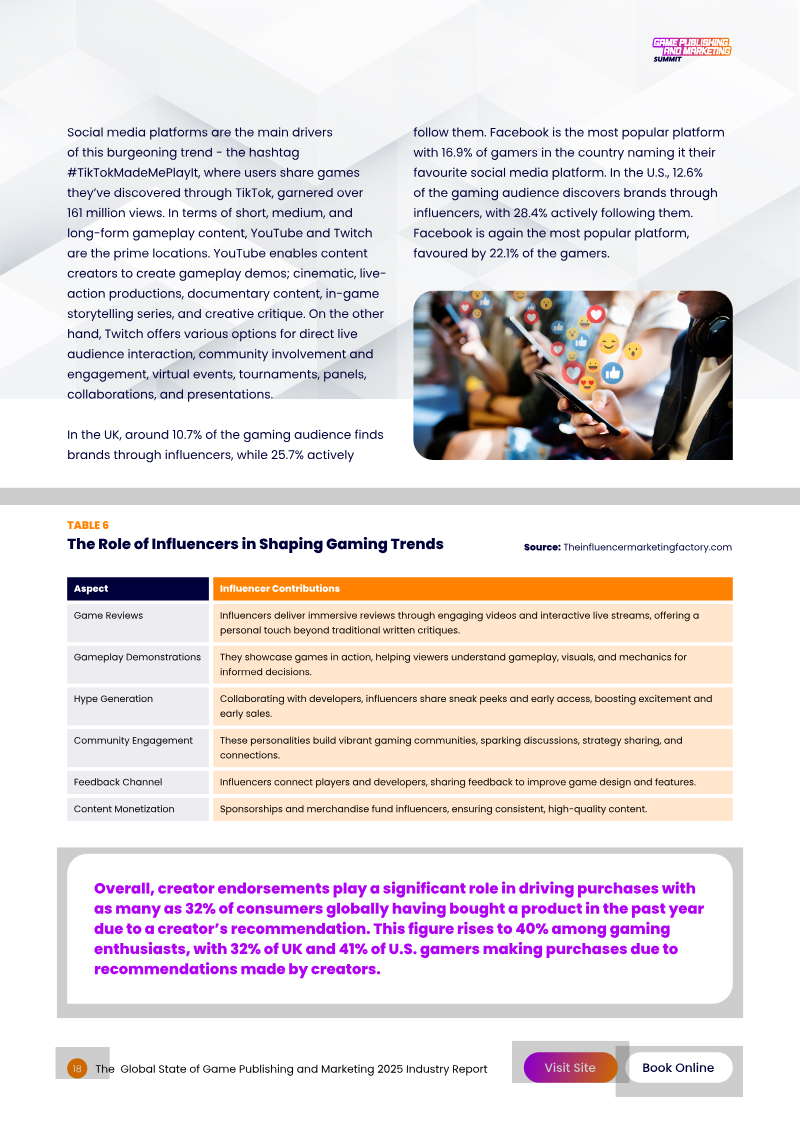
40% of gaming enthusiasts rely on creator recommendations for purchasing decisions.
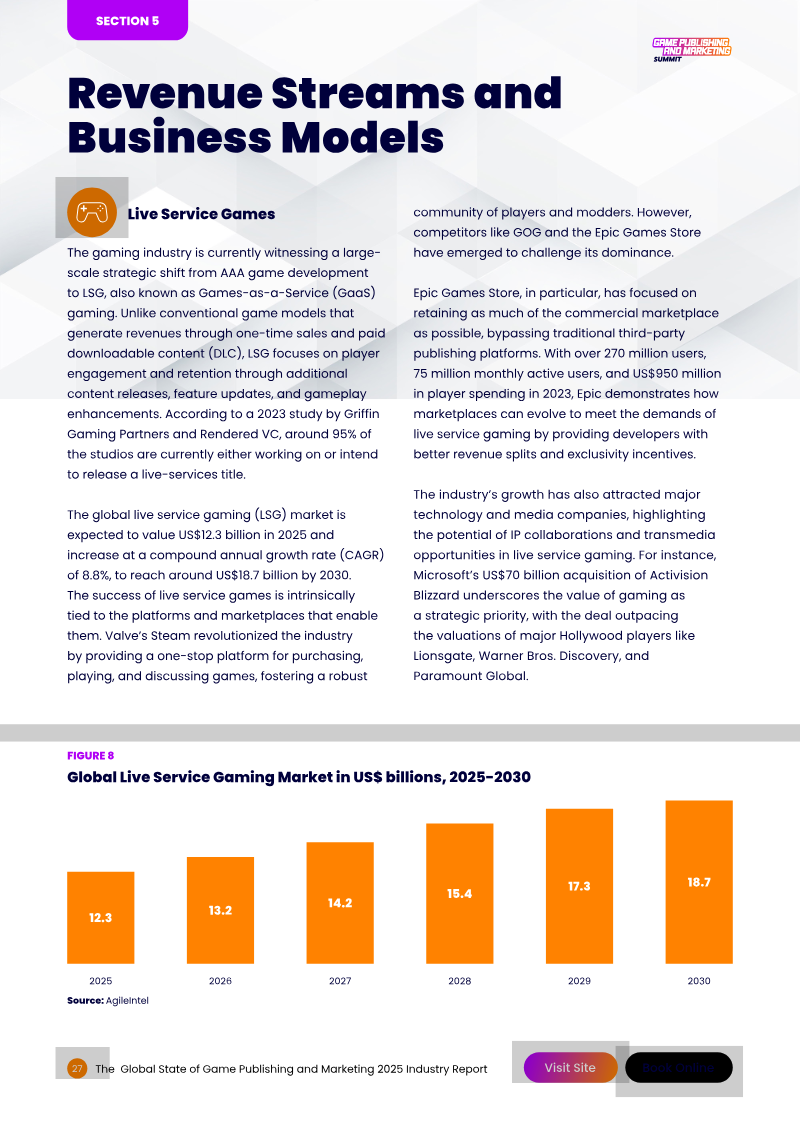
Live-service games are expected to reach $18.7 billion in market value by 2030. Esports media rights are projected to grow to $2.3 billion.
This integration helps manage player retention, safety, and personalized gameplay. It is a response to a saturated market.

The global game publishing market is undergoing a fundamental transformation, projected to expand from $117.4 billion in 2025 to $150.5 billion by 2030. This growth is underpinned by a strategic pivot toward cross-platform accessibility, live-service models, and the integration of advanced data analytics. As the industry matures, the traditional publishing paradigm is being supplanted by a hybrid ecosystem that favors self-publishing, community-centric engagement, and "publishing-as-a-service" structures. This evolution is a direct response to a saturated market where rising development and user acquisition costs necessitate more efficient, long-term monetization strategies.
Digital transformation remains the primary catalyst for this shift, with digital sales now comprising over 95% of total industry revenue. Developers are increasingly bypassing traditional gatekeepers, utilizing influencer-led marketing and community-building initiatives to reach audiences directly. Data indicates that 40% of gaming enthusiasts rely on creator recommendations for purchasing decisions, highlighting the transition from transactional sales to the curation of immersive, social experiences. To manage this complexity, studios are adopting AI-powered moderation and real-time analytics to optimize player retention, safety, and personalized gameplay.
Looking toward 2030, the industry will be defined by the rapid expansion of live-service games, which are expected to reach $18.7 billion, and the continued professionalization of esports, with media rights projected to hit $2.3 billion. While narrative-driven, one-time purchase titles maintain a niche, the broader market is prioritizing multi-device ubiquity and transmedia opportunities to sustain player interest. Ultimately, success in this competitive landscape requires a delicate balance of technological innovation, such as AI integration, and a commitment to fostering inclusive, active communities that extend a game's lifecycle well beyond its initial launch.