LegalGameVault System
Proposed Acquisition of Electronic Arts: Labor and Market Competition Review
6 pages~6 min full read
Key insights
6 slides
Industry Instability
The U.S. video game industry has seen significant job losses since 2022.
Over 35,000 total layoffs have occurred across the industry. Electronic Arts alone has eliminated more than 1,700 positions since 2023.
Deal Structure
The proposed acquisition of EA relies on substantial debt financing.
At least $20 billion in debt financing is involved in the deal.
Labor Concerns
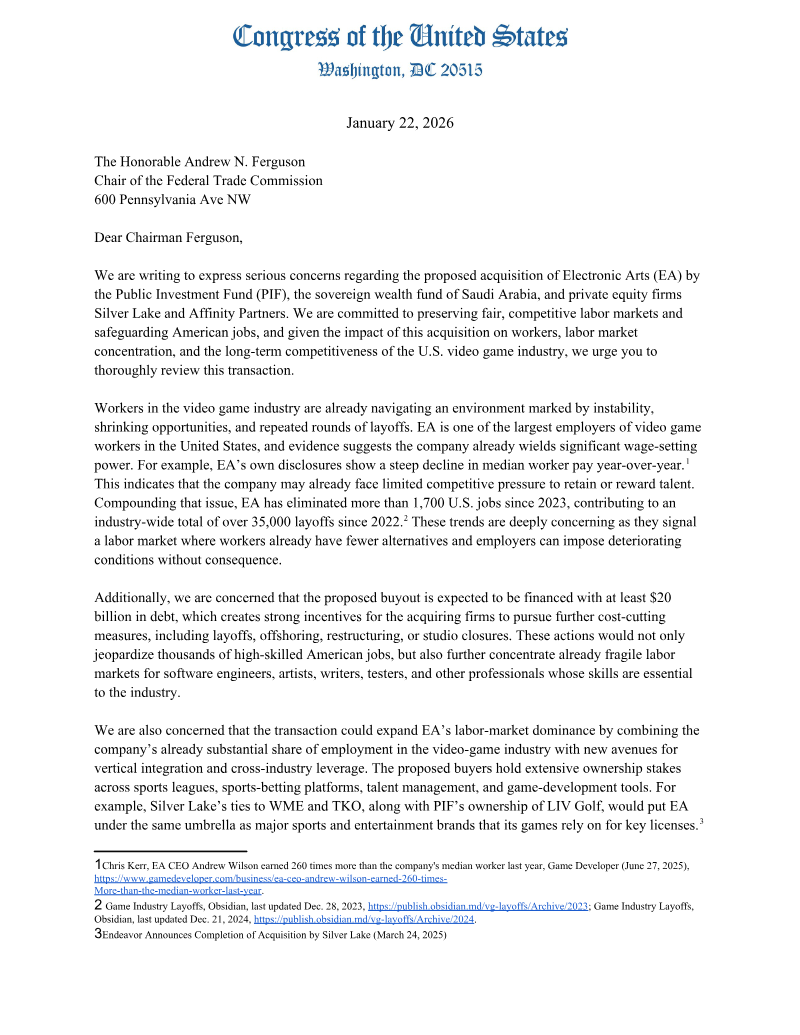
The Congressional Labor Caucus urges the FTC to block the EA acquisition.
Concerns include labor market concentration and potential wage suppression. The caucus believes the merger threatens high-skilled American jobs.
Wage Power
Declining median worker pay at EA suggests existing wage-setting power.
This decline is used as evidence of limited competitive pressure. The acquisition could exacerbate this trend, further suppressing wages.
Anticompetitive Risks
The merger could facilitate anticompetitive practices in the labor market.
These practices include restricted worker mobility and the formation of interlocking directorates. This could diminish the bargaining power of software engineers and artists.
Vertical Integration
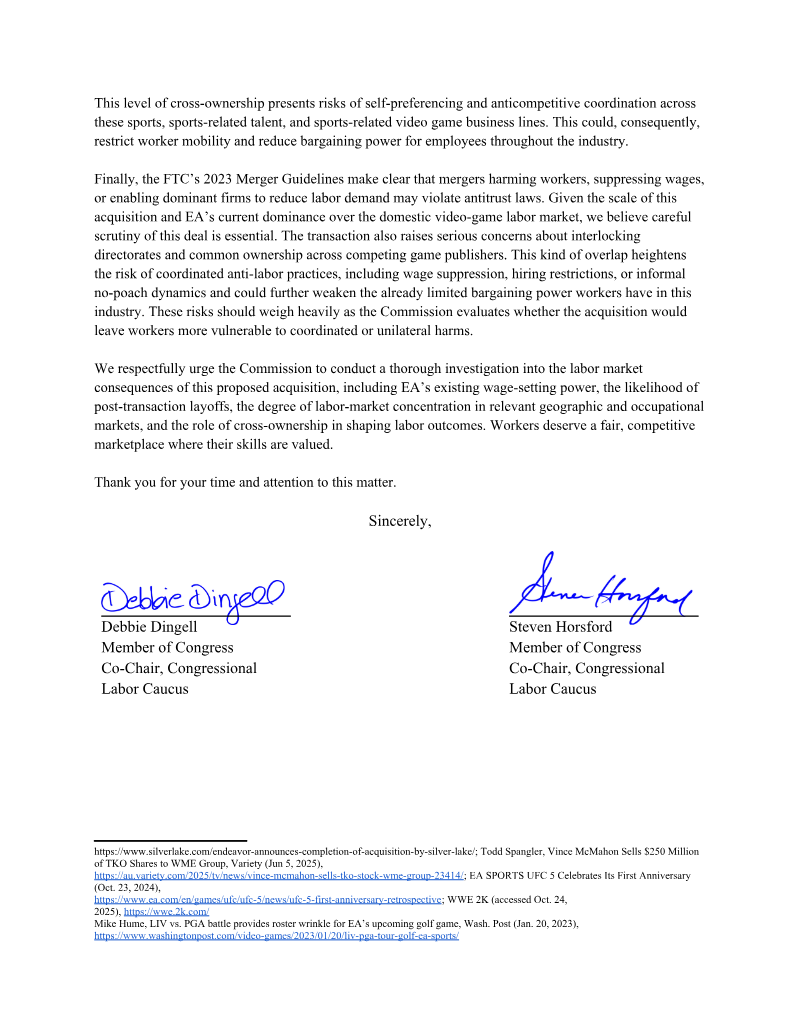
The acquisition risks creating vertical integration issues.
This combines EA’s market dominance with the acquiring firms' stakes in sports leagues, betting platforms, and talent management agencies. This could lead to self-preferencing and coordinated anti-labor dynamics.
Integration Risk. The acquisition risks creating vertical integration issues by combining EA's market dominance with other firm holdings.
1 / 6
Ask AI about this report