Loading the document
1 free read left. Create a free account for unlimited reading + AI research.
Create free accountArticle DiGRA
1 free read left. Create a free account for unlimited reading + AI research.
Create free accountArticleDiGRA
The paper argues that Nintendo Labo, released in 2018, is the culmination of what Mattia Thibault calls "paper-made digital games." The material presence of cardboard in these games is described as deliberately poetic rather than merely practical.
The paper argues that the cardboard interfaces of Nintendo Labo, released in 2018, represent the culmination of a broader aesthetic movement in digital games that Mattia Thibault calls "paper-made digital games." Drawing on the post-digital paradigm, which describes a contemporary disenchantment with digital systems and a renewed appreciation for analogue media, the author contends that the material presence of cardboard is not merely practical but deliberately poetic. The thesis is that these games draw on a culturally shared nostalgia, both personal and historical, to connect with memories of childhood play and handicraft.
The paper proposes a typology of paper-made digital games organized by the depth of their relationship to physical material. The first category is imitation, where fully digital games such as Crayon Physics Deluxe and Tearaway simulate paper craft and build it into core mechanics like drawing, cutting, and folding. The second is digitization, in which hand-drawn or physically constructed elements are captured and incorporated into digital content, as in Cuphead, The Banner Saga, and Lumino City, the last of which was built entirely from paper and cardboard. The third and most complete form is hybridization, where cardboard becomes part of the interface itself, exemplified by Google Cardboard and Nintendo Labo.
Methodologically, the work is a qualitative, semiotic and theoretical analysis rather than an empirical study, drawing on concepts such as Garda's distinction between restorative and reflective nostalgia, Juul's writing on independent style, and Barthes's observations on wooden toys. The examples are chosen from a relatively small set of notable titles, and the analysis relies on interpretation of their visual and material properties rather than on player data or market figures. The paper's scope is therefore conceptual and focused on the aesthetic and cultural meaning of cardboard and paper in contemporary game design.
Each row is a game or company this document names, each column a document, oldest first. A mark means that document names it. Select a row to see those documents.
DiGRA · 2026



DiGRA · 2025
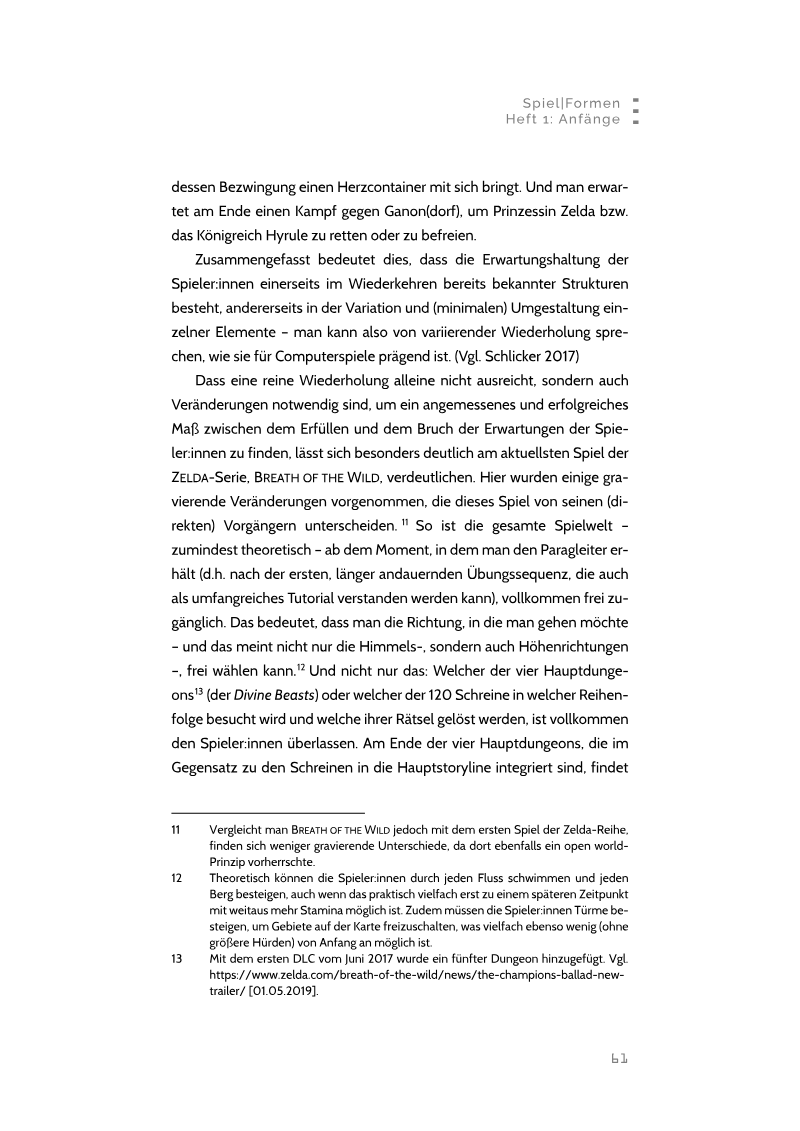
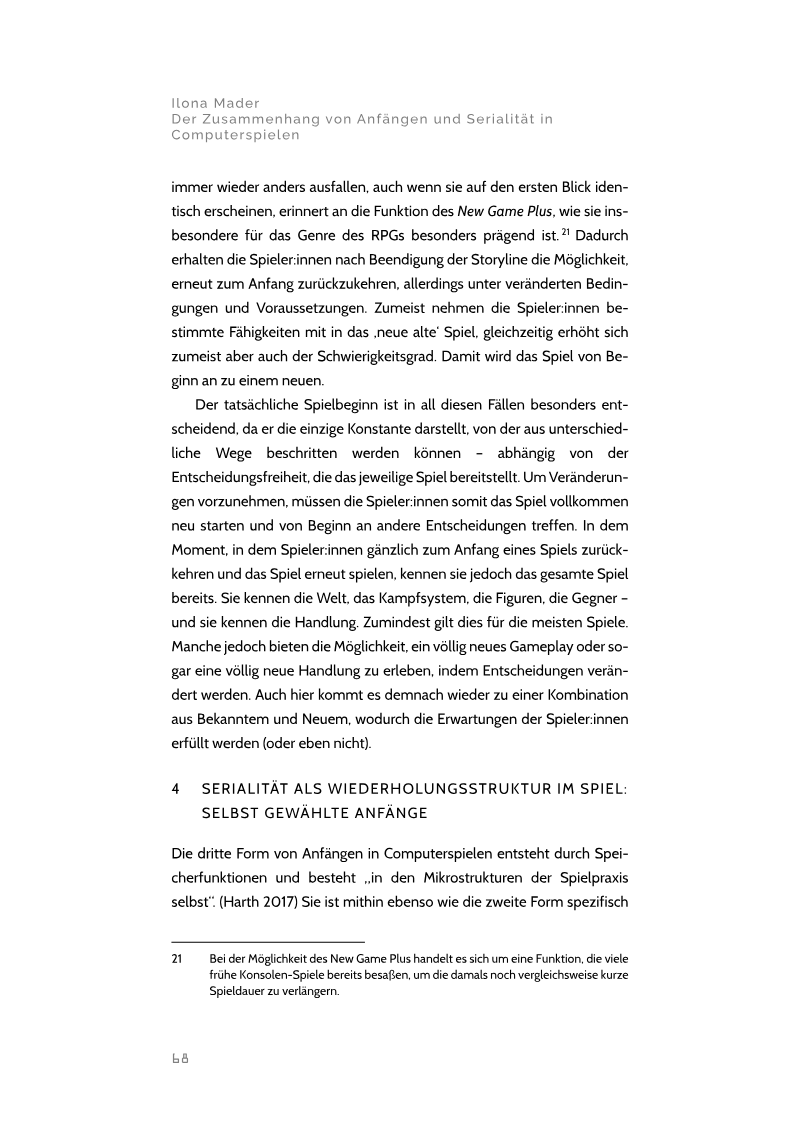
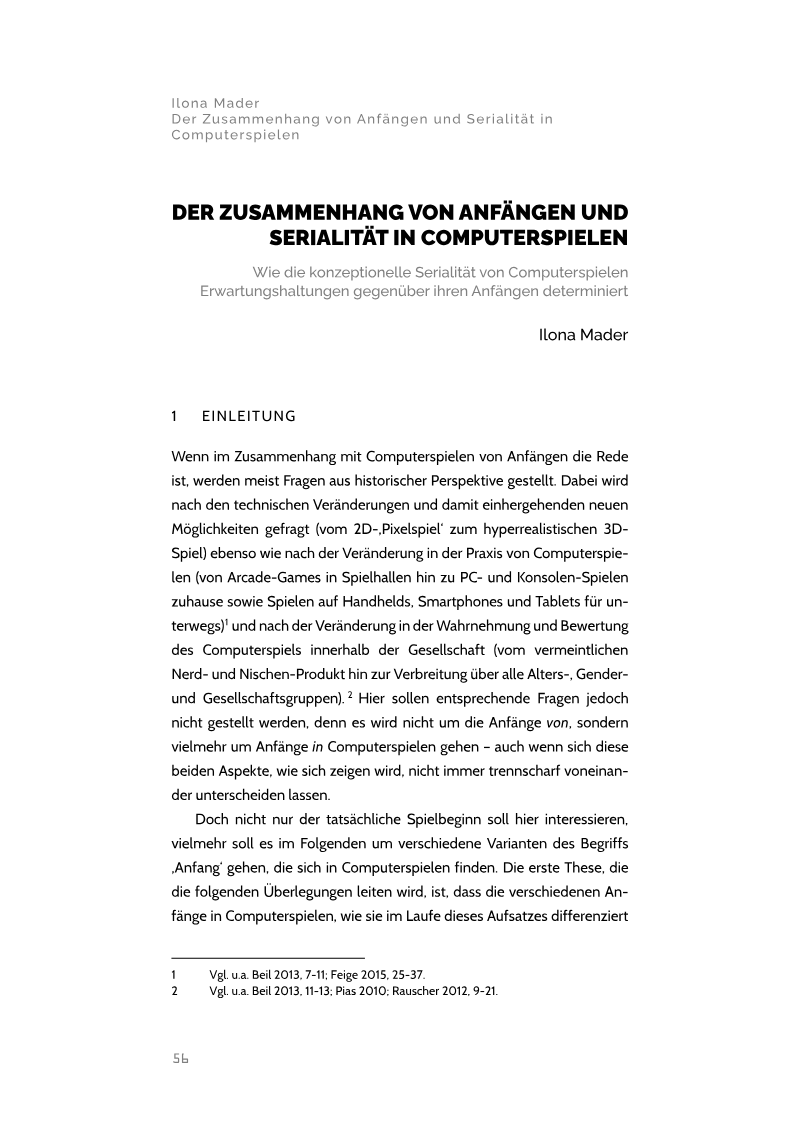
Spiel|Formen · 2021
ETC Press · 2011
University of California Santa Cruz · 2026
University of Bristol · 2026
Eindhoven University of Technology · 2026
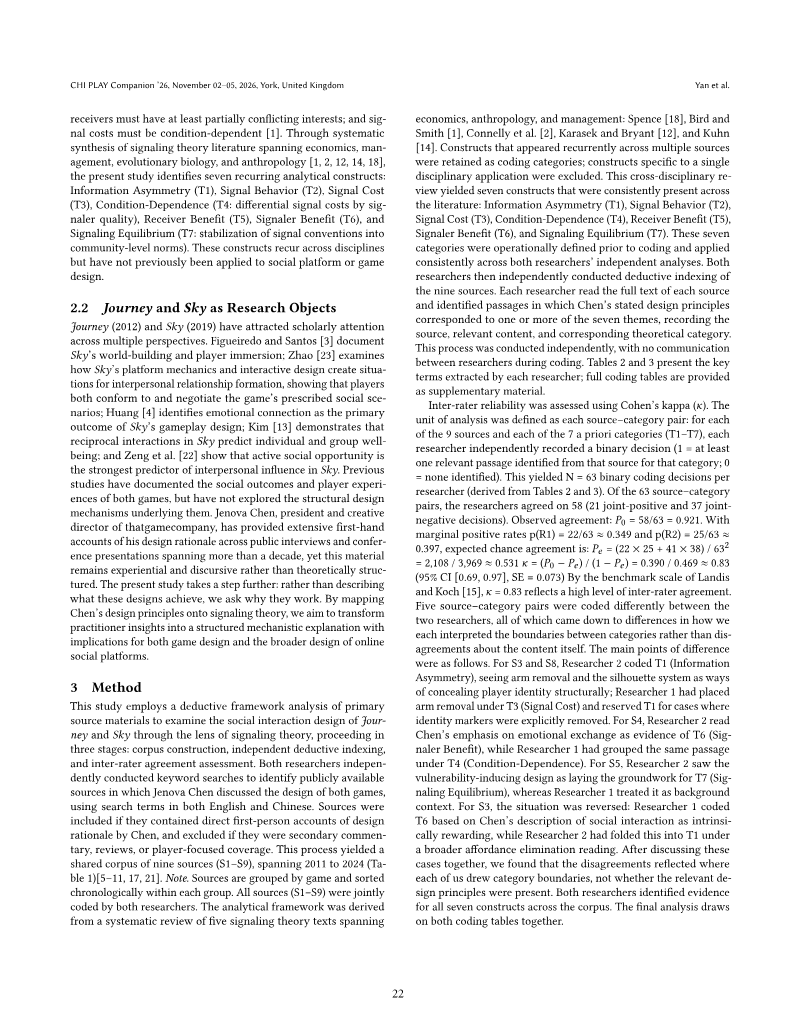
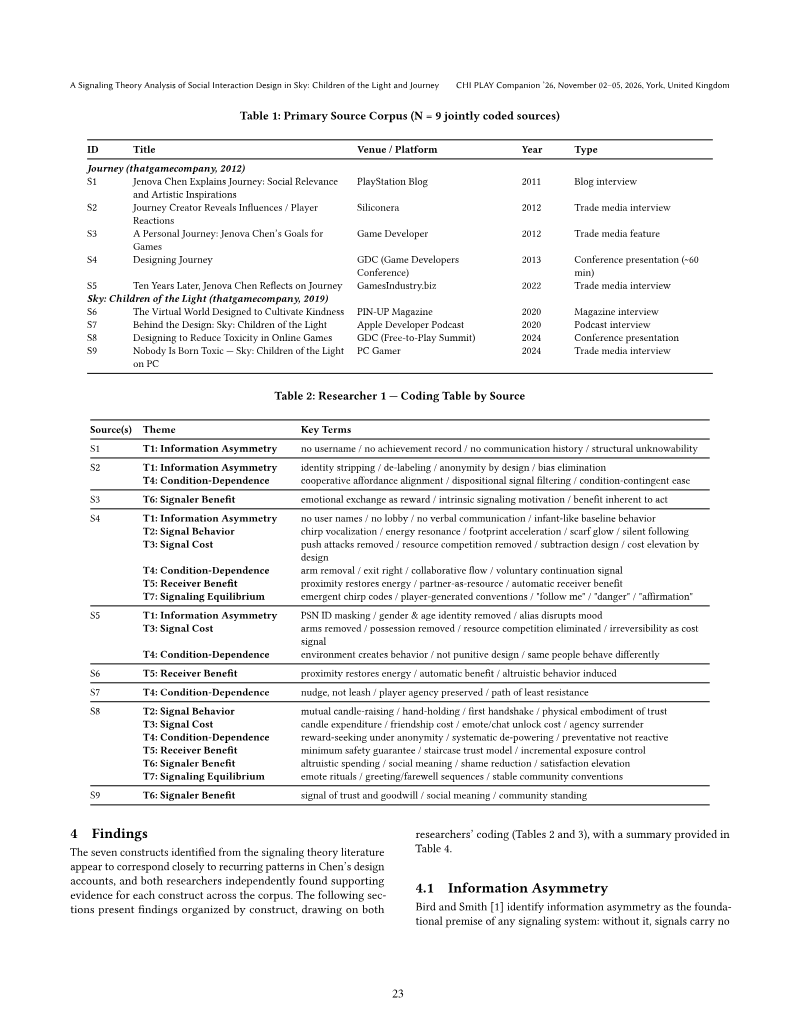
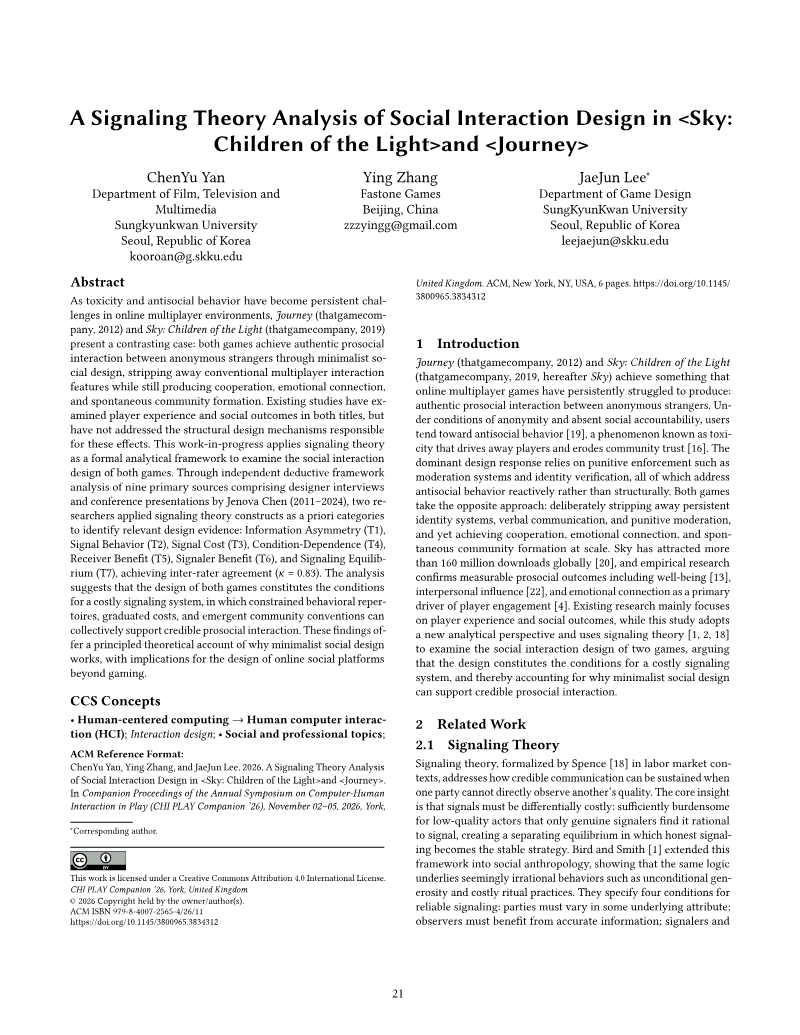
Sungkyunkwan University · 2026
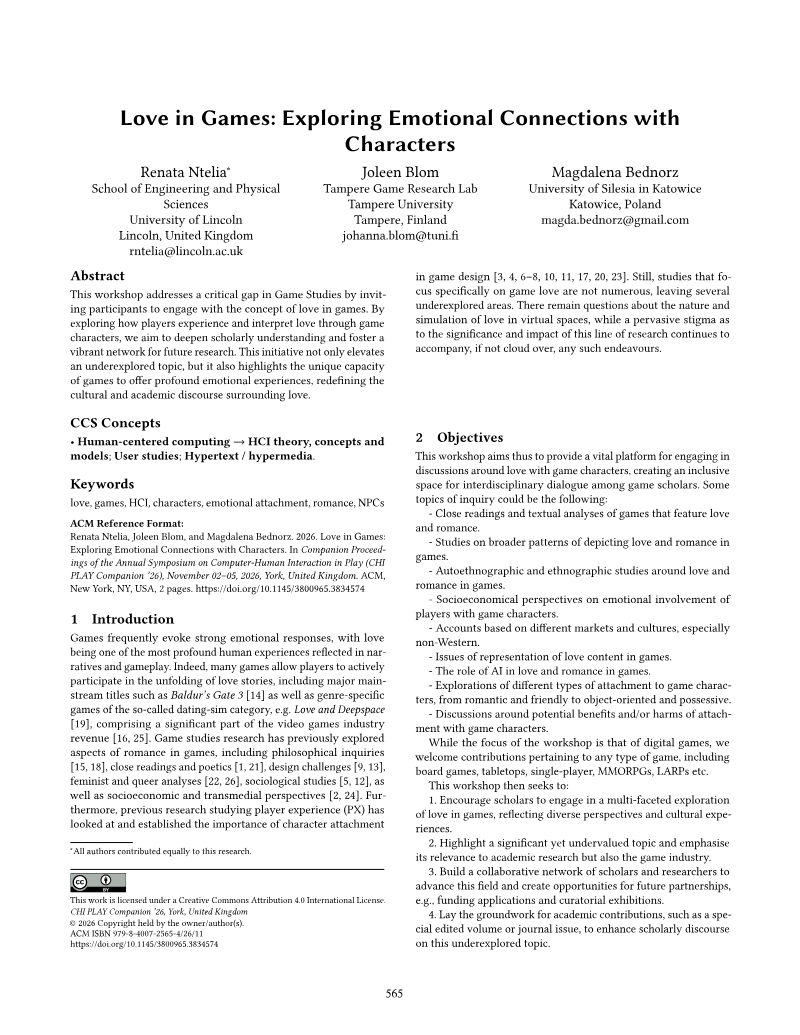
University of Lincoln · 2026



European Conference on Games Based Learning (ECGBL) · 2026



DiGRA · 2026



DiGRA · 2026



DiGRA · 2026