1 free read left. Create a free account for unlimited reading + AI research.
Create free accountArticleGames and Culture
Distilling the key insights…
The 2016 Overwatch World Cup serves as a definitive case study in the sportification of digital competition, illustrating how esports organizations intentionally adopt the production conventions of traditional athletics to secure professional legitimacy. By mirroring the broadcast structures of established events like the 2014 FIFA World Cup, the Overwatch World Cup utilized pregame studio analysis, expert commentary, and sophisticated visual grammars to frame competitive gaming as a structured, institutionalized discipline. This strategic presentation effectively translates the chaotic nature of first-person gameplay into a spectator-friendly format that aligns with global expectations for televised sports.
Beyond mere aesthetics, this sportification process fundamentally reshapes the viewer experience by prioritizing mechanical performance and statistical analysis over the game’s original narrative context. The broadcast minimized the visibility of individual players and referees, instead emphasizing national identity and team-based competition to foster a sense of collective pride. This shift reflects a broader movement to move esports away from its grassroots, community-driven origins and toward a standardized, commercialized model that mirrors the socio-material practices of traditional sports.
Ultimately, the sportification of the 2016 Overwatch World Cup demonstrates that the professionalization of esports is as much a product of media representation as it is of competitive evolution. While the event functioned primarily as a promotional vehicle for a specific commercial product, its success in adopting traditional sports tropes highlights a growing convergence between digital gaming and mainstream athletic culture. This transformation suggests that the future of competitive gaming lies in its ability to integrate seamlessly into the established media infrastructures that define modern global sports, effectively bridging the gap between virtual play and institutionalized competition.
Games and Learning Alliance Conference (GALA) · 2024
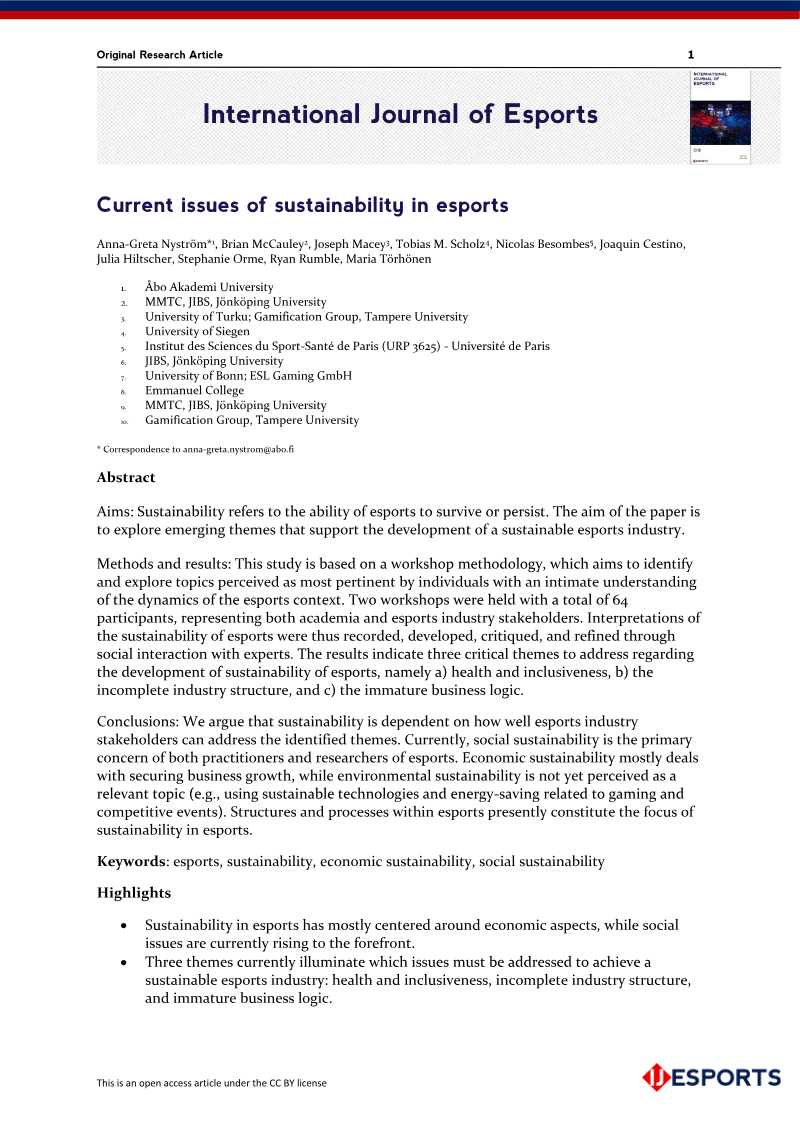
International Journal of Esports · 2022