More on Esports
View all
Presentation
A Historical Perspective on Speedrunning: Evolution and Impact of the Informational Aspect
DiGRA · 2023
Whitepaper
Current Issues of Sustainability in Esports
International Journal of Esports · 2022
Whitepaper
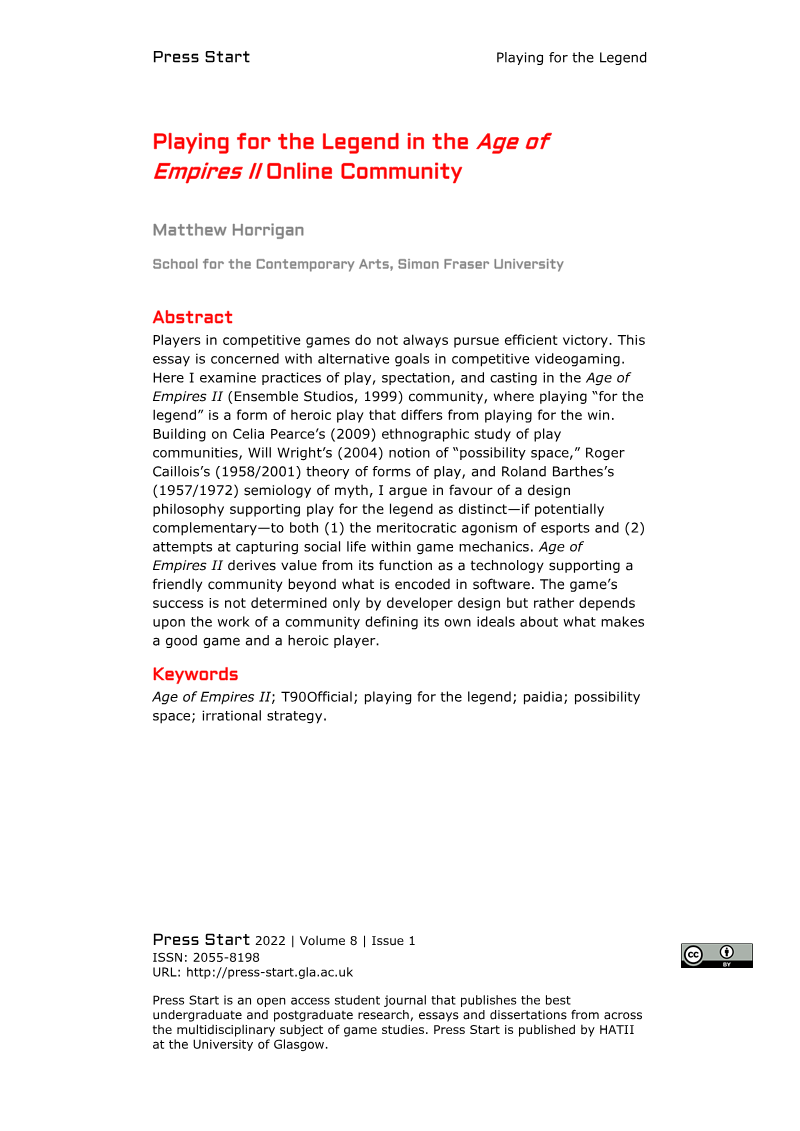
Playing for the Legend in the Age of Empires II Online Community
Press Start · 2022
Whitepaper
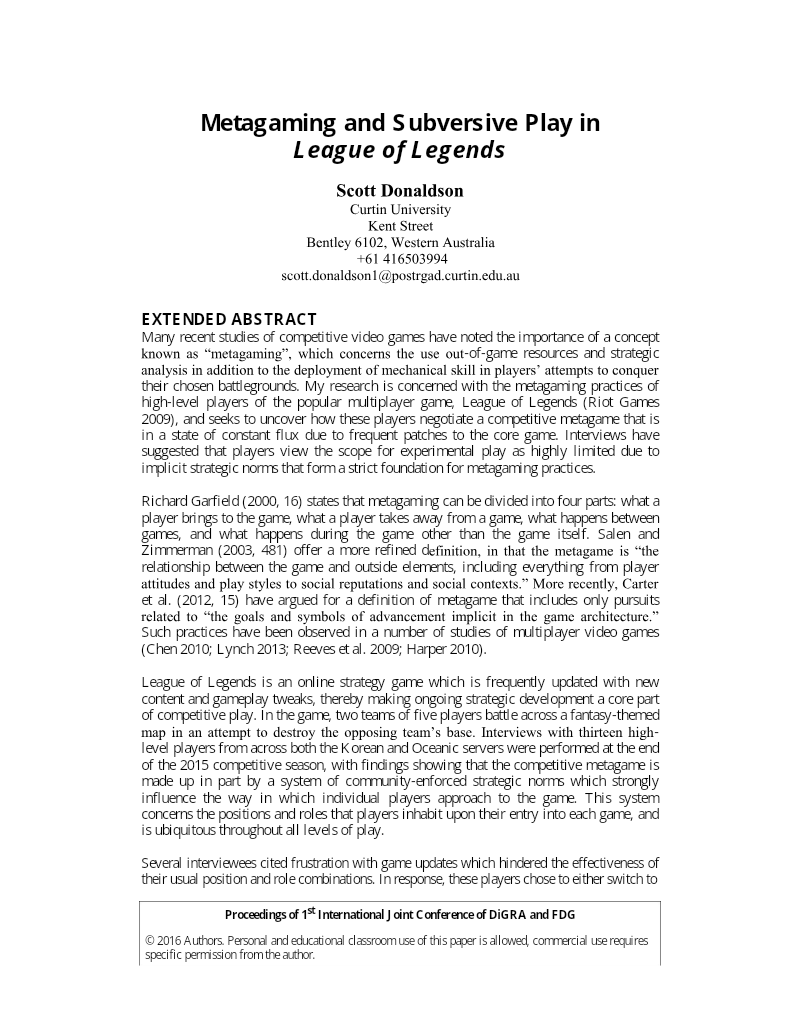
Metagaming and Subversive Play in League of Legends
DiGRA · 2016
Whitepaper
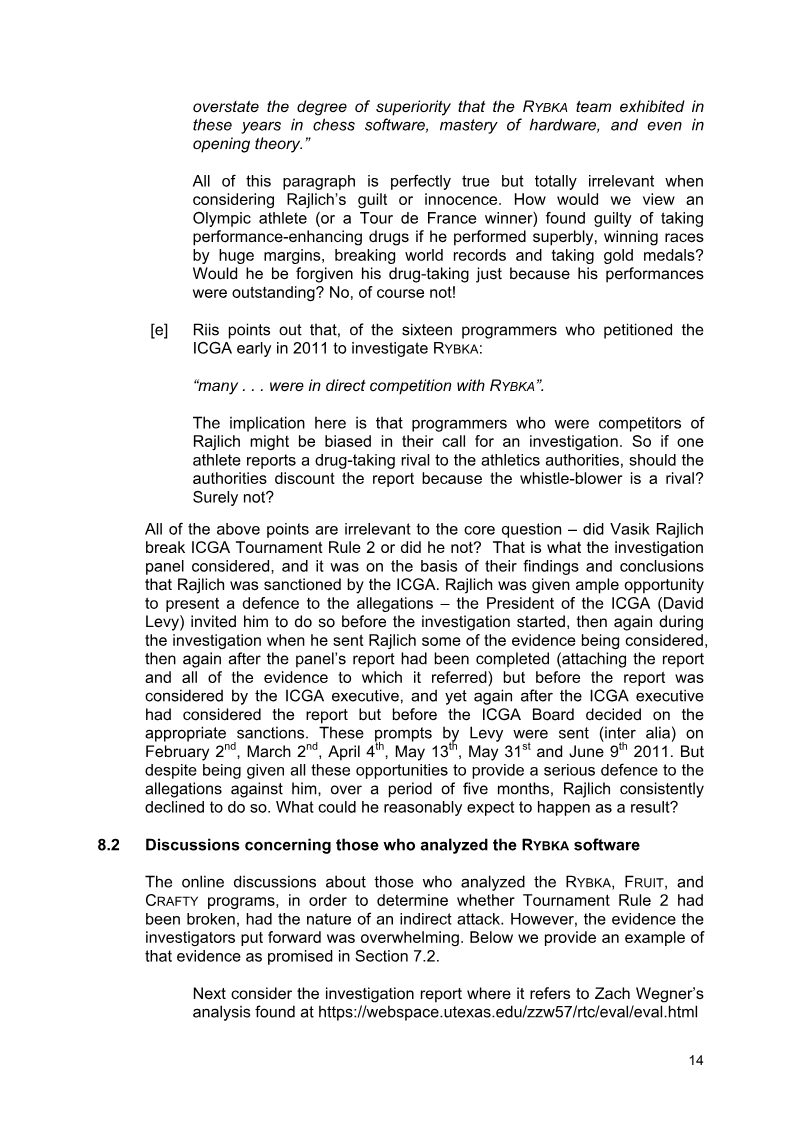
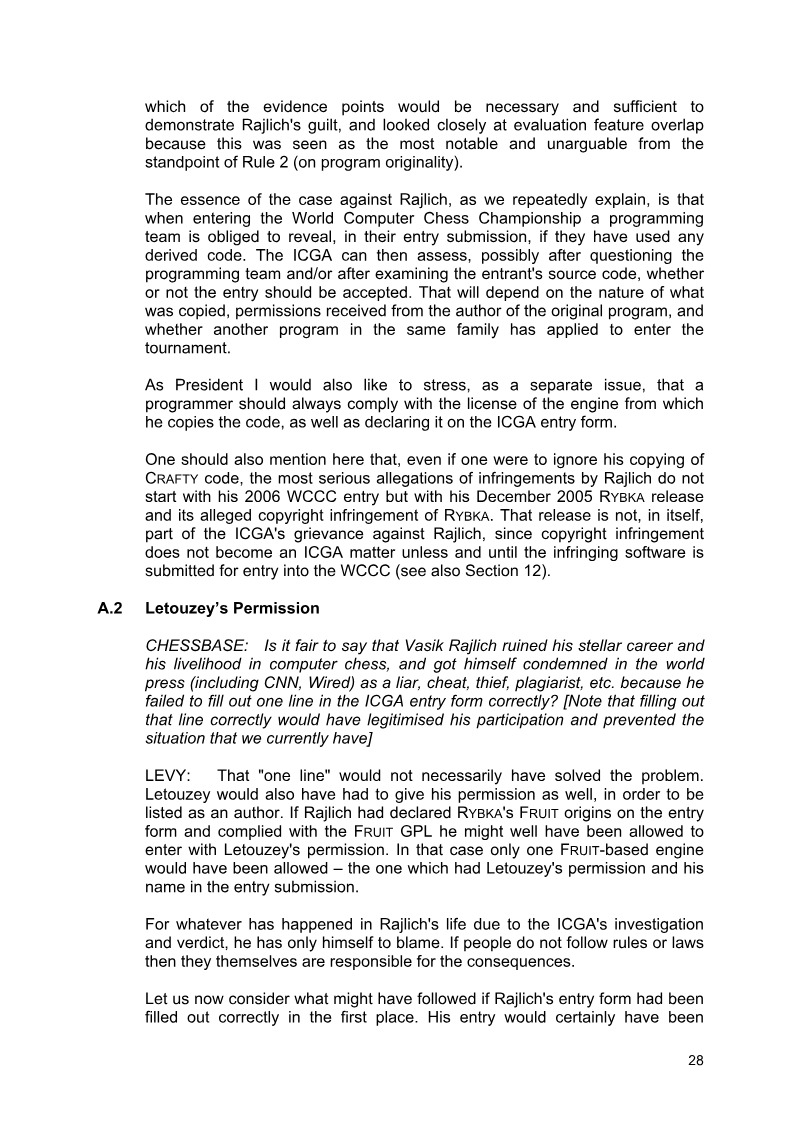
Plagiarism in Game Programming Competitions
International Computer Games Association · 2014
Whitepaper
Negotiating Play: The Process of Rule Construction in Professional Computer Gaming
DiGRA · 2009



Whitepaper
Digital Resilience, Health, and Harms: The Digital Convergence
DiGRA · 2026



Whitepaper
Black and White in Color: Ludonarrative Deconstruction and (Anti-)Monomyth in Pokémon (2010)
Press Start · 2026



Whitepaper
Tworzenie „przestrzeni dyskomfortu” jako narzędzie zarządzania afektywnego: przypadek marki Pokémon
Replay. The Polish Journal of Game Studies · 2026



Whitepaper
Beyond Play: Towards a Non-Gaming-Centric Gaming Research
gamevironments · 2026



Whitepaper
Bleed as Intrapersonal Conflict: Understanding Bleed Management and Resilience
International Journal of Role-Playing · 2026



Whitepaper
Plateformisation du Jeu Vidéo: Comment Roblox, Fortnite et Minecraft Façonnent le Temps de Jeu
Kinephanos · 2026