Loading the document
Key insights
5 slides
The rules
Competitive programming enforces strict originality standards.
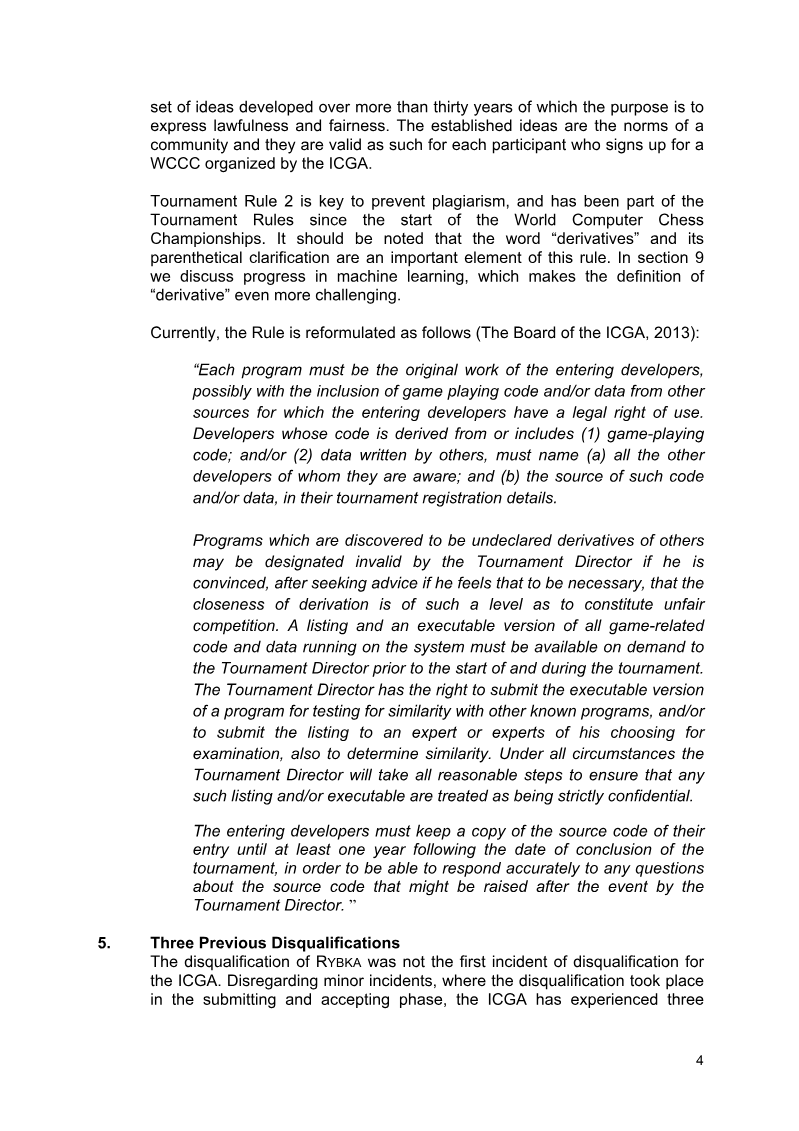
The International Computer Games Association upholds Tournament Rule 2, requiring all software entries to be original or disclose derived code. This ensures fair play and genuine innovation.
1 / 5
- 01The International Computer Games Association enforces Tournament Rule 2, which mandates that all software entries must be original or explicitly disclose any derived code to ensure fair play.See it on page 4
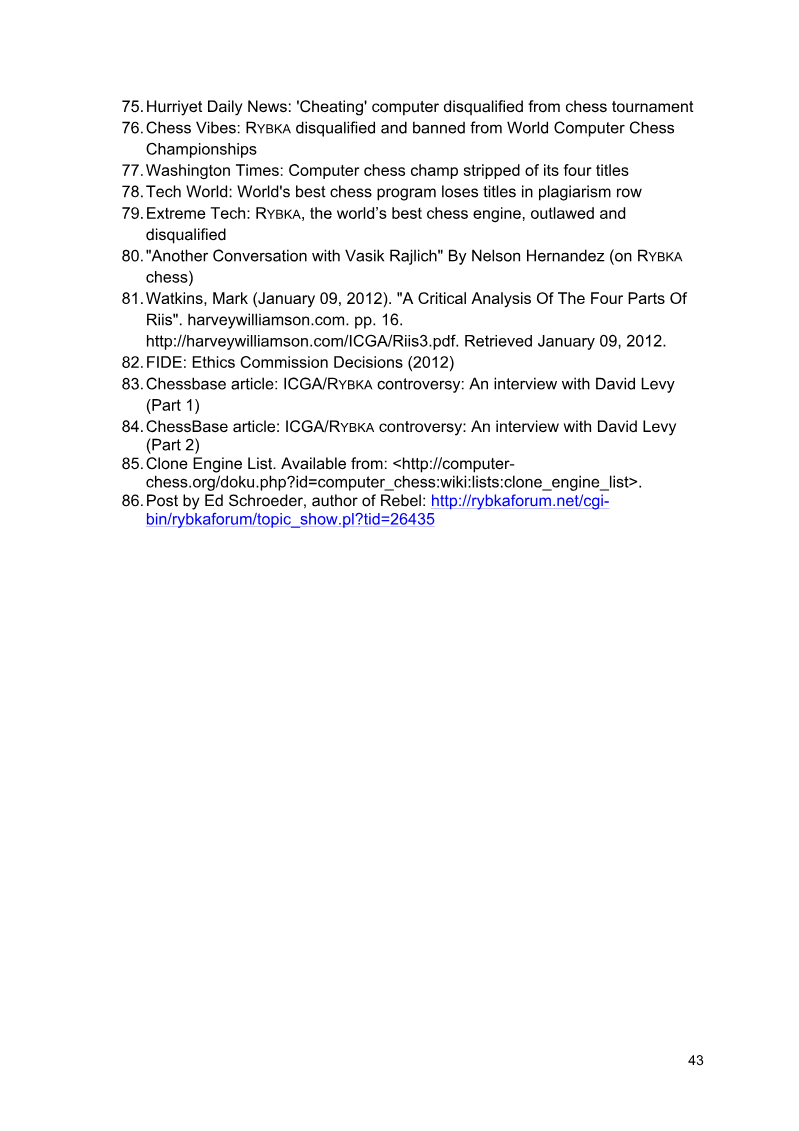
- 02The chess engine Rybka was disqualified and its developer, Vasik Rajlich, received a lifetime ban after an expert panel determined the software was a derivative of the open-source programs Fruit and Crafty.See it on page 43
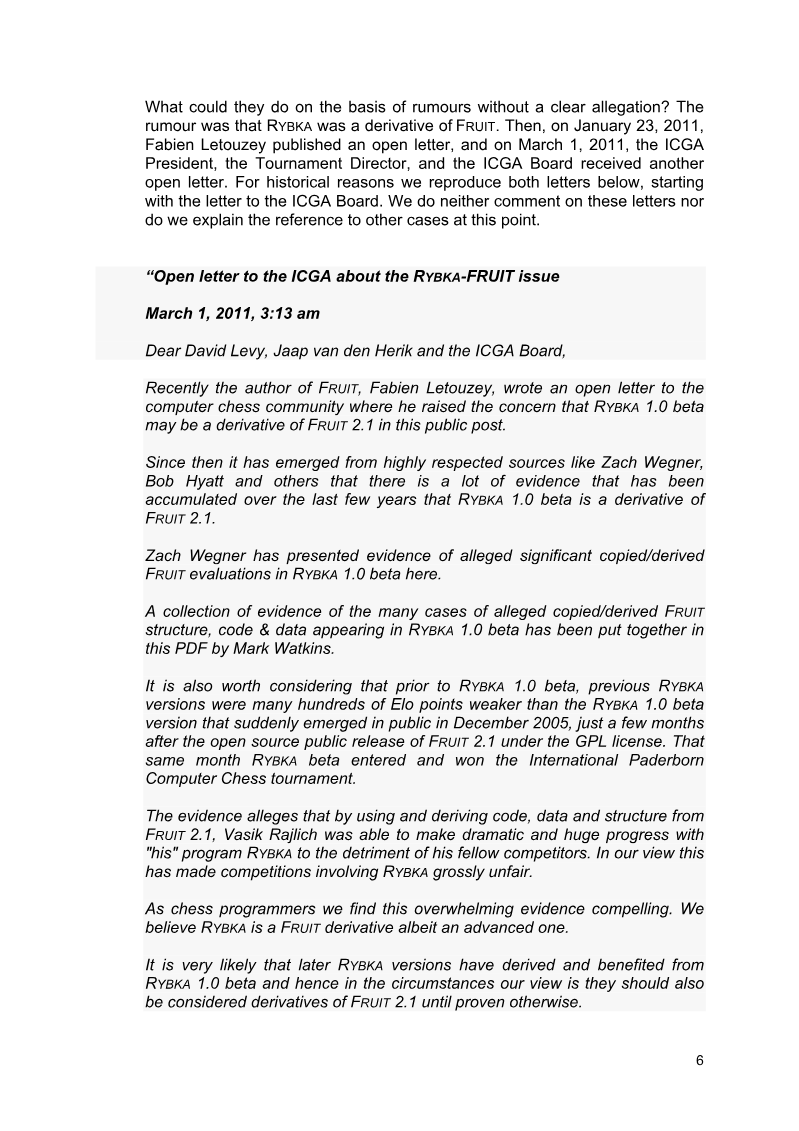
- 03Evidence against Rybka included both extensive code-similarity analysis and a statistically improbable performance surge that correlated with the release of the source material for Fruit and Crafty.See it on page 6
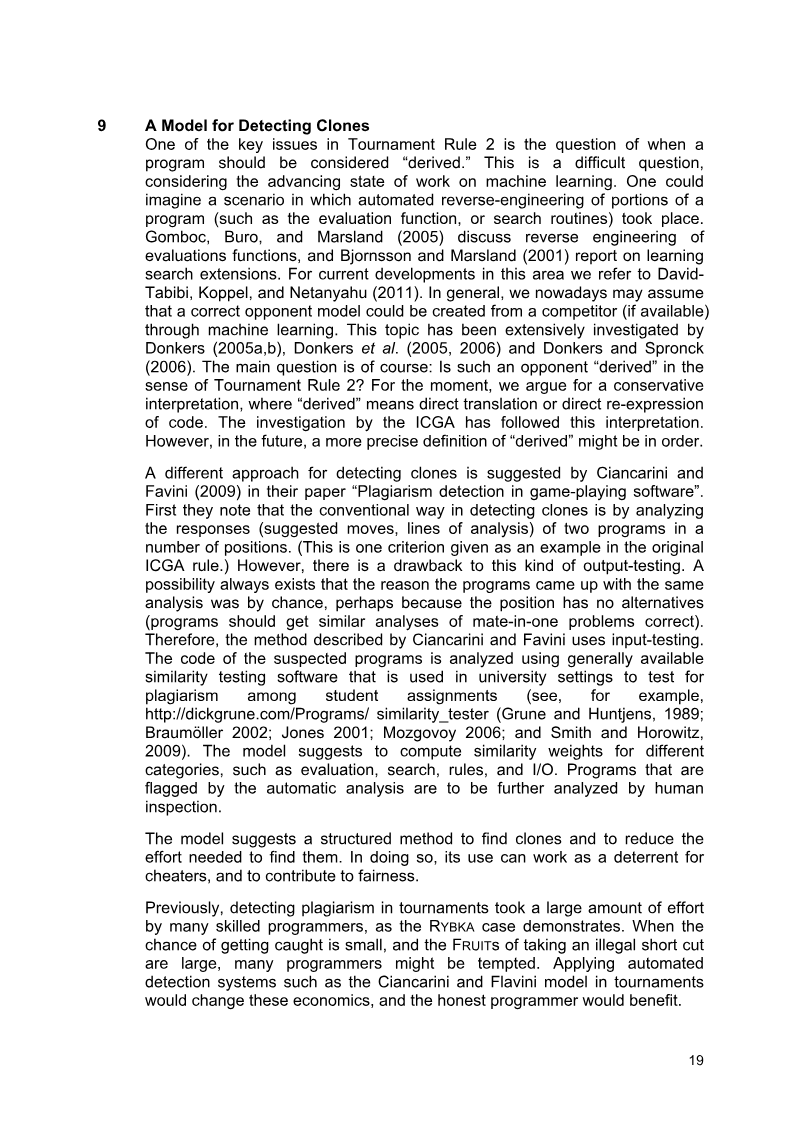
- 04The industry is moving away from manual inspection toward automated detection methods, such as the code-similarity models proposed by Ciancarini and Favini, to improve efficiency and objectivity.See it on page 19
- 05Regulatory frameworks in competitive programming operate independently of broader copyright law to uphold higher ethical standards and preserve the credibility of the sport.See it on page 26
- 06Future efforts to deter plagiarism involve integrating technical safeguards with transparent, procedurally fair dispute resolution frameworks to reward authentic research and development.See it on page 19
Ask AI about this report
Summary
The International Computer Games Association maintains the integrity of competitive computer chess by enforcing strict standards of originality and attribution. Central to this mission is the enforcement of Tournament Rule 2, which mandates that all software entries must be original work or explicitly disclose any derived code. This regulatory framework exists independently of broader copyright law, allowing the organization to uphold higher ethical benchmarks for participants. The primary objective is to preserve fair play and ensure that competitive outcomes reflect genuine programming innovation rather than the unauthorized appropriation of existing intellectual property.
The high-profile disqualification of the chess engine Rybka serves as a definitive case study in these enforcement efforts. An investigation by a panel of experts concluded that Rybka was a derivative of the open-source programs Fruit and Crafty, citing both extensive code-similarity evidence and a statistically improbable surge in performance following the release of the source material. Consequently, the developer, Vasik Rajlich, faced a lifetime ban and the revocation of all titles. Despite criticisms regarding the panel's composition and the nature of the investigative process, the organization maintains that the unanimous guilty verdict was supported by overwhelming evidence and that the defendant was afforded ample opportunity to participate in his own defense.
To mitigate future instances of academic and professional dishonesty, the industry is shifting toward more robust, automated detection methods. Implementing advanced code-similarity models, such as those proposed by Ciancarini and Favini, offers a more efficient and objective alternative to manual inspection. By integrating these technical safeguards with transparent, procedurally fair dispute resolution frameworks, the competitive programming community aims to deter plagiarism while fostering an environment that rewards authentic research and development. These measures are essential for protecting the credibility of the sport and ensuring that future competitions remain equitable for all participants.