Key insights
4 slides
The core issue
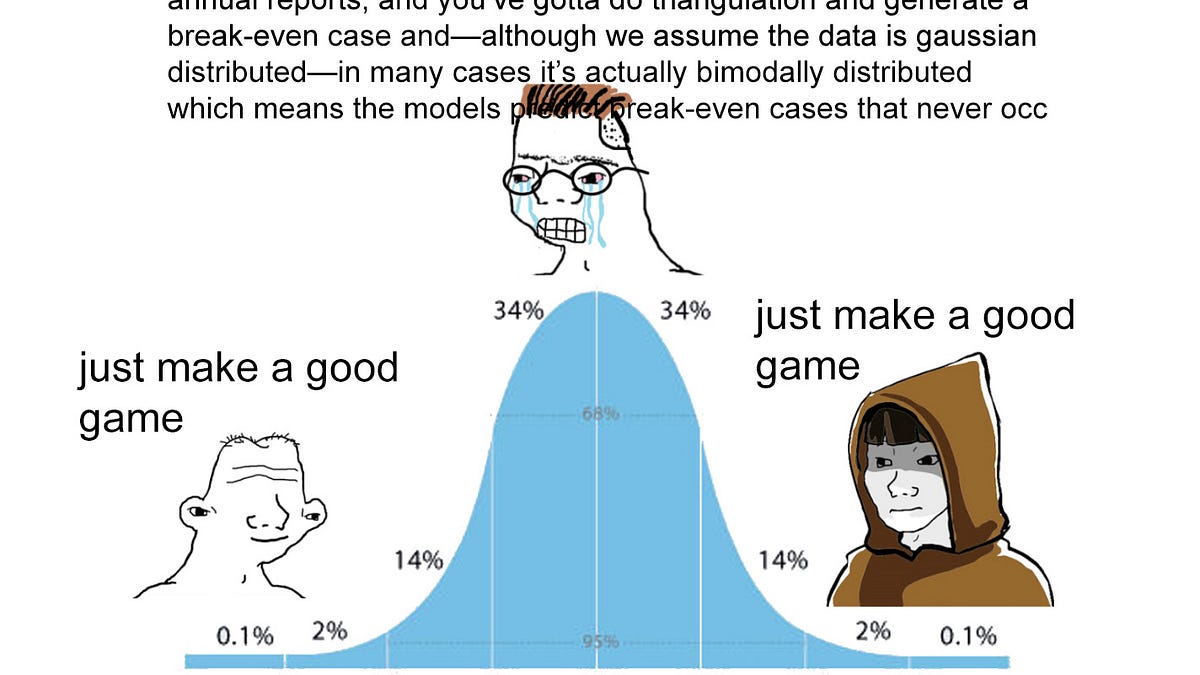
Traditional spreadsheet-based forecasting often fails to account for volatile market success.
Financial models are necessary to align internal teams and external stakeholders on expectations. They remain speculative exercises rather than precise predictive tools.
Key strategy
Increasing the total volume of creative output is the most reliable strategy for a hit.
The equal-odds rule posits that increasing the total volume of creative output is the most effective way to improve the probability of success. Individual project outcomes are notoriously difficult to forecast.
equal-odds rule
The most reliable strategy for achieving a commercial hit
What changed
Early playtests and authentic player feedback generate tangible market signals.
Developers should prioritize the generation of market signals through early playtests and authentic player feedback. This iterative process allows teams to gauge engagement levels and refine quality before a full-scale launch.
Long-term view
Determination and persistent output predict long-term studio viability better than raw talent.
Determination, characterized by a combination of discipline, ambition, and persistent output, serves as a more accurate indicator of long-term viability than raw talent or intelligence. Studios must balance data-driven forecasting with the reality that hit-making remains an elusive art.
1 / 4
Ask AI about this report