1 free read left. Create a free account for unlimited reading + AI research.
Create free account
Next generation cloud gaming
Key insights
6 takeaways- 01Telecommunications companies and cloud providers are entering the market to leverage cloud gaming as a strategic tool for driving 5G adoption in regions with low console penetration.
- 02Technological development is bifurcating between high-performance GPU-based cloud instances and cost-effective code-streaming models that rely on end-user hardware capabilities.
- 03Microsoft holds a competitive advantage due to its vertical integration across cloud infrastructure, gaming platforms, and proprietary streaming technology.
- 04Cloud gaming is a medium-to-long-term opportunity, with significant market impact delayed until 5G infrastructure reaches maturity between 2022 and 2023.
- 05Industry monetization is shifting toward hybrid models that combine subscription fees with in-game microtransactions to ensure long-term sustainability.
- 06Future industry growth will be defined by aggressive studio acquisitions to secure exclusive content and the use of subscription platforms as marketing engines for broader in-game spending.
Ask AI about this video
Transcript
[Music] very much for attending this so I'm gonna talk about what would describe is next generation cloud gaming which is basically our view of the kind of next wave of interests in cloud gaming I'm sure many of you have been following some of the news stories have been coming up in around Google and Microsoft our idea is to give you a bit of background on you know how the sector's suffered in over the years since OnLive launched and what's different now in terms of the opportunity what that means for content owners and developers
potentially what opportunities and what we're sort of predicting for this year and just tell you a little bit about ohs market our chess market is a is a nasdaq listed research company we have 16,000 employees we have 450 analysts that are tracking the technology media telecom sectors I head up the the games research team and we've been looking at this space I think I write the first report I'm sort of Omdurman gaming back in 2004 are we looking at games on demand originally but actually technology for cloud gaming was around back then so this chart this slide I've been showing this slide for probably 10 years or so now with with minimal changes I would say this is I think kind of consensus around where we're sort of shifting in
terms of our consumption of content and the transition with respect to the game sector has taken place of you know 20 years plus since sort of 1995 and PC starts start off of digital opportunities and then we've obviously had a wave of console connectivity and that's brought in more digital opportunities and then the third major stage has really been the introduction of app stores and and mobile devices and we're sort of think towards a model of delivering content when and where customers demand and that's the sort of background to the interest I guess in empower gaming there's been a lot and I'm sure many of you follow it's been a lot of experimentation in terms of cloud gaming one of the questions that was commonly
asked is why you know why has cloud gaming failed in the past and I think the number one reason is is really around virtualization costs the actual cost of service delivery as a commercial proposition GPU instances in the cloud is actually not that scalable it's not that cheap and it has an impact on all other areas of your proposition to the consumer so for example content you know being able to secure you know premium content for your offer and I think that's why on live it suffered you know it didn't provide a service based on the public cloud but actually it provided a service building its own infrastructure and that was a hugely expensive thing to do and it was unable to scale that and also see the content availability the norcold impact on the content availability at that time there was a limited addressable market because broadband which has come on leaps and bounds in the last five years or so in
many markets was relatively limited in terms of the speeds necessary for a good experience and there are other things you know the end-user experience was not that great and more in more recent times you've had startups which would be introducing sort of what we describe is bring your own game services so in effect hiring a cloud PC a high-end cloud PC and they are actually relatively expensive compared to what you think was the proposition from OnLive originally which was ten to fifteen dollar proposition the cloud PC based services were sort of more like you know they're more like sort of 30 to 40 dollars a month and I think those are not necessarily sustainable but they give you an idea of the commercial reality of providing few instances in the cloud so when we describe next-generation cloud game we're talking about a new wave of interesting cow gaming and that's been born the introduction of new technology
so new networking technologies we're talking about 5g for example new streaming technologies so there are alternatives I don't know if anyone we've been following some of the sessions today but hatch for example or poly stream both alternative ideas around the cloud gaming proposition and not based on GPU instances in the cloud they're more based on streaming code which then can be rendered by the device on the user device the introduction of new and improved business models subscription plus michael jackson microtransactions certainly in the console space for example you know with exports game past is now gaining zhuzhing it's significant momentum so it opens up a significant opportunity also new market entrants primarily from the cloud service providers but there's a
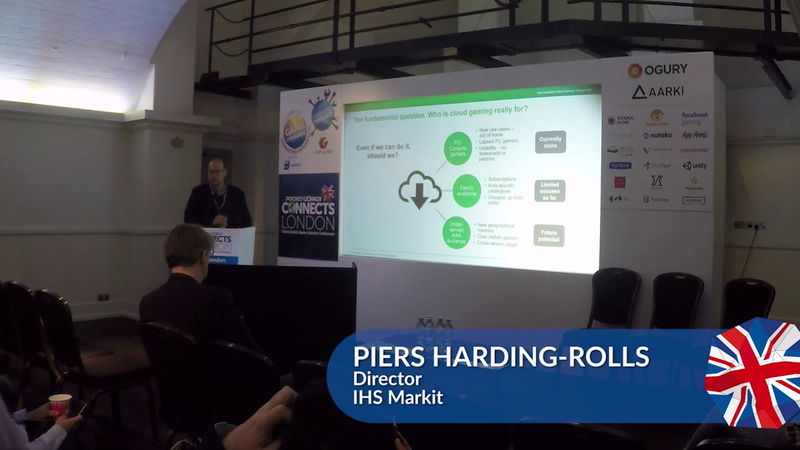
lot of other companies which are sniffing around this area so telcos are seeing am renewed another wave of interest in cloud gaming so I think we should ask a fundamental question which is you know who is cloud gaming really for what is the value proposition to the end-user if we can do it should we actually really be doing it even though if we can technologically you know it's it's technologically feasible should we actually be doing it is there you know is there a better user experiences delivered through this than say you're a download service like Xbox game parts for example and I think there's a sort of question mark over there and I think that's reflected in PlayStation now for example which is added downloads to its proposition now you know there's a we're a sort of I guess midpoint around the the real the value proposition of these types of services if the experience is not good enough
should we be doing it there's certainly some use cases around the introduction when it's aligned to things like 5g for example the introduction of on the move type business models and consumption in that way which potentially broadens the opportunity and introduces a new dynamic to the market and obviously that introduces new market entrants into the into this category so mobile network operators for example the family audience proposition there's been a number of experimentations in regards to that specifically like cable companies or IPTV players I've provided cloud gaming services the number of services in France for example there's been number of services in China and the success is it's not kind of mass-market
adoption it's certainly a relatively niche proposition at the moment so there's been limited success in those propositions I think where companies are possibly thinking about whether Microsoft is talking about accessing a broader audience beyond the console proposition they're talking about this future potential of an underserved triple-a audience in in markets where console penetration is not so significant or with users who are seeking access to content without you know spending on the device there's potential there and I think that's what those sort of they're thinking about when they're talking about the future potential of this opportunity so just a little bit of background there just for audience so this is the UK market just an example but gives you an idea of how speeds have increased this is up to 2017 but it sees the dynamic of the market so a majority of services in 2017 for fixed
or brand subscribers by speed majority is over that 30 megabits per second which is enough to as long as you're relatively near to a date center to get an you know pretty good experience in terms of consumption of cow gaming so basically addressable audience is much bigger now than it was previously so that you have this significant growing in the opportunity for these types of services so when we evaluate companies that are coming into this space we look at where they're operating in the value chain and how many points they operate across and where those where there are companies that operate across multiple points so if you take a Microsoft for example they operate in the cloud space so they're operate they they're active in service
delivery they're developing streaming technology they have a go to market proposition they have a platform in Xbox and they have they have content so they are operating across a whole they have and this is why I think there's a commentary sort of a basic commentary going on that suggests that they are well positioned in terms of this opportunity because they have the flexibility to shift or make it take advantage of those different points within the value chain compared to say a Sony whoo so they've built their own infrastructure so they do have a service delivery but it's it's kind of hampered and because they have to invest in it significantly they have a go to market platform and content and the streaming tech so they're they're relatively well plays but they don't have the cost advantage of Microsoft in terms of owning the cloud and then you can think about other companies in this space so when you evaluate you know how this sector is going to evolve and which companies are going to be well placed you have to think about these kind of
dynamics in the market and when you're thinking about differentiation in terms of service delivery you thinking about cost oversee the geographical availability now everyone talks about public cloud companies as having a broad kind of global footprint and that's what they're talking about all of these services are going to be cool globally available Microsoft for example only has one implementation of Xbox one server hardware in the cloud to deliver its its streaming proposition at the moment but so did have to build out that so that's it's not a sort of you know minimal undertaking it still has to invest in in building out its data centers to enable this opportunity if you look at the footprint of most of the clouds companies they have good footprints in North America Western Europe points in Asia but have weak kind of exposure to
say Latin America in that kind of environment you would think that perhaps a telco player may be best better place to take advantage of that market but we do acknowledge that obviously cloud-based companies have a strong position because they have this cost advantage over a company that's you know building their own instructs from the ground up or that is utilizing public out proposition which is very expensive so all the startups that are relying on AWS or Azure for implementation they're actually you know there there are a cost disadvantage these guys but it's right to acknowledge that the biggest cloud gaming companies today are actually serving customers via their own private infrastructure so Sony obviously
obviously PlayStation now and twelve countries from its own servers but I think it's one of those sort of hindrances to the expansion of that service is the fact that they have to invest significantly you know you have to get to a certain point to be able to launch that service in a in a specific geography Grau games is an interesting it's one of the major players in China for example it's actually it's built its own infrastructure as 30 points of presidents across T and one and tier two cities in China it's actually once become a clouds provider to other two third parties so it's this is a kind of use case applications use case for them and they're sort of expanding out into cloud services themselves so there's a question mark over you know what's the you know what's the sustainability of this type of approach I would say and I
was talking about telcos I think telcos are increasingly interested we've had a few announcements recently Verizon investing in companies charter communications cable company investing there's been a significant history a long history of telcos being involved in this space Telecom Italia orange in in France China Mobile with the introductions of new form factors so these foldable screens which are coming into the market now there's there's a genuine interest in in providing more advanced contents of those types of devices and similarly with the rollout of 5g obviously that opens the markets new new entrance so mobile network operators as well whereas previously it had been sort of focused on fixed operators or multi-channel operators that were operating with cable
and IPTV networks this is specifically looking at you know increasing the opportunity really for 5g players and they're looking for ways to push 5g services so they're looking at interactive content as one of those propositions when you think about 5g we have to think about you know when it's going to make an impact in the market this is our latest view on a regional basis of how 5g is going to be rolled out significantly LEDs by asian asia pacific territory and adoption but it's not going to be a major it's not gonna have a major impact in the market until 2022 and 2023 this is our judgment at the moment so we're gonna be waiting a few years I think until that has an impact so Microsoft talking about how 5g is going to be possibly you know the rollout of
their streaming service is going to be climbs quite significantly with 5g they think if they're thinking about targeting you know new device and form factors of the device you've got to think about that and the context of when how 5g will be rolled out so I don't think anyone should be expecting a major impact from these propositions in 2019 for example I already touched on this new streaming tech this is part of the sort of next-generation proposition hatch and poly stream so they use CPU cloud computes with GPU rendering on the device I think the challenge with this is that although it's much easier to scale it's much cheaper to actually provide the service it's actually you're having the you know the actual limitation on the audience on the user
side so they have to actually have a device which is capable of rendering that content so there is some significant limitations to that on the consumer end whereas the GPU based instance servers have limitations on the omnis or the server end because of the expense there so there's you know different approaches to this market and one of the interesting things which i think is you know it's general consensus around this is that subscription services that started become much more interesting because you can apply additional business models to subscription services so you can apply microtransactions to content and it's not just so when OnLive was first launched it was about replacing retail sales with a subscription offer and that's why the content was so poor they couldn't secure the the premium content to go into their services to offset retail sales you know no publisher would go for that deal now actually
subscription service about finding audiences and engaging audiences for them to be monetized through in-app purchase or through micro transactions it's a completely different dynamic and why exports going past I think is more acceptable to publishers now than it was in the past and I think increasingly subscription platforms become kind of marketing platforms in effect so that's changed the dynamic and market makes it more commercially viable I think one aspect which I think is interesting and should be made aware of is that we think because with the sort of fragmented distribution channels increasing numbers of players coming into this space we actually think content windowing is going to become more significant and that has you know potential opportunities for content owners you know we've seen on epic game store some of the negotiations that were going around in in relation to the content that's being signed exclusively
for the distribution platform I can imagine that becoming more evolved and more numerous in the context of wow gaming as well but I think on the consumer end you've got you could ask how many services consumers warner to subscribe to and so that's one thing to keep in in mind so this is our market sizing for cloud game this is all were described as cloud gaming services this is not bring your own PC services this is monthly subscription services similarly it's not services which are which you know give you a few hours access or you can pay for day access or which some of the you know startups are flexibly applying in in markets like China for example so there's obviously a significant way to go in terms of the opportunity so I'm running down I just
want to finish on five key gaming meaning cloud gaming predictions for 2019 don't expect any of the new services that come into market in 2019 to have a major impact on existing markets we see this as a medium to long term opportunity we're expecting more announcements from major players in 2019 I think large telcos and cloud service providers are the main candidates in that context maybe some consumer electronics companies I think there will be studio acquisitions for companies that want to do this seriously and need exclusivity on new need content for their platforms to drive adoption so I think Google is a significant candidate in that context service launching in 2019 so we talked a lot about
subscription ovens and microtransactions actually premium transactions are likely to be one of the monetization vehicles that we've seen used before but I've sort of died away somewhat and I think so with the new introduction of mobile network operators because of the rollout of 5g which is an interesting dynamic you know there's gonna be opera there's going to be opportunities for developers and publishers to sign and exclusivity deals with different new distribution channels that are merging in this space so I think there's overall a good opportunity for companies in the future thank you very much [Applause] [Music] you
Summary
The next generation of cloud gaming represents a significant shift in the industry, driven by advancements in networking, streaming technology, and evolving business models. Historically, cloud gaming struggled due to high virtualization costs, limited broadband infrastructure, and an inability to secure premium content. Current market developments, however, are addressing these barriers by leveraging improved global connectivity and more sustainable monetization strategies, such as combining subscriptions with microtransactions.
Key industry players are currently evaluated based on their position within the value chain, specifically their access to cloud infrastructure, proprietary streaming technology, and content libraries. Companies like Microsoft are viewed as well-positioned due to their integrated control over cloud services and gaming platforms, whereas others face higher costs by relying on third-party infrastructure or building private networks from scratch. New entrants, particularly telecommunications companies and cloud service providers, are increasingly viewing cloud gaming as a strategic vehicle to drive 5G adoption and reach underserved audiences in regions with low console penetration.
Technological approaches are bifurcating between GPU-based cloud instances, which offer high-end performance but face scalability challenges, and code-streaming models that offload rendering to the user’s device. While the latter is more cost-effective, it remains limited by the hardware capabilities of the end-user's device. Despite the hype, the industry is expected to remain a medium-to-long-term opportunity. Significant market impact is not anticipated in 2019, as 5G infrastructure is not projected to reach maturity until 2022 or 2023. Future growth will likely be characterized by increased content windowing, strategic studio acquisitions to secure exclusive titles, and a move toward subscription-based platforms acting as marketing engines for broader in-game monetization.
















Comments