1 free read left. Create a free account for unlimited reading + AI research.
Create free accountArticle Eludamos: Journal for Computer Game Culture
1 free read left. Create a free account for unlimited reading + AI research.
Create free accountArticleEludamos: Journal for Computer Game Culture
Existing ecogaming work has concentrated on SimCity, Red Dead Redemption 2, and Kentucky Route Zero.
"Metroidvania Ecologies" argues that the Metroidvania genre, and specifically Hollow Knight (2017) and Rain World (2017), deserves a central place in ecogaming scholarship, which has so far concentrated on titles such as SimCity, Red Dead Redemption 2, and Kentucky Route Zero. The authors' core claim is that the genre's interconnected, gated level design, with its recursive exploration, backtracking, and gradual unlocking of space, parallels Gibsonian ecological relations between organism and environment. Through this structure, the games are presented as challenging human mastery and promoting ecocentric rather than anthropocentric values.
The analysis develops this thesis through the games' mechanical and representational choices. Gated progression, punishing traversal, and opaque maps are read as resisting the colonial "direct use-value" ideology of exploration, making the environment refuse the player's command. Postapocalyptic settings largely emptied of humans, along with nonhuman protagonists, a slugcat in Rain World and an insect-like knight in Hollow Knight, foster an experience of nonhuman vulnerability rather than control. Drawing on the cuteness and fragility of their avatars and on repetitive death-and-respawn loops, the argument holds that these games cultivate an ecological affect that connects player and nonhuman life without collapsing their differences.
Rain World receives particular attention for its procedural animation and independent AI ecosystem, which decenter the player-character and present a world of autonomous, interconnected nonhuman behavior. The author is careful to frame the Metroidvania's suitability for ecological themes as a tendency rather than a universal property of the genre.
The scholarly framework is correspondingly interdisciplinary, drawing on game studies, ecocriticism, posthumanism, animal studies, postcolonial theory, and climate fiction, and engaging with Gibson's affordance theory and Morton's "ecological thought." Alongside the two focal games, the discussion references Dark Souls, the Metroid and Castlevania series, and recent work on animal avatars and nonhuman agency in games.
 Hollow KnightGame · Team Cherry · 2017 · 68 documents
 Red Dead Redemption 2Game · Rockstar Games · 2018 · 80 documents
 Kentucky Route ZeroGame · Cardboard Computer · 2013 · 4 documents
 Team CherryCompany · Australia · founded 2014 · 25 documents
 Rockstar GamesCompany · United States · founded 1998 · 148 documents
 MetroidGame · Nintendo R&D1 · 1987 · 35 documents
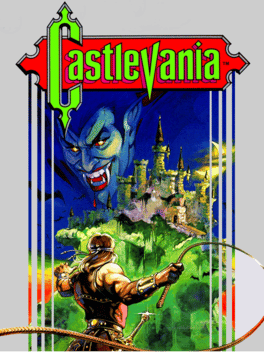 CastlevaniaGame · Konami · 1986 · 14 documents
 MaxisCompany · United States · founded 1987 · 15 documents
 Red Dead RedemptionGame · Rockstar North · 2010 · 117 documents
Each row is a game or company this document names, each column a document, oldest first. A mark means that document names it. Select a row to see those documents.
Eludamos: Journal for Computer Game Culture · 2026
Game Developers Conference · 2023