1 free read left. Create a free account for unlimited reading + AI research.
Create free account
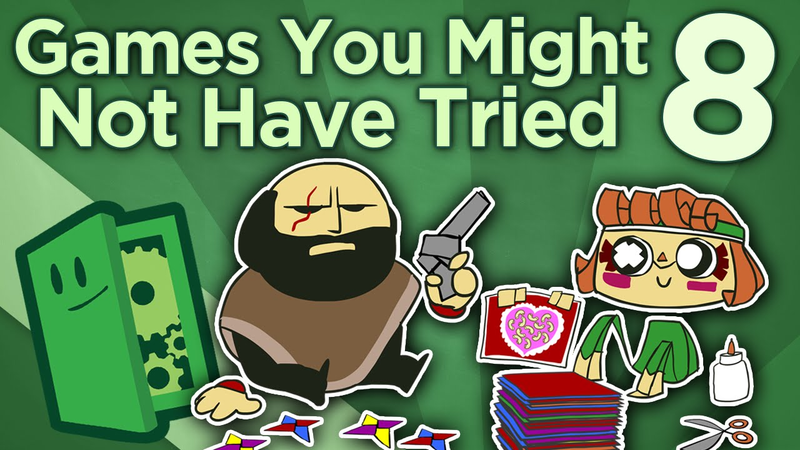
Games You Might Not Have Tried - ep 8 - Find New Games - Extra Credits
Key insights
6 takeaways- 01Thea: The Awakening innovates within the 4X genre by isolating the early-game exploration phase and integrating it into a full roguelike experience.
- 02Axiom Verge serves as a primary case study for modernizing Metroidvania design principles through high-quality craftsmanship.
- 03Mordheim: City of the Damned provides a high-difficulty tactical experience that balances permadeath with a unique injury system, intentionally omitting overhead maps for increased immersion.
- 04The static speaks my name is categorized as a brief, unconventional, and emotionally disturbing experimental title.
- 05Lisa offers a subversion of post-apocalyptic RPG tropes by utilizing an uncompromising, bleak narrative that emphasizes the impact of player choices.
- 06Tearaway: Unfolded demonstrates effective hardware integration by utilizing PlayStation 4 motion controls to physically bridge the gap between the player and the game world.
Ask AI about this video
Transcript
We covered a lot of the bigger names back in December, but James still had a ton of cool little games on his list to recommend. So, we figured it's time for another games you might not have tried. As usual, perhaps even more than usual, don't expect all of these games to be great, but they are all interesting and maybe worth having a look at if anything I show you here intrigues you. Here we go. First up, Thea: The Awakening. Have you ever wished that you could play the beginning part of Civilization, the part where you're exploring, for the whole game? If so, Thea has got you covered. Its storyline is actually stronger than it needs to be for a turn-based Civ-esque game. Its combat, while not incredibly deep, has more to offer than standard Civilization, too, and there's a ton of gear to craft. The tech tree and buildings for your settlements leave a bit to be desired,
but that's not what the game's about. It's about exploration in a quasi-Eastern European fantasy setting. Every new monster lair or abandoned city you explore is either filled with loot or opens up another sprawling narrative quest. Every unexplored tile might be filled with peril or rewards, and the game also borrows roguelike elements. The map is randomized every game, your characters have permadeath, the game only allows one save slot, and there's a meta progression system so that each time you lose, and you will lose, you retain some of your progress as your deity grows in power and bestows new boons to the next tribe you start up, which is a fascinating addition to this type of game. It wouldn't work in Civilization, but this game lets you know from the outset that you're not going to win right away and yet sets you up to come back for more. The game can have some of that fiddly chore-like management that Civilization does very late in the game, and the combat, while rich at first, becomes a little tedious when you have large stacks of units, but overall, if you want to play something that takes that early exploration phase of Civ and spools it out into an entire game, try Thea: The Awakening.
Axiom Verge. Usually on these episodes we try to give a shoutout to games that do something different, but you know, every once in a while you got to just respect solid craftsmanship and Axiom Verge is that. That's not to say it's perfect. There are still plenty of places to get stuck and plenty of frustrations to be had, but if you're looking for an old school Metroid experience, and I do mean Metroid, not Metroidvania, Axiom Verge delivers. But the real reason that we're recommending it is, if you're interested in design, it's fascinating to compare it with the old Metroid games just to see where design thinking has changed in the last few decades.
Mordheim: City of the Damned. And here we go recommending another Warhammer game. On the one hand, I feel like Games Workshop basically ran the license into the ground by just handing it out to everyone and getting so many terrible games in return, but they've handed it out to so many people now that at least a few of them were bound to turn out good. And I got to give it to Mordheim. It is just what I was looking for in a sort of rogue-like tactics game. Mordheim is a small unit strategy game, very akin to Valkyria Chronicles in how it plays, but very different in theme. It's third-person with lots of unit progression, party management, equipment, and skills to play around with. Most of the battles are randomized encounters that make for functionally infinite content, while it's handcrafted story missions always feel exciting, terrifying, and special. Now, the game saves after every move, so you can't escape Mordheim's permadeath penalties,
but characters who fall in combat aren't simply removed from your army forever. Instead, they roll on a table of possible wounds, so you don't often end up feeling like you should just quit the game if your favorite character falls, or that you need to hold back your most awesome unit because they're just too precious to put into danger. Now, if you decide to play this, might I recommend trying the extra credits challenge, in which you never open up the overhead map. You see, in game, you can press shift to see the layout of the level and where all the loot and the known enemies are, which is great. It makes the game a lot more playable. But, if you want it to feel like that dark, oppressive Warhammer world, try it without the map. You have to search every house for loot yourself without ever knowing what might lurk around the corner. If your team gets split up, they'll have to find their way back, wandering through the deserted streets of an unknown city, desperately trying to find their warband before something finds them. Tactics are all about guesswork and what can be seen with the naked eye. It's a lark. Maybe frustrating at times, but entertaining. So, if roguelike and tactics sound good together, you might want to check this
out. The Static Speaks My Name. This was one of the most bizarre and disturbing games that I've played this year. It's not for everybody, not by a long shot. But, if you want a game to put you in a really uncomfortable place, pick up this piece of head trauma for free. I am just going to leave it at that. You can play it in less time than it would take me to spoil it. Lisa. Since we talked about Undertale last time, and you did all go play Undertale, right? I think it's time we talked about Lisa. If you want a summary of this game, just think about all the things
that Undertale made you feel, and then imagine the exact opposite. Yes, this is a post-apocalyptic RPG, but it's nothing like anything you have seen in that genre before. This game can only be described as brutally uncompromising. It is perhaps the grimmest, bleakest tale in video games. But, if you're looking for an RPG with devastatingly, horrifically meaningful choices in it, if you're looking for a game that doesn't shy away from trauma or abuse or addiction, if you're looking for a game that will continuously leave you shocked without ever once feeling like it's simply going for cheap shock value, you're looking for Lisa. Just understand, this is a depressing trip through and through, but it's also a game that manages to embrace Snes RPG sensibilities while dealing with its themes in a more mature way than most mature-rated games today. So, if you're ready for an apocalypse more bleak than The Road, well, here you go. And finally, let's talk about something lighter and wholesome to cleanse the brain. Tearaway Unfolded.
Tearaway Unfolded is a PS4 remake of the utterly charming Tearaway for the Vita, which never got the attention it deserved because of the platform. It's got an endearing narrative, fantastic narration, and a gorgeous papercraft world. But, the reason I want to talk about the remake rather than the original is the central conceit. A big part of the controls relies on using the motion control features built into PlayStation 4 controllers. Basically, the little glowy bit on the back of your controller serves as a giant flashlight in the game. And this idea of using the controller as a beam of light is a really interesting one. The controls were still awkward at times, and I found myself wishing that I didn't have to use all the motion control elements of the controller to play the game, but unlike most motion control attempts with the gyroscopic controllers, this doesn't feel artificial. Their central conceit of the light from the controller being a beam of light in the game, and the way their narrative embraces the idea that you as a player are really sitting somewhere on the other side of the
screen from the game, makes it all feel real and connected. It's one of the rare integrations of the PS4's built-in gyroscopes that actually enhances your connection to the world and the gameplay rather than sucking you out of it. So, yeah, give Tearaway a look. It deserves it. Well, I hope that we have pointed you towards something that you'll enjoy. See you next week. Tearaway. Yeah. Yeah. Yeah. Yeah. Yeah.
Summary
This analysis highlights a curated selection of video games that offer unique design experiences, mechanics, or narrative approaches that may have been overlooked by mainstream audiences. The primary objective is to provide recommendations for players seeking titles that deviate from standard industry tropes, focusing on games that excel in specific niches such as exploration, tactical depth, or experimental storytelling.
The recommendations include Thea: The Awakening, which successfully translates the early-game exploration phase of 4X strategy titles into a full, roguelike-infused experience. Axiom Verge is highlighted for its high-quality craftsmanship and its value as a case study in evolving design principles within the Metroidvania genre. Mordheim: City of the Damned is presented as a robust tactical strategy game that balances permadeath mechanics with a forgiving injury system, while also offering an immersive, high-difficulty playstyle for those who eschew overhead maps.
The selection also covers experimental and emotionally challenging titles. The static speaks my name is identified as a brief, disturbing, and unconventional experience. Lisa is noted for its uncompromising, bleak, and mature approach to post-apocalyptic RPG tropes, offering meaningful player choices that contrast sharply with more traditional genre entries. Finally, Tearaway: Unfolded is recommended for its innovative integration of PlayStation 4 hardware features, specifically using motion controls to bridge the gap between the player and the game world. Collectively, these titles demonstrate a range of creative risks, from mechanical experimentation to thematic depth, providing a diverse list of alternatives for players looking to explore beyond popular, high-profile releases.


















Comments