1 free read left. Create a free account for unlimited reading + AI research.
Create free accountArticle Eludamos: Journal for Computer Game Culture
1 free read left. Create a free account for unlimited reading + AI research.
Create free accountArticleEludamos: Journal for Computer Game Culture
Antagonistic game design means an author deliberately frustrates and provokes the audience. This sets up an asynchronous adversarial relationship between designer and player.
Definition. Antagonistic game design is a game author deliberately taking on the role of a player within their own creation by frustrating and provoking the audience.
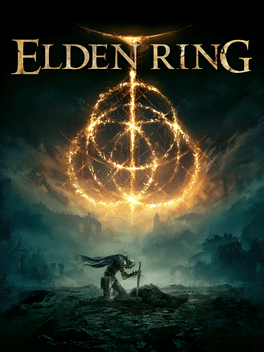
Antagonistic game design examines how a game author can take on the role of a player within their own creation by deliberately frustrating and provoking the audience, establishing an asynchronous adversarial relationship between designer and player. Grounded in philosophical precedents from Eugen Fink and Bernard Suits, the analysis defines authorship through deliberate aesthetic effects and voluntary participation, and it recognizes that players themselves co-author experiences through modding, house rules, and self-imposed styling. The central claim is that the implied adversary is less the author as an individual than the creative intentions embodied in the game, a point illustrated by the difficulty-driven design of FromSoftware's Elden Ring.
The argument proceeds largely through theoretical reasoning and illustrative examples rather than empirical data. It identifies three ways in which game authors can become players of their own work: returning to their creations with a playful attitude after production, competing against expert play-testers, and acting as role-playing game masters or deliberately teasing players through design. Antagonistic design is distinguished from related concepts such as abusive and deceptive design, and it is illustrated through titles including Syobon No Action, the "Baby Game" in The Stanley Parable: Ultra Deluxe, and Bennett Foddy's Getting Over It.
Beyond design intent, the analysis considers why players willingly persist through such experiences. It proposes that players may be motivated by "sticking it to the (implied) man," a form of antagonistic or vengeful play that can emerge even without an explicitly hostile author. This motivation is linked to established accounts of challenge-based engagement, including Lazzaro's "hard fun," Nguyen's "striving play," and Caillois's agonistic play, alongside diegetic, achievement, and social motivations.
The work concludes that antagonistic game design and antagonistic play are distinct modes of engagement that extend debates in game studies about authorship and player agency. By situating the author as a participant within the game's adversarial structure, the analysis contributes to understanding how creative intent and player resistance interact in contemporary, challenge-oriented games.
Eludamos: Journal for Computer Game Culture · 2026

Thomas Brush · 2026