1 free read left. Create a free account for unlimited reading + AI research.
Create free accountWhitepaper DiGRA
1 free read left. Create a free account for unlimited reading + AI research.
Create free accountWhitepaperDiGRA
The paper proposes a three-step framework: determining where to go, planning how to get there, and performing the required movement and inputs. It treats navigation challenge as distinct from overall difficulty.
Key idea. The framework treats navigation challenge as distinct from overall difficulty and as something designers can deliberately modulate.
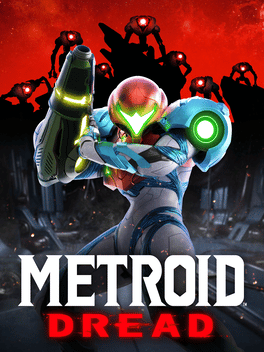
This paper proposes a three-step framework for analyzing navigation challenge in games, consisting of Destination (determining where to go), Routing (planning how to get there), and Execution (performing the required movement and inputs). Grounded in research on human wayfinding, the framework treats navigation challenge as distinct from overall difficulty and as something designers can deliberately modulate. The authors apply it to six two-dimensional Metroid titles released between 1986 and 2021, drawing on play, strategy guides, and critical reviews to examine how each step is shaped by design choices.
On Destination, the analysis distinguishes indirect guidance, such as diegetic cues like locked doors and room layouts, from direct guidance, such as waypoints and maps. Each carries a positive or negative valence that tunes difficulty, since guidance can point toward or away from solutions. For Routing, the authors separate micro-planning within a single screen, where moving enemies and time limits raise cognitive load, from macro-planning across the gameworld, where distinctive landmarks and hub-based layouts reduce memory demands. Cognitive load emerges as a central lever for scaling both Destination and Routing challenge.
On Execution, the paper separates physical challenge, meaning precision, timing, and the forgiveness of failure, from control challenge, meaning the number and complexity of required inputs and techniques. Control complexity grows across the series as upgrades accumulate, from nine inputs in the original Metroid to 16 in Super Metroid and 18 in Metroid Dread. Most platforming in the series is highly forgiving, with low-forgiveness exceptions such as the electrified water sections of Metroid Fusion. The authors conclude that each title emphasizes Destination, Routing, or Execution differently, and that the framework can help designers allocate a game's overall difficulty budget across these three dimensions.
Each row is a game or company this document names, each column a document, oldest first. A mark means that document names it. Select a row to see those documents.

DiGRA · 2026

DiGRA · 2026



DiGRA · 2026