1 free read left. Create a free account for unlimited reading + AI research.
Create free accountWhitepaper Loading... The Journal of the Canadian Game Studies Association
1 free read left. Create a free account for unlimited reading + AI research.
Create free accountWhitepaperLoading... The Journal of the Canadian Game Studies Association
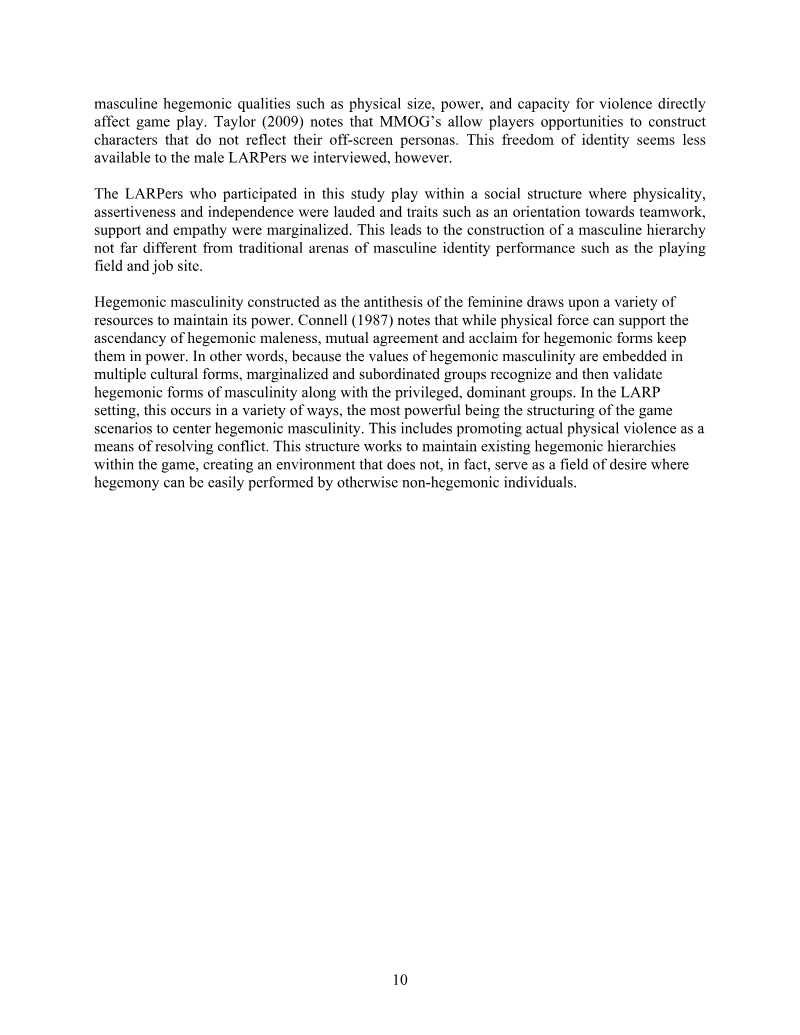
These spaces prioritize physical combat and aggressive assertiveness as primary metrics for success. This dynamic can solidify existing social stratifications.
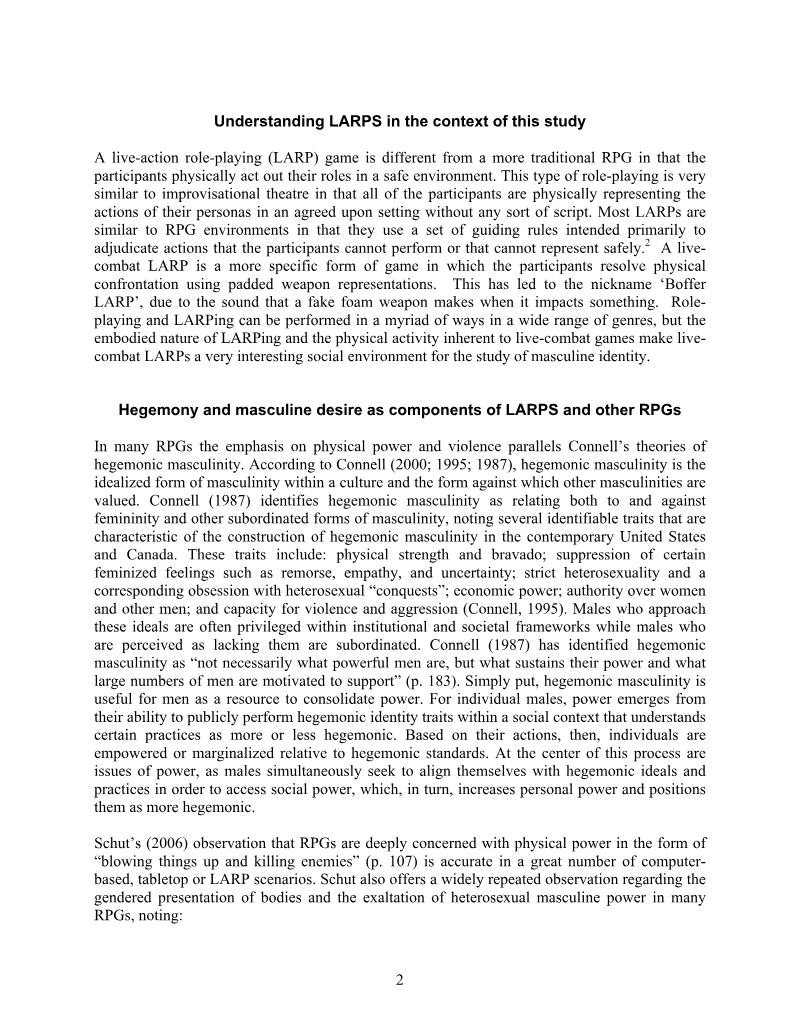
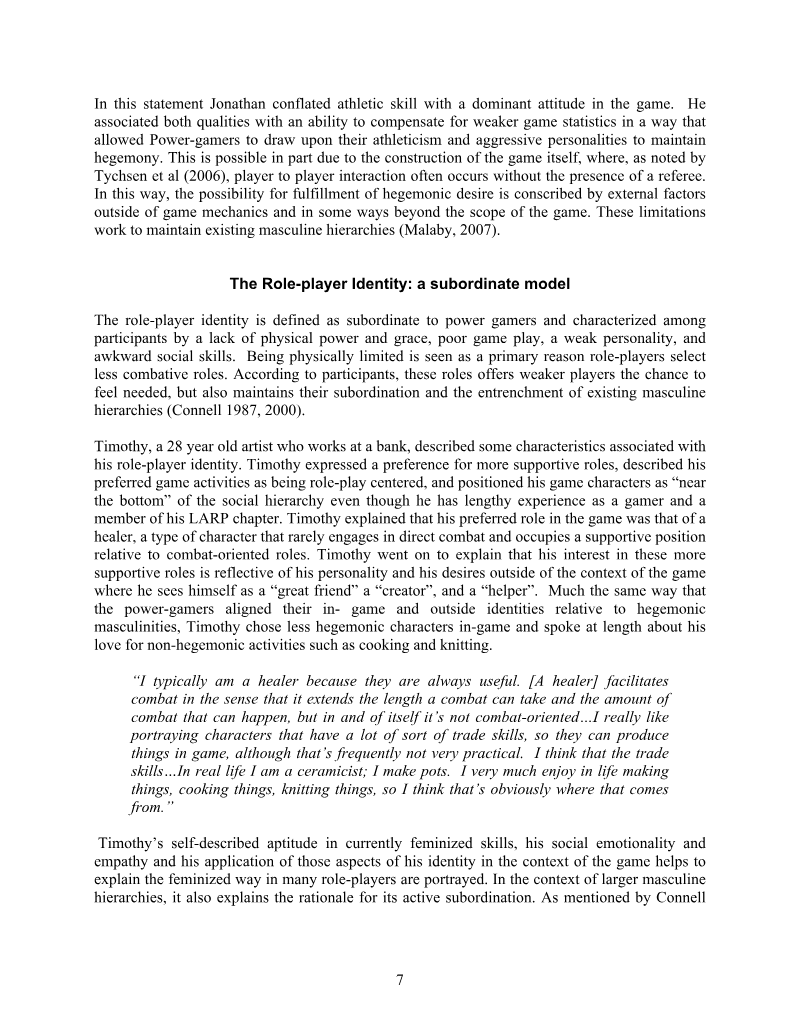
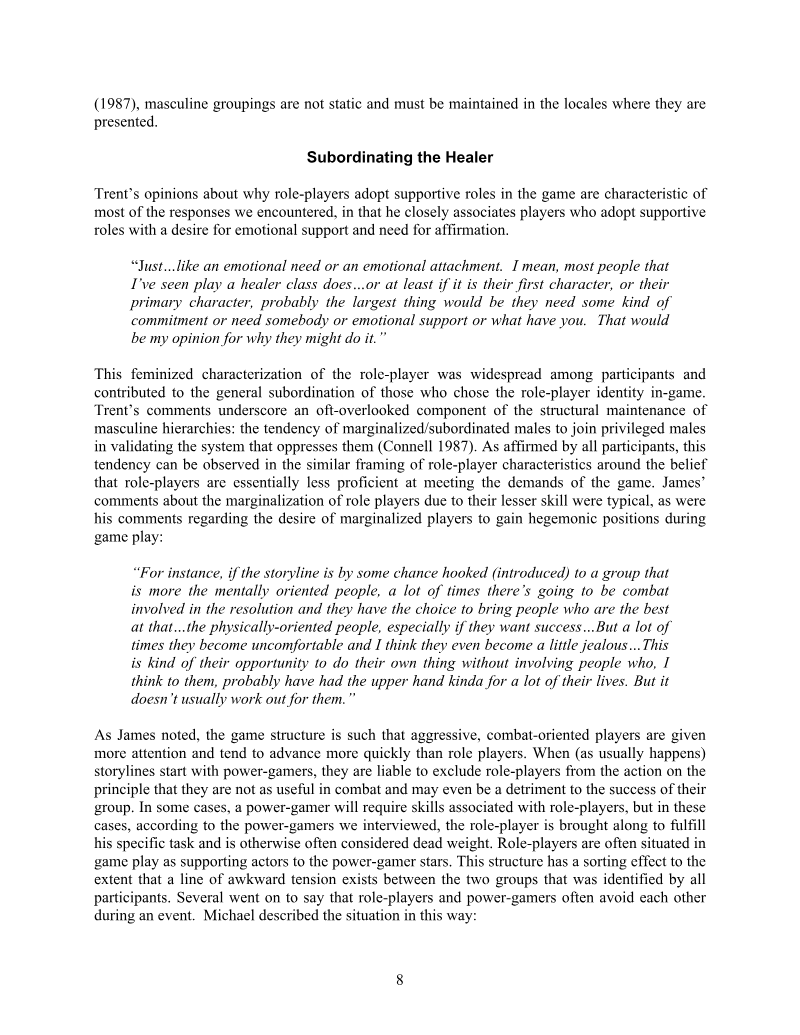
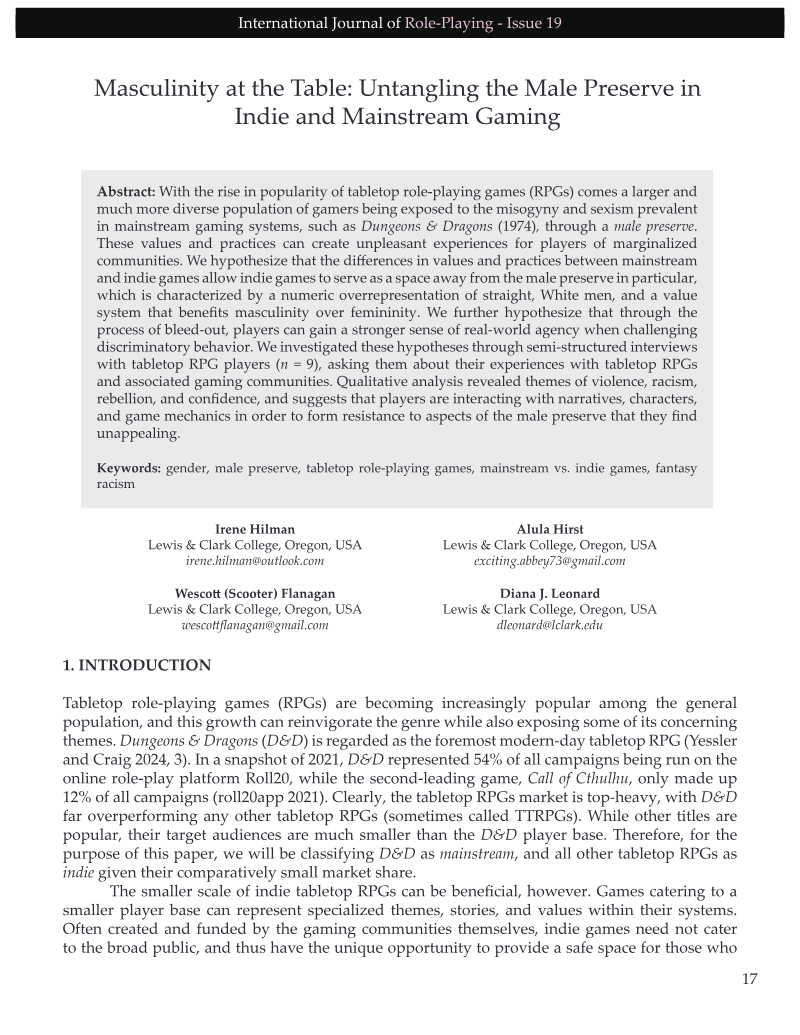
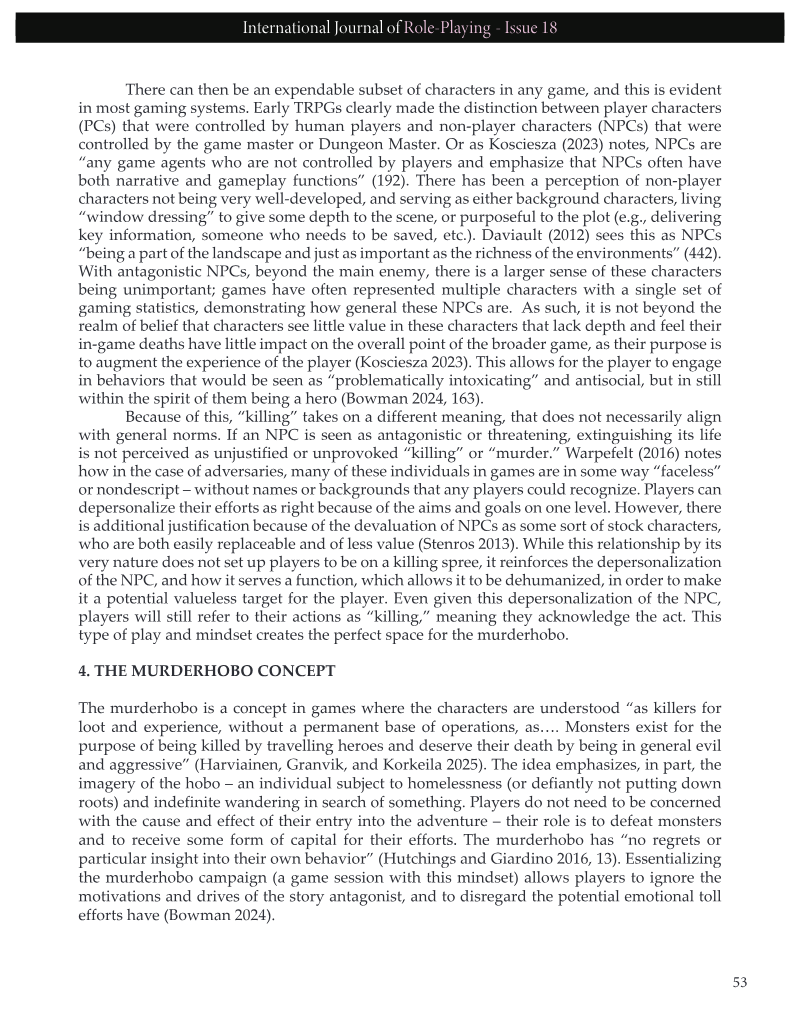
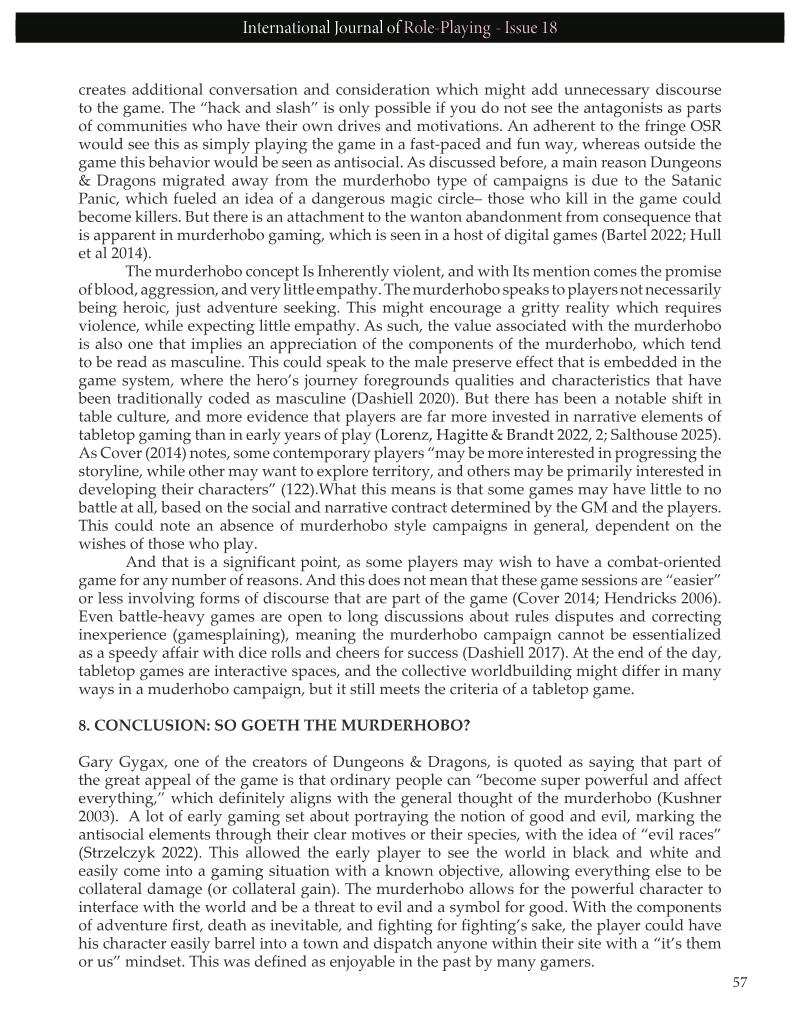
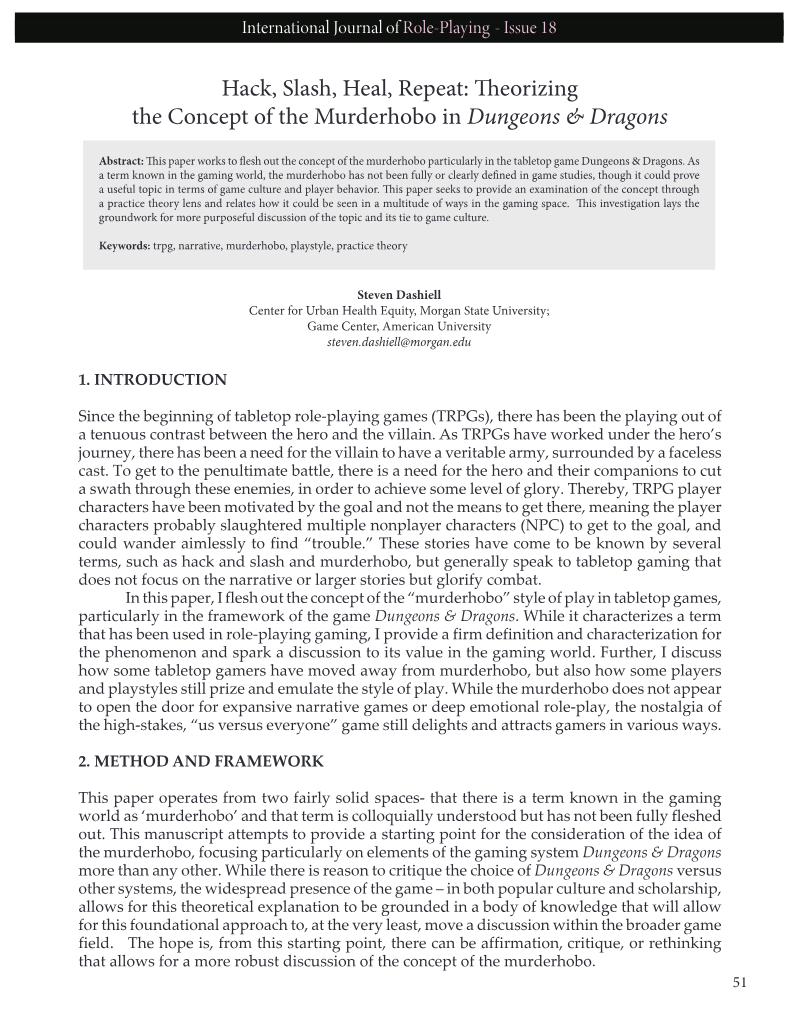
Live-action role-playing (LARP) environments frequently function as liminal spaces that reinforce rather than subvert traditional gender norms. By institutionalizing physical combat and aggressive assertiveness as the primary metrics for success, these games establish a rigid hierarchy that mirrors real-world hegemonic masculinity. This structure creates a binary divide between power-gamers, who embody dominant masculine traits through competitive prowess, and role-players, who prioritize empathy, support, or trade-based character development. Consequently, the game mechanics themselves act as gatekeepers, systematically marginalizing those who do not conform to traditional masculine archetypes.
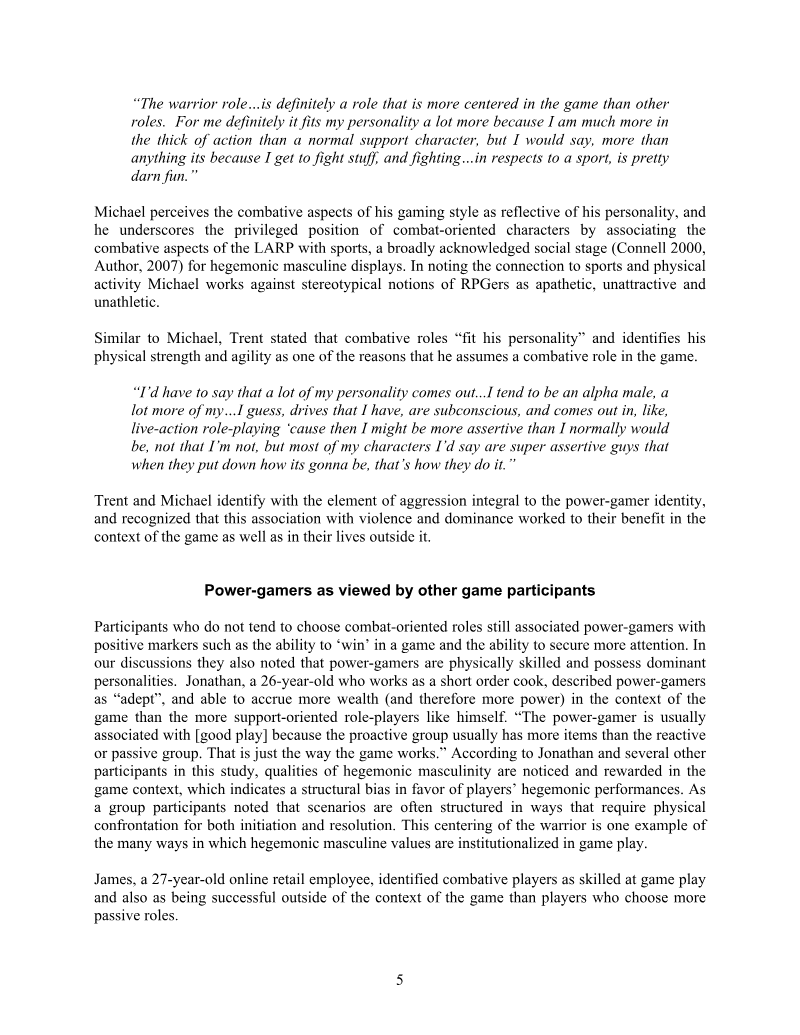
The research highlights a significant correlation between in-game status and the perceived real-world success of participants. By rewarding physical athleticism and dominance, LARP culture validates the very systems of power that often exclude non-hegemonic identities. Even participants who occupy subordinated roles frequently reinforce these hierarchies, suggesting that the community remains deeply entrenched in traditional social structures. This dynamic persists because the game’s design incentivizes the performance of aggression, effectively turning the fantasy space into a theater for the enactment of conventional masculine power.
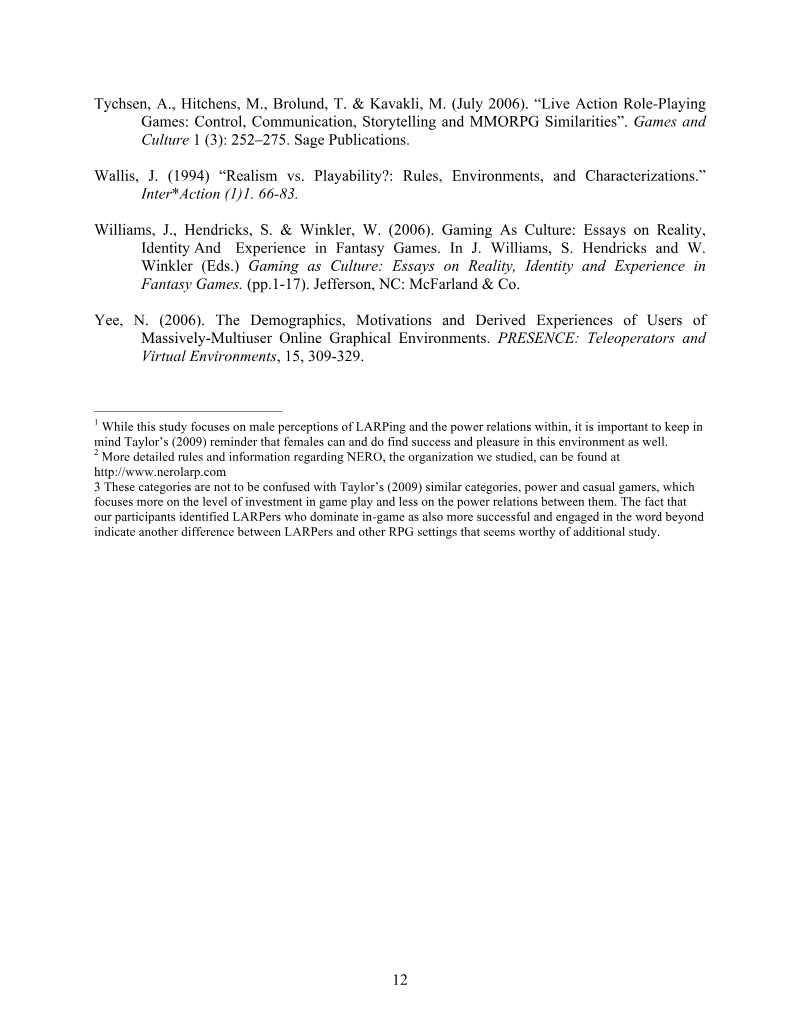
These findings suggest that LARP environments are not inherently progressive spaces for identity exploration. Instead, the industry segments that emphasize combat-heavy gameplay often serve to solidify existing social stratifications. While these observations are distinct from previous investment-focused classifications of player behavior, they underscore a critical need for further academic inquiry into how gaming structures influence social performance. Ultimately, the reliance on combat-centric mechanics ensures that traditional masculine hierarchies remain the dominant framework for status and recognition within these communities.
Loading... The Journal of the Canadian Game Studies Association · 2018
Loading... The Journal of the Canadian Game Studies Association · 2018
Loading... The Journal of the Canadian Game Studies Association · 2017
Loading... The Journal of the Canadian Game Studies Association · 2017
Loading... The Journal of the Canadian Game Studies Association · 2017
Loading... The Journal of the Canadian Game Studies Association · 2017
Loading... The Journal of the Canadian Game Studies Association · 2017
Loading... The Journal of the Canadian Game Studies Association · 2017
Loading... The Journal of the Canadian Game Studies Association · 2017
Loading... The Journal of the Canadian Game Studies Association · 2017
Loading... The Journal of the Canadian Game Studies Association · 2016
Loading... The Journal of the Canadian Game Studies Association · 2016
Japanese Association for Role-Playing Game Studies (JARPS) · 2024