1 free read left. Create a free account for unlimited reading + AI research.
Create free accountArticle DiGRA
1 free read left. Create a free account for unlimited reading + AI research.
Create free accountArticleDiGRA
The paper contends The Sims' praised inclusiveness owes more to late-capitalist marketing of marginalized consumers than to a genuine shift in cultural ideology.
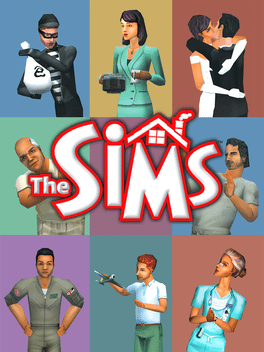
Curlew's paper argues that The Sims, widely praised as socially progressive for its treatment of same-sex relationships, racial equality, and the non-sexualized presentation of women, owes its inclusiveness less to a genuine shift in cultural ideology than to a change in how marginalized consumers are marketed to under late capitalism. Drawing on the work of Stuart Hall, Naomi Klein, Henry Jenkins, and others, the author contends that the game's progressive surface participates in what Hall calls the commercial appropriation of difference, targeting non-white, non-male, and non-heterosexual audiences to tap their consumer potential. The paper presents itself as a topical introduction rather than an exhaustive study, and it situates its analysis within sociology, cultural theory, race and gender studies, queer theory, game studies, and the political economy of the industry.
The analysis examines several dimensions of the game. On gender, Curlew notes that female and male Sims have equal capabilities and that female characters are not sexualized, but argues that the game's emphasis on domesticity, shopping, child-rearing, and interior design reflects a marketing strategy aimed at drawing women into a traditionally male-dominated medium, and that it reinforces stereotyped feminine roles. On sexuality, the game permits same-sex romantic relationships without defining characters by sexual identity, which the author reads as a way of avoiding essentialist portrayals while still appealing to queer consumers. On race and ethnicity, Curlew finds that players may select skin tone, yet all Sims otherwise share a standardized, middle-class, white American lifestyle, with religious and cultural particularities largely absent. Body representation is similarly limited: obese, disabled, and disfigured bodies are effectively excluded from the preprogrammed content.
Historically, the paper traces a pattern in which the 1990s expansion of gaming markets, combined with broader corporate embrace of diversity, prompted cultural producers to incorporate marginalized groups for financial rather than principled reasons. Curlew compares The Sims to ethnic Barbie dolls, arguing that both "normalize" difference by rendering it familiar to a white mainstream audience. The author concludes that the game forms a hybrid entity in which genuine progressive elements coexist with player-import possibilities for critical play and the commercial logic of late capitalism, and that the balance among these forces will shape the future representation of difference in games.
Each row is a game or company this document names, each column a document, oldest first. A mark means that document names it. Select a row to see those documents.
DiGRA · 2018
DiGRA · 2018
DiGRA · 2018
DiGRA · 2018
DiGRA · 2018
DiGRA · 2018
DiGRA · 2018
DiGRA · 2018
DiGRA · 2018
DiGRA · 2018
DiGRA · 2018
DiGRA · 2018
Two & a Half Gamers · 2024