1 free read left. Create a free account for unlimited reading + AI research.
Create free accountArticle Game Studio Unlocked
1 free read left. Create a free account for unlimited reading + AI research.
Create free accountArticleGame Studio Unlocked
This leads to either a slow accumulation of un-cut features or constant, disruptive pivots. Project failure is not typically due to a lack of execution capability.
Key Issue. Indie studios frequently face project failure because they cannot make deliberate decisions about which ideas to pursue or abandon.
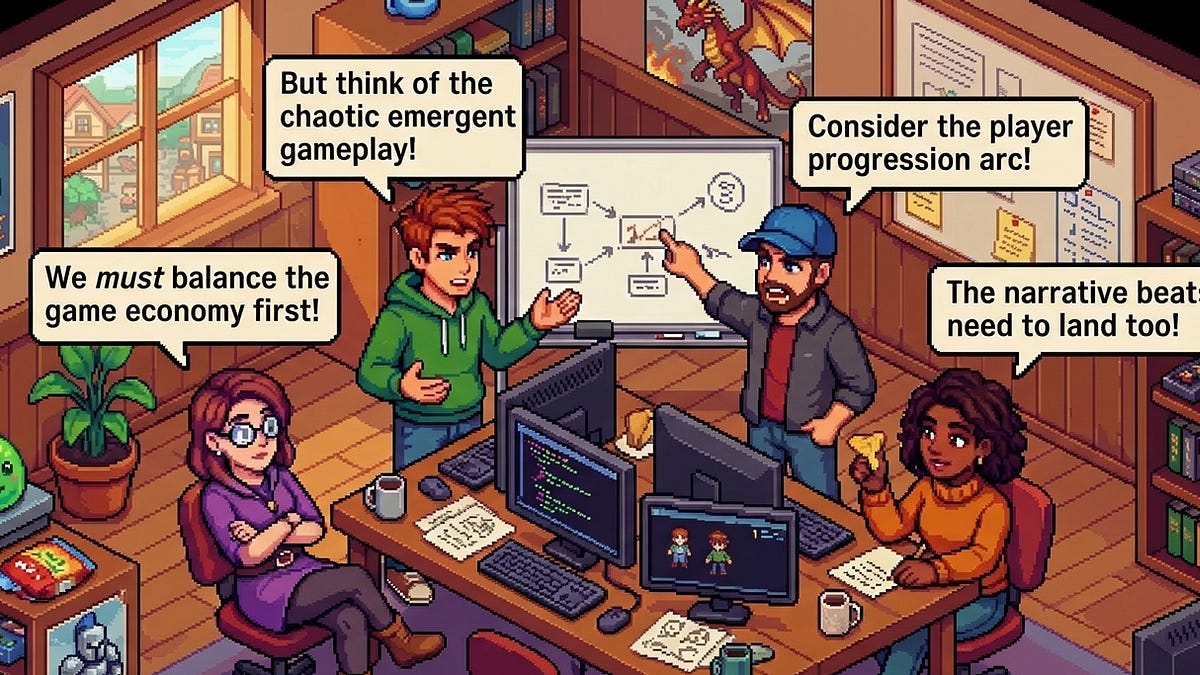
Indie game studios frequently face project failure not due to a lack of execution capability, but because of an inability to make deliberate decisions regarding which ideas to pursue and which to abandon. The primary thesis is that studios must transition from ad-hoc, personality-driven decision-making to a structured, procedural approach to manage creative scope. Without a formal system, teams often succumb to creative inertia, where sunk costs and emotional attachment prevent the removal of underperforming features, or they suffer from constant, destabilizing pivots that prevent a project from coalescing.
To mitigate these risks, studios should evaluate potential features against five critical criteria: alignment with the core vision, empirical evidence from playtesting, the total cost of implementation, the timing of the introduction, and the reversibility of the decision. High-cost, low-impact ideas should be systematically eliminated, while late-stage changes should be held to a significantly higher threshold of necessity. Furthermore, leadership must decouple the objective evaluation of ideas from the personal contributions of team members, ensuring that the process remains transparent and empathetic to maintain morale.
The recommended methodology for implementing this discipline involves establishing formal change gates at key production milestones and utilizing time-boxed creative spikes with predefined kill conditions. By logging ideas in a backlog and scoring them against established criteria, studios can remove the urgency and emotional volatility often associated with development pivots. This structural approach allows teams to protect the core vision while remaining open to genuine improvements, ultimately fostering a more sustainable and resilient production environment.

Game Studio Unlocked · 2026
Game Studio Unlocked · 2026
Game Studio Unlocked · 2026

Game Studio Unlocked · 2026
Game Studio Unlocked · 2026
Game Studio Unlocked · 2026
Game Studio Unlocked · 2026
Game Studio Unlocked · 2026
Game Studio Unlocked · 2026
Game Studio Unlocked · 2026
Game Studio Unlocked · 2026
Game Studio Unlocked · 2026











